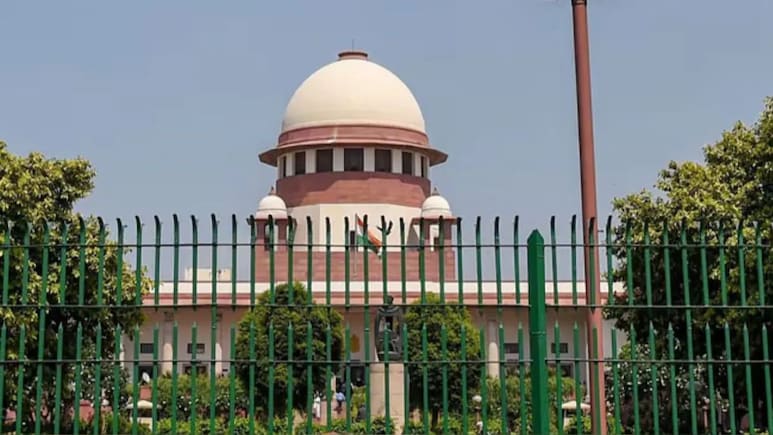

The Supreme Court on Monday dismissed the anticipatory bail plea of a Kerala college Head of Department accused in the suicide of a dental student from Kerala, Nithin Raj, observing that a strong message must go that teachers cannot behave with students in a manner that humiliates them. The top court emphasised that teachers must not humiliate students in the classroom, observing that changes in social norms mean such conduct can have serious consequences for a pupil's mental health.
The remarks came during the hearing of a plea filed by the college professor. Senior Advocate DS Naidu, representing the professor, argued that the alleged classroom humiliation occurred about a month before the student's death and therefore could not be treated as the proximate cause.
-

-
 NDTV World Summit 2026: What To Watch Out For | PM Modi, Jaishankar, AI And Global Power Shifts
 -
 Andrew Ng On AI At Scale: Building The Intelligence Economy | NDTV World Summit 2026
 -
 NDTV World Summit 2026: Behind The Scenes As Ayush And Vedika Preview Two-Day Mega Event
 -
 Who Is Rajiv Mehta? Lilavati Hospital Trustee To Speak At NDTV World Summit 2026
 -
 Ex-CIA Director To Decode 'War In Times Of AI' At NDTV World Summit
 -
 From Call Centre To Billion-Dollar Disruptor: Nikhil Kamath At NDTV World Summit
 -
 Alain Ebobisse, Africa50 CEO, To Attend NDTV World Summit 2026. All About Him
 -
 Kriti Sanon At NDTV World Summit: A Look At Her Career And Business Ventures
 -
 Ex-CIA Director To Decode 'War In Times Of AI' At NDTV World Summit
 -
 Who Is Vikram Rai, CEO, South Asia GE Aerospace, Set To Attend The NDTV World Summit 2026
He told the court that a separate incident, occurring roughly an hour before the suicide, was more directly connected to the student's state of mind: the student had allegedly taken a loan through a mobile app, used the professor's name as a guarantor without consent, and was being harassed by recovery agents.
A Bench of Justice Vikram Nath and Justice Sandeep Mehta refused to interfere with the Kerala High Court's order denying pre-arrest bail to Dr Kondanda Ram, Head of the Department at a dental college, who is facing allegations of abetment of suicide and uttering casteist slurs.
Counsel for the professor warned the bench against criminalising strict disciplinary action, saying teachers sometimes become “overbearing in the interest of the student” and that criminal proceedings against educators for enforcing discipline could have a “chilling effect” on teaching staff.
Justice Sandeep Mehta, however, stressed that “times have changed” and that corporal punishment or public humiliation cannot be justified by past norms. “Maybe in our days beating was the norm … now things have changed,” he said. The judge observed that being insulted before classmates can have a lasting impact on a student's psyche and said a clear message must go out that teachers cannot behave in that manner.
The offences alleged against him are those under Section 108 of Bharatiya Nyaya Sanhita (BNS) and Sections 3(1)(r) and 3(2)(v) of Scheduled Castes and Scheduled Tribes (Prevention of Atrocities) Act.
DS Naidu, appearing for the petitioner, argued that while the professor may have been a "harsh teacher", that by itself could not justify denial of anticipatory bail.
He submitted that the alleged humiliation of the student had taken place about a month before the suicide, whereas immediately before the student's death there had been a separate incident involving harassment by loan recovery agents over a Rs 15,000 loan carrying high interest.
Naidu told the Court that another professor had complained to the principal about the student's loan shortly before the suicide, as she was allegedly made the guarantor by the victim for the loan taken, as loan app recovery agents had allegedly harassed both the professor shown as guarantor and the student. He further submitted that those loan app operators had already been arrested and remanded, contending that the immediate trigger for the suicide was the loan-related harassment rather than the earlier conduct of the HOD.
The senior counsel also argued that denying anticipatory bail in such circumstances would have a "chilling effect" on professors seeking to maintain discipline in educational institutions, even if they occasionally crossed the line.
Justice Mehta, however, observed that the cumulative effect of the alleged conduct could not be ignored. "As they say, 'ghada bhar jata hai'. He has to realise the consequences of his actions for the students. A student is insulted in the classroom in the presence of co-students. What would be the ultimate impact on such students?" Justice Mehta remarked.
