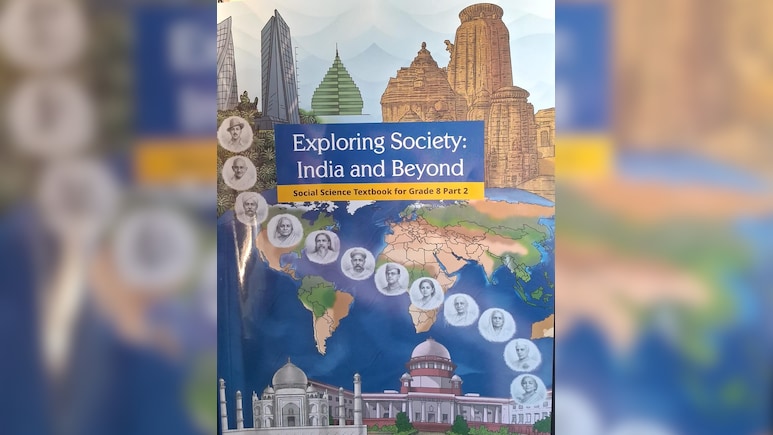
- NCERT's Class 8 Social Science textbook includes a chapter on judiciary's role and corruption
- The chapter highlights judicial corruption and systemic challenges delaying justice delivery
- It reports over 81,000 Supreme Court, 6.24 million High Court, and 47 million lower court cases pending
The National Council of Educational Research and Training (NCERT) has released a new Class 8 Social Science textbook featuring a chapter, The Role of the Judiciary in Our Society, which examines judicial corruption and structural challenges affecting courts in India. The chapter identifies "corruption at various levels" as a key concern and lists systemic barriers to justice delivery, including a large case backlog. It states that the Supreme Court of India has about 81,000 pending cases, while the High Courts of India together have roughly 6.24 million cases awaiting resolution. District and subordinate courts account for about 47 million pending cases.
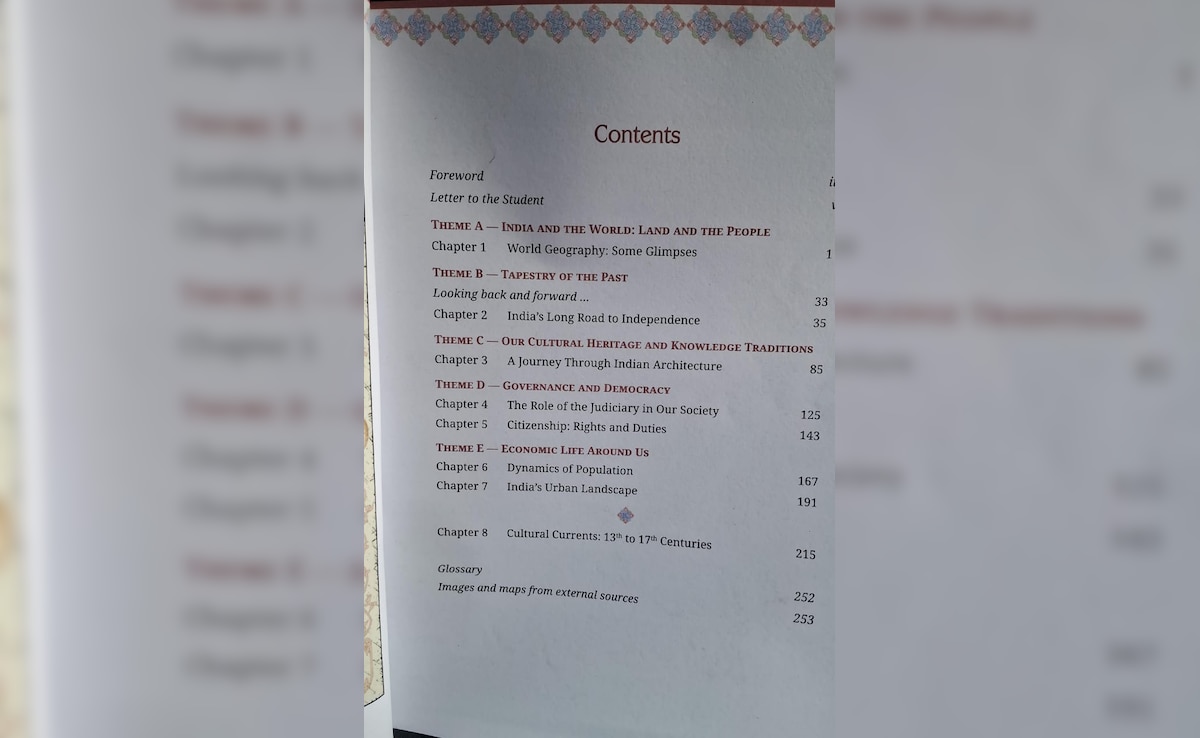
A shortage of judges is cited as a major cause of delays, alongside complex legal procedures and inadequate court infrastructure. The chapter explains that judges must follow a code of conduct governing their professional and personal behaviour, and outlines internal accountability mechanisms within the judiciary. It also notes that citizens can file complaints through the Centralised Public Grievance Redress and Monitoring System (CPGRAMS).
According to the textbook, more than 1,600 judiciary-related complaints were received between 2017 and 2021 through the grievance system. Judicial delays and corruption are presented as structural issues that students should understand when studying how courts function and the challenges in delivering justice.
The book also quotes former Chief Justice of India B R Gavai, who said during a July 2025 hearing that corruption and misconduct harm public confidence. "However, the path to rebuilding this trust lies in the swift, decisive and transparent action taken to address and resolve these issues. Transparency and accountability are democratic virtues," he said.
The chapter comes amid an ongoing institutional debate between the government and the judiciary over appointments, accountability and the scope of judicial intervention. Recent reports have highlighted tensions over the collegium system for selecting judges, delays in appointments cleared by the courts, and political criticism alleging judicial overreach, while the judiciary has emphasised constitutional independence and the separation of powers.
