
Even as the Union government repeatedly dismisses rumours of an "energy lockdown" as "completely false" and "irresponsible," the Indian Agricultural Research Institute (IARI) in Delhi has issued a mandatory directive sending hundreds of students including undergraduate, first-year Master's, and first-year PhD students back to their homes, with classes shifting entirely online from April 6, 2026.
"There are around 1800 students currently residing in the campus out of which nearly 600 students will be affected as notice is applicable to all UG students and first year PG and PhD students," an official from IARI said.
The notice, issued by IARI's Graduate School, a national institution, on March 25 , explicitly attributes the decision to the "current energy crisis being faced by the country" and its impact on running student hostels and mess systems. After in-house due diligence and consultation with student representatives, the institute ruled that the move is "not optional". Students in these batches must vacate the campus until further notice.
Higher-year Master's/MTech and PhD students at IARI New Delhi and its sister institutes will continue offline classes and research uninterrupted. Faculty members have been asked to prepare plans for practical components once students return to campus.
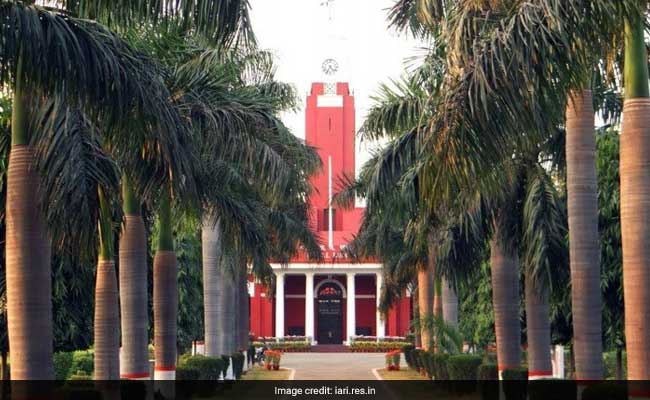
IARI, a premier ICAR institution and deemed university located in Pusa, Delhi, relies heavily on residential hostels for its large student community. The energy crunch is reportedly affecting reliable electricity and fuel supplies needed for mess operations, lighting, and basic hostel functions.
Government Insists: "No Lockdown, No Major Crisis"
This development comes amid persistent official assertions that there is no energy lockdown planned or under consideration. Union Petroleum and Natural Gas Minister Hardeep Singh Puri has strongly debunked such rumours, calling them "completely false" and warning that spreading panic is "irresponsible and harmful." He emphasised that the government is not imposing any restrictions on public movement or daily life.
Power Secretary Pankaj Agarwal and other officials have expressed confidence that India can meet record summer peak power demand-projected at 270-283 GW-through ample coal stocks, restarted coal capacity, renewables, and hydro support, despite LNG supply disruptions linked to the West Asia conflict. The government has built substantial coal inventories, deferred plant maintenance, and redirected resources to ensure uninterrupted power where possible. Prime Minister Narendra Modi has also assured that India will navigate the situation resiliently, drawing parallels to its COVID-19 response without imposing lockdowns.
Officials maintain that fuel stocks (petrol, diesel, and LPG) remain adequate for the short term, with a 24/7 monitoring control room in place. Recent steps include lowering excise duties on petrol and diesel to shield consumers from price spikes rather than passing on full costs.
Yet the IARI notice reveals how the broader pressures- rising electricity demand driven by early summer heat, constrained LNG imports due to geopolitical tensions in the Middle East, and the need to conserve resources at institutional levels-are translating into tangible disruptions at government-run facilities.
