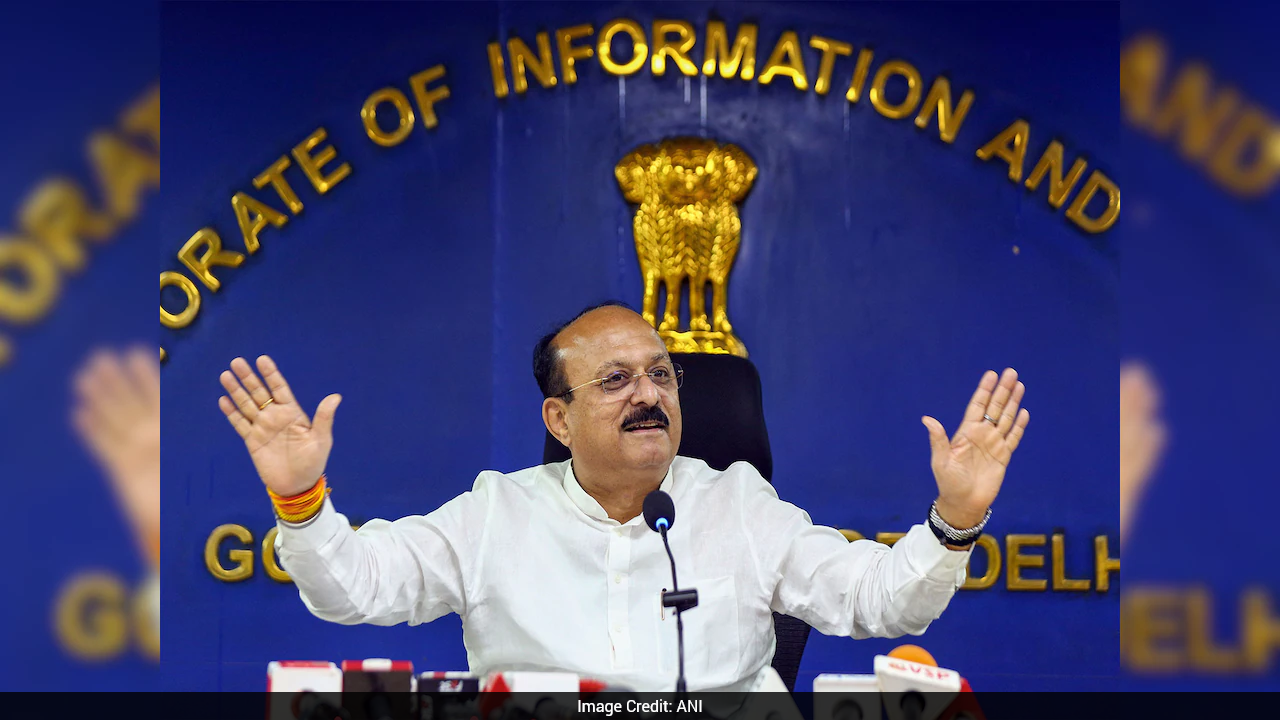

The Delhi government has approved a major change in the process for opening private schools by replacing the long-standing 'Essentiality Certificate' requirement with a self-certification system. The move is aimed at making the school recognition process simpler and reducing unnecessary paperwork.
According to ANI, Delhi Education Minister Ashish Sood has approved the reform, under which the Directorate of Education will remove several outdated provisions under the Delhi School Education Act and Rules (DSER), 1973.
-

-
 NDTV World Summit 2026: What To Watch Out For | PM Modi, Jaishankar, AI And Global Power Shifts
 -
 Andrew Ng On AI At Scale: Building The Intelligence Economy | NDTV World Summit 2026
 -
 NDTV World Summit 2026: Behind The Scenes As Ayush And Vedika Preview Two-Day Mega Event
 -
 Who Is Rajiv Mehta? Lilavati Hospital Trustee To Speak At NDTV World Summit 2026
 -
 Ex-CIA Director To Decode 'War In Times Of AI' At NDTV World Summit
 -
 From Call Centre To Billion-Dollar Disruptor: Nikhil Kamath At NDTV World Summit
 -
 Alain Ebobisse, Africa50 CEO, To Attend NDTV World Summit 2026. All About Him
 -
 Kriti Sanon At NDTV World Summit: A Look At Her Career And Business Ventures
 -
 Ex-CIA Director To Decode 'War In Times Of AI' At NDTV World Summit
 -
 Who Is Vikram Rai, CEO, South Asia GE Aerospace, Set To Attend The NDTV World Summit 2026
The decision follows the recommendations of the Compliance Reduction and Deregulation Exercise, which was launched to simplify administrative procedures and make the process of setting up schools more transparent.
Under the new system, private schools will no longer have to obtain an Essentiality Certificate, which earlier required government approval on whether a new school was needed in a particular area.
The Delhi government said the changes bring the city's school recognition rules in line with the Right of Children to Free and Compulsory Education (RTE) Act, 2009. Under the RTE Act, schools are recognised based on whether they meet prescribed standards such as infrastructure, safety, teacher qualifications and the required student-teacher ratio. The law does not require the government to assess whether a new school is needed in a particular locality.
As part of the reform, Rule 44(3) of the Delhi School Education Rules, 1973, has been amended. Earlier, applicants had to inform the government before opening a school, after which officials decided whether another school was required in that area. This condition has now been removed.
The government has also amended Rule 50(ii), which earlier required authorities to evaluate the number of existing schools in an area before granting recognition. This provision has also been scrapped.
According to ANI, the Delhi government has also relaxed the minimum land requirement for setting up private schools. The change takes into account Delhi's limited urban space and is expected to make it easier to establish schools closer to residential areas without compromising safety or educational standards.
Speaking on the reform, Education Minister Ashish Sood said: "Our goal is to ensure that every child in Delhi has access to high-quality education in safe, well-equipped schools. By replacing the outdated 'Essentiality Certificate' with a simple self-certification system, we are shifting the focus from unnecessary administrative paperwork to what truly matters--excellent infrastructure, qualified teachers, and proper student-teacher ratios. This reform brings Delhi's rules in perfect alignment with the Central RTE Act, ensuring that school recognition is based strictly on transparent standards, not subjective hurdles."
