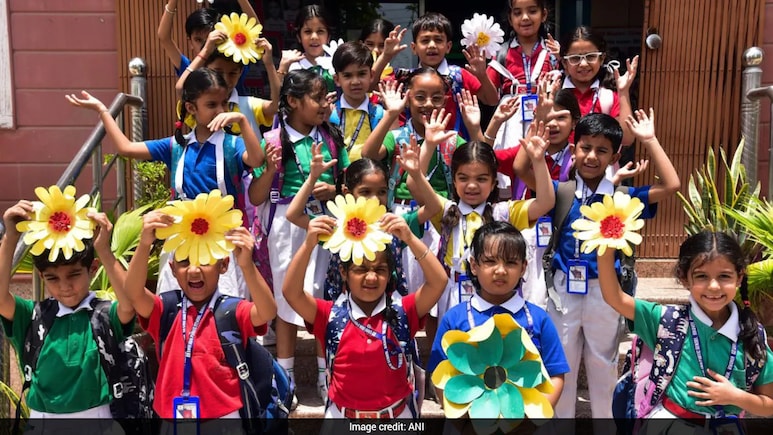
Arts Education: As Artificial Intelligence (AI) and automation reshape jobs, experts have warned that technical skills alone will not suffice. With employers increasingly valuing creativity and adaptability, industry specialists have said that arts education offers unique training in problem-solving and collaboration.
Arts education is as crucial as STEM (Science, Technology, Engineering, and Mathematics) for preparing students for future jobs and life, Dr Sanjeev Kishor Goutam, Director General of the National Gallery of Modern Art, under the Ministry of Culture, Government of India, said, urging schools and policymakers to treat the arts as an integral part of multidisciplinary learning.
Speaking on the growing global emphasis on science, technology, engineering and mathematics, Dr Goutam acknowledged the understandable focus on technical skills in an era of rapid technological change and artificial intelligence. But he warned that technical knowledge alone will not be sufficient for the workplace or society of tomorrow.
"This is understandable because technological change is transforming numerous industries, artificial intelligence is changing the way in which people find work, and people with strong technological skills are needed in today's world," he said. "However, at a time when the world is becoming more digital in every aspect, there is a possibility that technical knowledge alone will not be sufficient," he added.
"Skills that employers increasingly value - creativity, communication, adaptability, empathy and critical thinking - are primarily fostered through arts education," Dr Goutam said. He pointed to the World Economic Forum's Future of Jobs Report 2025, which highlights creativity, resilience and leadership among the qualities that machines are least able to replicate and that will be in high demand.
The director argued that participation in theatre, music, visual arts, literature and design cultivates collaboration, risk-taking and problem-solving in ways other subjects seldom do.
"Many successful innovations emerge where technology meets creativity," he said, noting that a successful mobile application, for example, combines complex coding with design, narrative and an understanding of human behaviour.
Citing international research, he said that studies by organisations such as the OECD and UNESCO establish links between arts participation and enhanced creativity, social-emotional competencies and cultural awareness. He also highlighted the personal-development benefits of arts engagement - improved self-expression, confidence and emotional resilience - which he described as critical amid rising youth mental-health concerns.
ALSO READ | GATE Is Not Just For Engineers: What Humanities Students Need To Know
The National Education Policy (NEP) 2020's emphasis on multidisciplinary learning and integration of arts, sciences and vocational studies was welcomed by Dr Goutam as a step in the right direction. "It realises that learners need to have a variety of skills instead of mastering one sphere of knowledge in order to become future-ready students, " he stated.
"There should be no debate about STEM versus arts," he said. "The future needs people who can merge analytical thinking with creativity, technology with empathy, and innovation with humanity, he asserted"
"These features do not have to oppose each other but should cooperate," he added.
The skills which are most sought-after these days, like creativity, communication, adaptability, empathy, and critical thinking, are mostly fostered through arts education, he asserted. Now that the world economy has changed immensely, the arts can no longer be viewed as a mere option; rather, they have become an integral part of training students for the next generation, he added.
