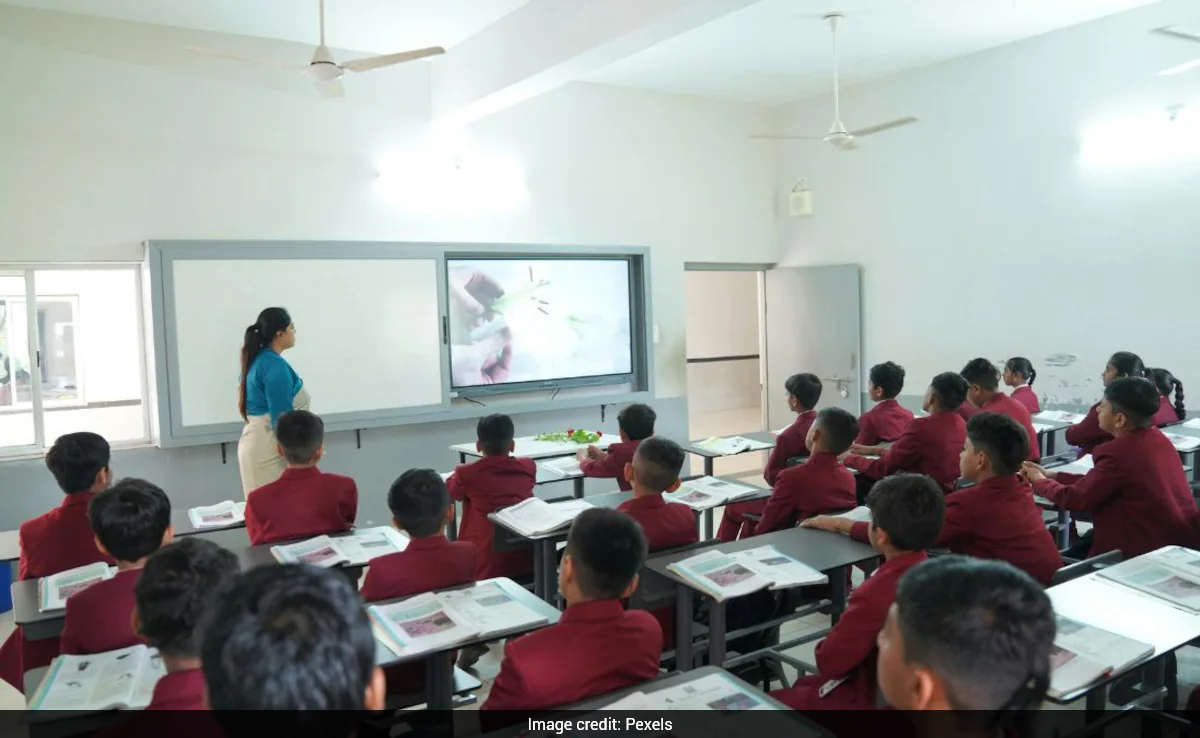
The increased consumption of Artificial Intelligence (AI) in the hallowed halls of academia has raised concerns about academic integrity. There are also worries about how AI-generated content can be biased, inaccurate, and sometimes contain entirely false information.
OpenAI released the chatbot software ChatGPT in November 2022. The tool gathers information from the internet and explains it through conversation. ChatGPT is different from a search engine. It can perform many creative and helpful tasks, such as writing poetry in the style of Shakespeare or providing advice on relationships. The tool can also answer academic test questions and write essays for students. This ability has caused significant concern among educators. Several reports have highlighted the instances of cheating with ChatGPT in schools and colleges.
Experiments With AI
Harvard Graduate School of Education lecturer Houman Harouni has urged educators to actively integrate generative AI tools like ChatGPT into classrooms rather than ignoring them, viewing technology as integral to modern learning. Being a former elementary and high school teacher himself, Harouni has long wrestled with the impact of this technology on education, including experimenting in his own classroom.
Stop Pretending That AI Doesn't Exist
Stop pretending that AI doesn't exist; and help students use it with integrity, Harouni suggested. He emphasised that students already experiment with AI independently and need guided, responsible use to navigate its realities effectively.
8 Safe Strategies To Integrate AI In Classrooms
The integration of Artificial Intelligence in classrooms requires a fundamental shift in how students engage with technology and how teachers define academic tasks. Here are some expert-backed strategies to help students and teachers integrate AI into classroom learning.
- AI as a Study Partner: Treat the AI as a collaborator that can explain complex concepts, define difficult terms, or help brainstorm ideas for projects rather than generating finished assignments.
- Drafting and Revising: Use AI to review rough drafts for structural flow, grammar, and clarity, allowing the student to maintain full ownership of their ideas and voice.
- Interactive Tutoring: Engage with the tool to create practice quizzes or flashcards based on lecture materials to reinforce understanding of core concepts.
- Language Practice: Leverage the model to practice foreign language conversation or to translate academic texts, enhancing linguistic skills in a dynamic environment.
- Summarising Complex Material: Use AI to provide summaries of lengthy articles or chapters, which can then be used as a foundation for deeper critical analysis by the student.
- Accessibility Support: Students with disabilities can use AI to adapt learning materials, such as converting text into more accessible formats or simplifying instructions to accommodate specific learning needs.
- Critical Fact-Checking: Use the tool to identify potential biases or misinformation in its own outputs, turning the process of verifying AI claims into an essential information-literacy exercise.
- AI to Spark Imagination: One frequent concern about generative AI is that students will use it to cheat and avoid the hard work of thinking for themselves, but Harouni says that tools like ChatGPT should really challenge teachers and professors to reassess the assignments they give their students.
However, it is important to analyse the bias in AI and confirm its accuracy. Teachers must teach their students to verify the information given by ChatGPT using official and authentic sources. It is also the role of educators to make students understand what is considered cheating.
Teach Students How To Ask ChatGPT Questions
According to Harouni, the educator's job is to understand what opportunities are left open beside the technology. Teachers can teach students about when and how to approach AI, and what questions to ask. It is also important to teach students to do what artificial intelligence cannot do.
For psychology instructors too, the advent of ChatGPT has introduced new challenges. Addressing this concern, Ashley Abramson, from the American Psychological Association has stated in her research titled 'How to use ChatGPT as a learning tool' that the tool has potential to help students learn in new ways and prepare them for careers after college. The author has highlighted that ChatGPT could be a useful tool to prepare students for the real world where critical thinking is more important than rote memorisation.
