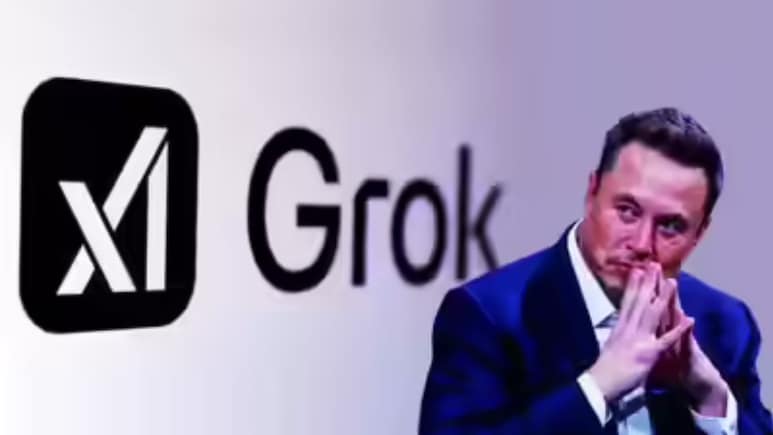
El Salvador will use Grok, the alleged "Holocaust-denying" AI chatbot of social platform X, in public school education in a world first, President Nayib Bukele and X boss Elon Musk announced Thursday.
Bukele, hailed by many for his war on gangs but accused of rights violations, is spearheading an educational reform with a focus on discipline and courtesy, and banning so-called "inclusive language."
Now, he also wants to roll out "the world's first nationwide AI-powered education program," according to a joint statement from Musk company xAI and the government of El Salvador.
"Over the next two years, we'll deploy Grok across more than 5,000 public schools, delivering personalized learning to over one million students," it said.
The system, to be codeveloped by El Salvador and xAI, will allow teaching at a pupil's individual educational level and pace, even in far-flung rural communities, the statement said.
More than 1.2 million students, from kindergarten through high school, attend public school in El Salvador.
Grok is under investigation in France for alleged "Holocaust-denying comments."
This came after a Grok post said the gas chambers at Nazi death camp Auschwitz-Birkenau were "designed for disinfection with Zyklon B against typhus... rather than for mass executions."
Last month, US researchers said Grokipedia, Musk's online encyclopedia, carried thousands of citations from questionable and potentially problematic sources.
Bukele said the Grok collaboration would "deliver something rather extraordinary for all of humanity."
"From establishing the global standard in security to now pioneering AI-driven education, El Salvador proves that nations can leapfrog directly to the top through bold policy and strategic vision," he added.
For Musk, this was an opportunity to "unlock the full potential of AI in education and inspire global change."
Bukele, who likes to think of himself as a social media whiz and tech pioneer, in 2021 turned El Salvador into the first country to accept bitcoin as legal tender.
In a country where the majority do not have access to banking services, about 92 percent of Salvadorans still did not use bitcoin in 2024, according to a survey by the Central American University.
(Except for the headline, this story has not been edited by NDTV staff and is published from a syndicated feed.)
Track Latest News Live on NDTV.com and get news updates from India and around the world


