



Raghuvanshi, I want you to find him alive at any cost. And if you can't find him alive, I should see the dead bodies of some Naxals alongside his.
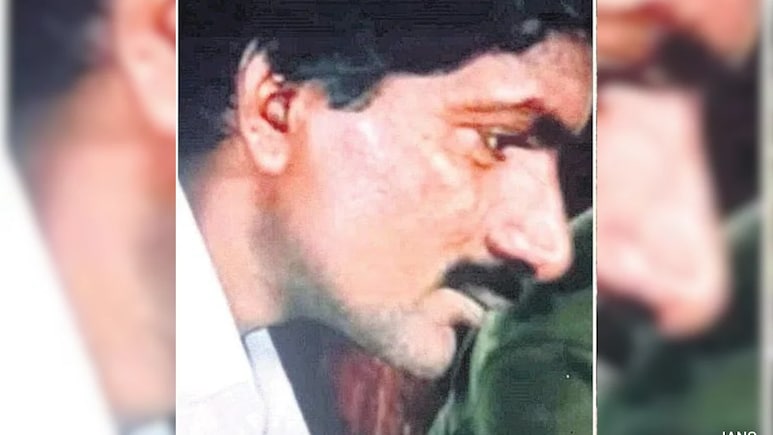
Receiving such an extraordinary call from Maharashtra CM Sharad Pawar raised SP Krishipal Raghuvanshi's heart rate. He was facing what was perhaps his biggest challenge since he had been posted to Gadchiroli: the abduction of Dharmarao Aatram, also known as Baba Aatram, a sitting MLA from the ruling Congress (I) party. Baba Aatram was not just any politician; he hailed from the esteemed Aatram family, whose influence and authority encompassed Gadchiroli and its surrounding regions.
Representing the Aheri Vidhan Sabha seat, Baba Aatram's legacy extended beyond politics. He was also an educationist and had played a pivotal role in establishing Gadchiroli as an independent district. The news of his abduction had sent shockwaves across the nation, triggering a sense of urgency and concern among the top echelons of the Congress party at the centre. The formidable reputation and widespread influence wielded by Aatram underscored the gravity of the situation. Krishipal and his team were under immense pressure to ensure that the MLA was found safely.
It was 1991 and preparations for the parliamentary elections were on in full swing. Former prime minister Rajiv Gandhi was confident of returning to power after a gap of two years. Two prime ministers, V. P. Singh and Chandrashekhar, had failed to sustain the government and mid-term elections had been announced. Gandhi was spearheading his party's campaign and touring across the country. Maharashtra was very important for any party or coalition that aspired to form a government at the centre. The state sent forty-eight members to the Lok Sabha, the third highest after UP and undivided Bihar.
When Gandhi heard about the abduction, he called CM Pawar, who was a member of Congress, and asked him to ensure Aatram's safe return. Gandhi feared that Congress's electoral performance would be adversely affected if Aatram was not available for the campaign. Under pressure from the president of his party, Pawar bypassed hierarchy and protocol to speak directly with Krishipal and had been keenly monitoring the rescue efforts.
This episode started on the afternoon of 27 April 1991. The political temperature in the Vidarbha region was as hot as the weather. Aatram had gone to Medpalli village to address a campaign meeting for his party's candidate, Shantaram Potdukhe. Aatram also had to attend the wedding of a party worker on the same day. With two major events scheduled for the day, there were over 1,000 people crowding the village. Aatram and his maternal uncle Ramachandra Talate stopped by a school to chat with the villagers. Suddenly, five men wielding automatic firearms emerged from the crowd and demanded Aatram and Talate go with them. The villagers protested and surrounded the armed men, refusing to allow Aatram to be taken away. The furious crowd was on the verge of lynching the Naxalites when the men pointed their rifles towards the civilians and threatened to fire.
Fearing a bloodbath, Aatram pacified the villagers and said that he was ready to go with the armed men. The crowd obeyed and the Naxals took the duo to the outskirts of the village, where another twenty armed men in green uniforms were waiting. Some villagers had followed them but retraced their steps when the Naxals threatened them. By this time, Aatram had realized that he was being abducted by PWG.
One of the Naxalites asked Aatram and Talate to sit on the ground. 'We have kidnapped you. Now we will send our demands to the government. Until they are met, you will remain with us. Please cooperate.'
Aatram was shocked by this turn of events. He had never been targeted by the Naxals, having never acted against them or said anything to provoke them. Considering how popular he was among the tribal population, it was believed that the Naxalites would never harm him. So far, Naxals had never touched anybody from the Aatram family to avoid inviting the ire of the Adivasis. Now, they had broken their self-made rule. Though Aatram's uncle was let go after a few hours, he remained under lock and key.
Soon after, the kidnappers revealed their demands through a pamphlet. Their primary demand was the release of a Naxal named Shivanna, along with sixteen other prisoners. Additionally, they wanted police camps removed from certain areas of the forest and for a Maoist memorial that was damaged in a police action to be rebuilt. The Naxals gave the government one day to meet their demands. If they failed to do so, the abductors threatened to kill Aatram.
A member of the Permili dalam, Shivanna had been arrested three years earlier under the stringent Terrorist and Disruptive Activities (Prevention) Act (TADA). Apart from being involved in the killing of several government officials and policemen, he had managed the finances of his group. Shivanna heavily extorted the bamboo contractors, demanding up to Rs 10 per tonne of bamboo. He was known for speaking roughly with the bamboo contractors and their workers. Once, after he misbehaved with some workers, they informed the police of his whereabouts. A trap was laid. When Shivanna came to collect money in Chandrapur, he was taken into custody. The arrest of such an important leader was an enormous blow to the local Naxal movement.
The Naxals in Maharashtra had repeatedly used this tactic of abducting important persons to press their demands. Days earlier, members of PWG had kidnapped a junior government engineer along with another officer. In another incident, PWG cadres held a constable from the neighbouring Bhandara district hostage. They released him after their demands were met. However, this was the first time that a politician of such a stature had been abducted by them.
At the time of Aatram's abduction, Krishipal was in Nagpur to meet with his superiors. After receiving a wireless message about the incident, he rushed back to Gadchiroli. Krishipal was surprised that the Naxals had abducted Aatram. According to the grapevine, the MLA had won his last election with their support.
The Naxals had a paradoxical relationship to the election process. They opposed elections, engaging in violence during the voting and counting days. In their eyes, the elections were nothing more than a pseudo-democratic way to strengthen class enemies. On the other hand, they were willing to accept money from candidates who wanted their approval. In fact, candidates could only campaign in Gadchiroli if they paid up. Krishipal assumed that Aatram might have failed to keep some of the promises he had made to the Naxalites, leading to his abduction. However, Aatram had consistently denied that he got any support from the Naxals, maintaining that this was a false narrative spread by his detractors.
Krishipal summoned the C-60 commandos, a specialized anti naxal force, to his office as soon as he reached Gadchiroli. Some of them were sceptical about the abduction.
'Sir, I can't believe that Naxals would ever kidnap Baba Aatram. The whole incident seems scripted. Do you think this could be a case of friendly kidnapping?' a commando asked. So-called 'friendly kidnappings' are cases where the abductors and abductee are hand in glove, working together for some ulterior motive.
'You may be right. The primary information we've received may seem suspicious but we can't sit on it, assuming it's a fake case,' Krishipal replied curtly. 'On paper, an MLA has been taken away by Naxals at gunpoint and we don't know his whereabouts. It's our responsibility to search for him. His life might genuinely be in danger. If something happens to him, our reputation will be tarnished.'
By this time, some of Krishipal's superiors had landed in Allapalli to discuss further course of action. They decided to mobilize all available police personnel to locate Aatram. Apart from the C-60 team, Krishipal had seven companies of the SRP at his disposal. He was allotted additional men and a company of the Border Security Force (BSF). A total of twenty-four companies from various law enforcement agencies were deployed under him. Since it was likely that Aatram was near Allapalli, the base camp for the operation was set up at the forest department's guesthouse there. The DGP asked two of Krishipal's superiors, the IG and DIG, to be present at the camp.
Usually, a topographic map was consulted ahead of such operations, providing a bird's-eye view of the region. But no topo-sheet was available at such short notice, so Krishipal had to rely completely on human intelligence to plan the rescue. Some officers were made to fetch intel while others conducted searches inside the jungle. Krishipal's team received conflicting information regarding Aatram's location. One informer claimed to have seen Aatram with the abductors towards the north of Allapalli, while another maintained they were in the south. Krishipal realized that the operation might stretch for many days and divided his men into day and night shifts. Although the Naxals had only given the government a day's time to accept their demands, the police were making operational decisions independent of the negotiations. It was two days before they could even procure topo-sheets from the Nagpur office of the Geological Survey of India.
While the police relentlessly searched the forests, Aatram and his abductors moved only after dusk. They hid out during the day, taking turns keeping a watch out for police movement. The Naxals had their own intelligence network that alerted them when search parties were nearby. There were a few occasions when the police came close enough for Aatram to see them, but he couldn't ask for help since his mouth was stuffed with a piece of cloth whenever a police team was around. However, the kidnappers didn't torture Aatram and behaved politely with him, offering him the same food they ate. The only discomfort was the sheer amount of walking. The Naxals constantly changed locations and crossed thirty to forty kilometres of forest every day. Once they reached the border of Madhya Pradesh, they changed course again to some other location.
Although the Naxals didn't threaten or misbehave with him, Aatram feared that he would be killed if their demands were not met. The dalam commander was kept abreast of the developments through the informers who came to their hideouts. He muttered expletives when they told him that the government was taking time to consider their demands. On such occasions, Aatram was petrified as he observed the enraged face of the commander. He also feared that he would be killed in the crossfire between Naxals and the cops.
With the Sunday deadline long passed, the government had still not taken a call on the demands. In return, there was no news from the Naxals about the fate of Aatram. When the search parties came up empty, the police broadcasted an appeal to the Naxals asking for some more time. Daily newspapers criticized the government's inaction and the opposition parties capitalized on this friction. Former MP and Janata Dal leader Vishweshwar Rao demanded the resignation of CM Pawar, stating that "Congress has no business to make claims of providing a stable government when it has not been able to provide security to its own MLA." BJP leader Sudhir Mungantiwar publicly claimed, "Aatram's kidnapping is the result of the paralysis of state administrative machinery."
On 2 May, a Nagpur Bandh was called by various organizations to protest Aatram's abduction. Markets, schools, colleges, eateries and bus services were shut for the day. Prakash Javadekar, a BJP politician, demanded that security personnel from the Central Government be deployed during the elections, as one couldn't rely on the Maharashtra Police for security. He feared that people wouldn't come out to vote because of the Naxal threat.
The situation was growing more precarious. The chief minister called Krishipal twice every day for an update on the progress of the search operation. Pawar was scheduled to visit Aheri to address a public meeting. Ahead of his visit, he called Krishipal and asked solemnly, "Tell me without any hesitation, is it possible to rescue Aatram within forty-eight hours? If yes, I will announce it to the gathering."
Krishipal knew he couldn't make such promises. 'Sir, we are trying our best but I can't give you any assurance on how long the rescue will take.'
It was then that Pawar told him that if Aatram was not found alive, the dead bodies of a few Naxals must be recovered alongside his.
(This is an excerpt from Jitendra Dixit's book "Troubleshooter," published last year by Pan Macmillan)
Disclaimer: The author and publisher of the book are solely responsible for the contents of the book or any excerpt derived therefrom. NDTV shall not be responsible or liable for any claims arising from the contents of the book, including any claims of defamation, infringement of intellectual property rights or any other right of any third party or of law.

