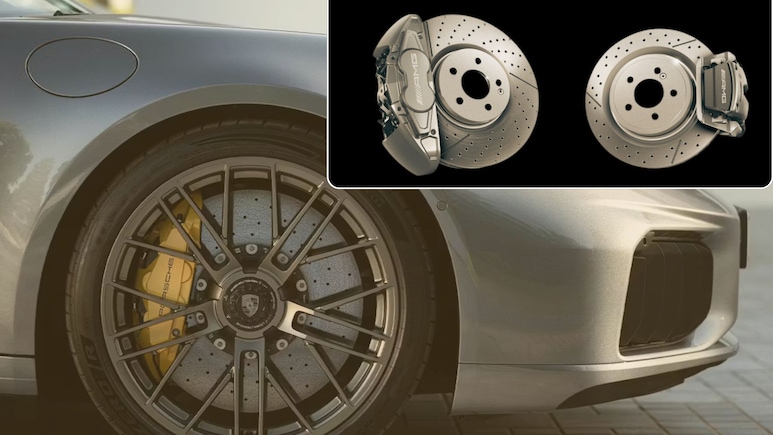
- Ceramic brakes use fibre-reinforced composites instead of conventional cast iron discs
- They are lighter by about 50%, reducing unsprung mass and improving vehicle dynamics
- Ceramic brakes resist corrosion, tolerate high temperatures, and reduce brake fade
Driving powerful performance cars-be it an AMG, a Lamborghini or a Porsche-isn't just about speed and sound. While acceleration delivers the thrill, what truly matters is the ability to slow down safely and consistently. That's where braking systems play a crucial role. Many high-end performance cars rely on ceramic brakes for this reason. But what exactly are ceramic brakes, and why are they trusted at high speeds? Let's take a closer look.
What Are The Elements In A Braking System?
The disc brake is a circular component, finished in metal. Behind each wheel sits a disc, which is paired with a metal clamping mechanism. The disc, known as the brake rotor, rotates with the wheel. When the brake pedal is pressed, hydraulic pressure forces the clamp-called the caliper-to squeeze the rotor, slowing the vehicle through friction. The brake pads, mounted inside the caliper, make direct contact with the rotor and are designed to wear over time.
Rotors are also wear components. Conventional rotors are typically made of cast iron, a material that is inexpensive, easy to manufacture, and reasonably effective at absorbing heat. However, cast iron rotors are also relatively heavy.
Performance Cars And Ceramic Brakes
Ceramic Composite Brakes (CCBs) use a ceramic fibre-reinforced composite instead of the cast iron employed in conventional brake discs. Their production is a highly controlled and intensive process. The composite structure is formed under high pressure, with aluminium particles integrated into the disc, followed by prolonged heat treatment at gradually increasing temperatures to achieve the required material properties. The result is a brake disc that is exceptionally hard, corrosion-resistant and capable of delivering consistent braking performance under repeated high loads.
Porsche was the first manufacturer to develop a ceramic composite disc with curved internal cooling channels, improving airflow and heat dissipation. Ceramic discs are perforated like steel rotors but are around 50 per cent lighter, reducing unsprung mass by up to 20 kilograms depending on the model. They also tolerate extreme temperatures, resist brake fade, generate significantly less brake dust and offer a substantially longer service life. The primary drawback remains their high cost.
Track Latest News Live on NDTV.com and get news updates from India and around the world
