






Artificial Intelligence, or AI, has enhanced productivity across nearly all corners of the economy, but it carries a significant amount of threat as well. Organisations, especially financial institutions, are worried about intensifying AI-related cyberattacks. Current systems are not, however, equipped to tackle such a threat.
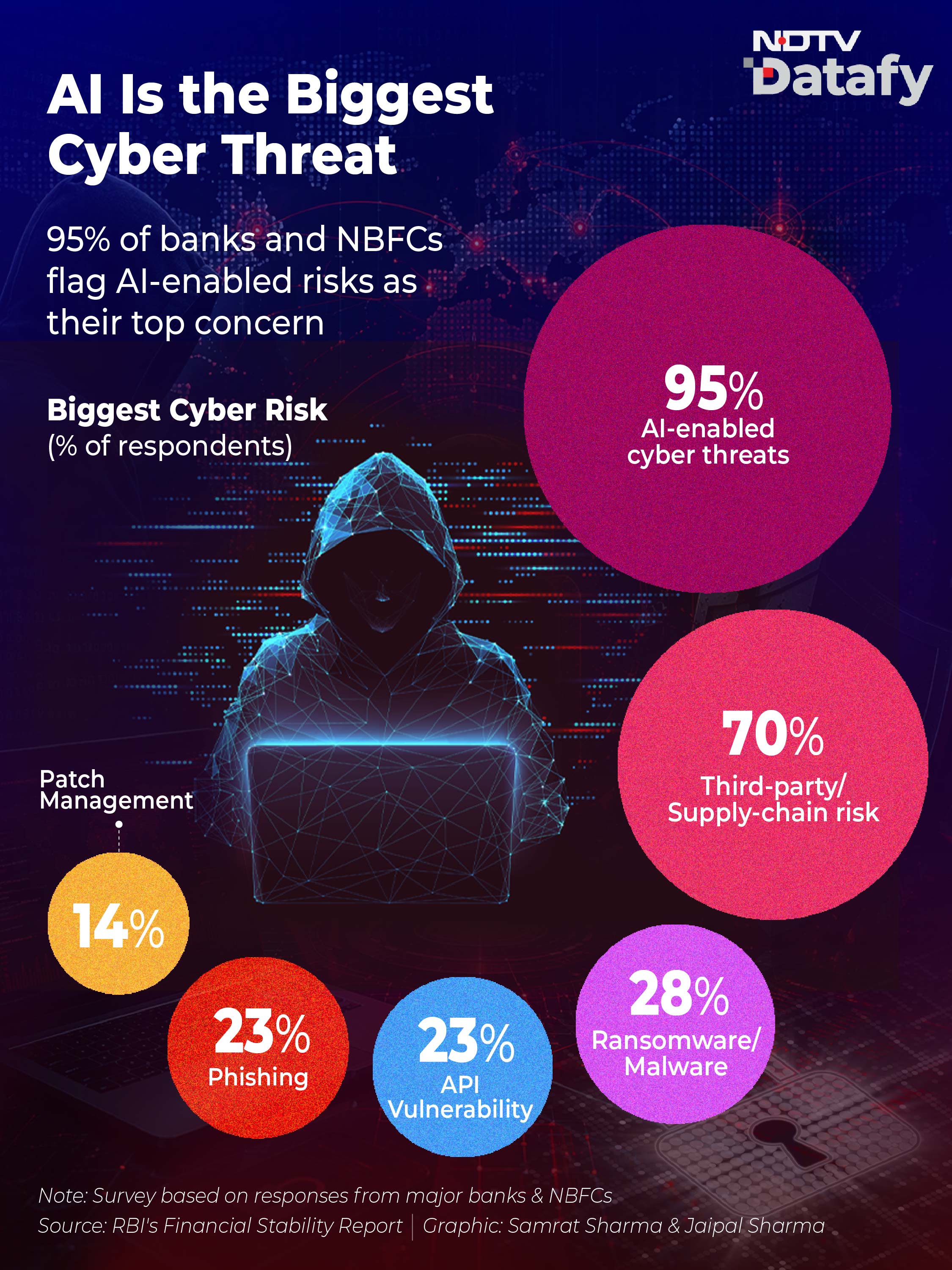
"AI-enabled cyber threats emerged as the leading perceived risk over the next 12 months," the RBI said in its latest Financial Stability Report. Rapid advances in AI can increase the sophistication, speed and scale of cyber incidents, it added.
While 23-28 per cent of the respondents believed phishing, ransomware, malware, application vulnerability and APIs were the most significant risks, 95 per cent considered AI-enabled cyber threats as the riskiest over the next 12 months. The second most significant risk was third-party or supply chain risk, which was flagged by 70 per cent of the respondents.
Institutions Not Prepared
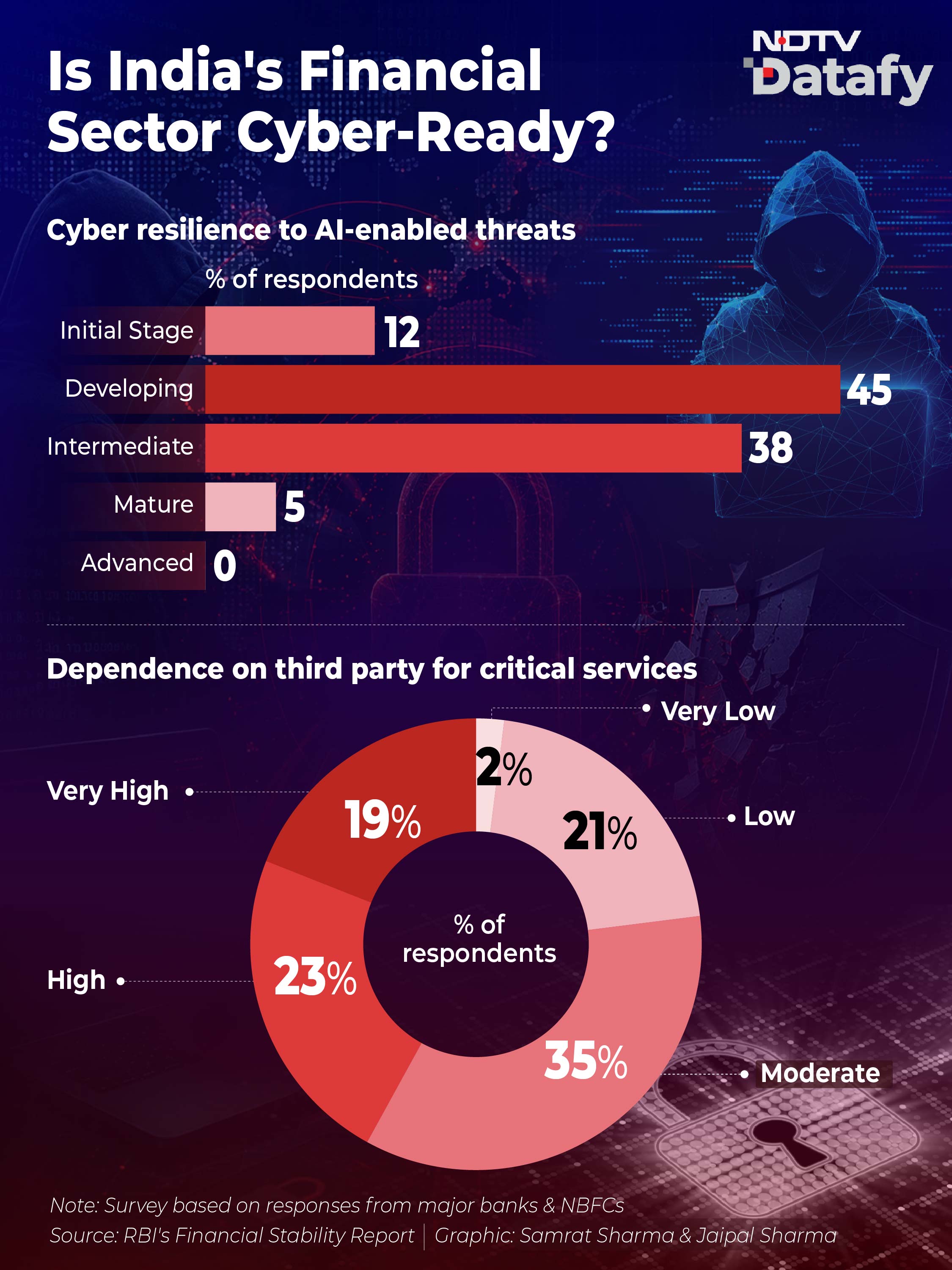
Although AI-related cyberattacks are the leading concern for the times to come, the preparedness level is not satisfactory. While zero per cent of the respondents classified themselves as completely resilient against these emerging AI-enabled cyber threats, 57 per cent of them responded that they are in the initial or developing stage. Another 38 per cent said they are in the intermediate stage while only five per cent said that they are in a mature stage to tackle AI-related cyber threats.
High Dependence
Third-party dependency and supply chain risk was ranked as the second most important cyber risk in the survey. Despite this, 93 per cent of respondents were partially or substantially dependent on external vendors for cybersecurity-related functions such as security operations center monitoring, cloud security, incident response, threat intelligence and vulnerability assessments.
In fact, 77 per cent of the respondents said that they depend on third parties for critical services and applications.
Geopolitical Tensions
Wars and geopolitical conflicts often heighten cybersecurity risks, prompting financial institutions to stay alert to rapidly evolving digital threats. Amid the current global environment, institutions are expected to strengthen their cyber vigilance and resilience measures.
Highlighting this concern, the RBI noted that 42 per cent of surveyed institutions believe geopolitical uncertainty has increased the probability of cyberattacks.
Cyber incidents can disrupt critical financial infrastructure by causing service outages, data breaches, and interruptions to payment systems. Beyond operational disruptions, such attacks can also weaken public confidence in the financial system. India remains particularly vulnerable, recording a comparatively high volume of cyberattacks relative to many other emerging market economies.
Track Latest News Live on NDTV.com and get news updates from India and around the world

