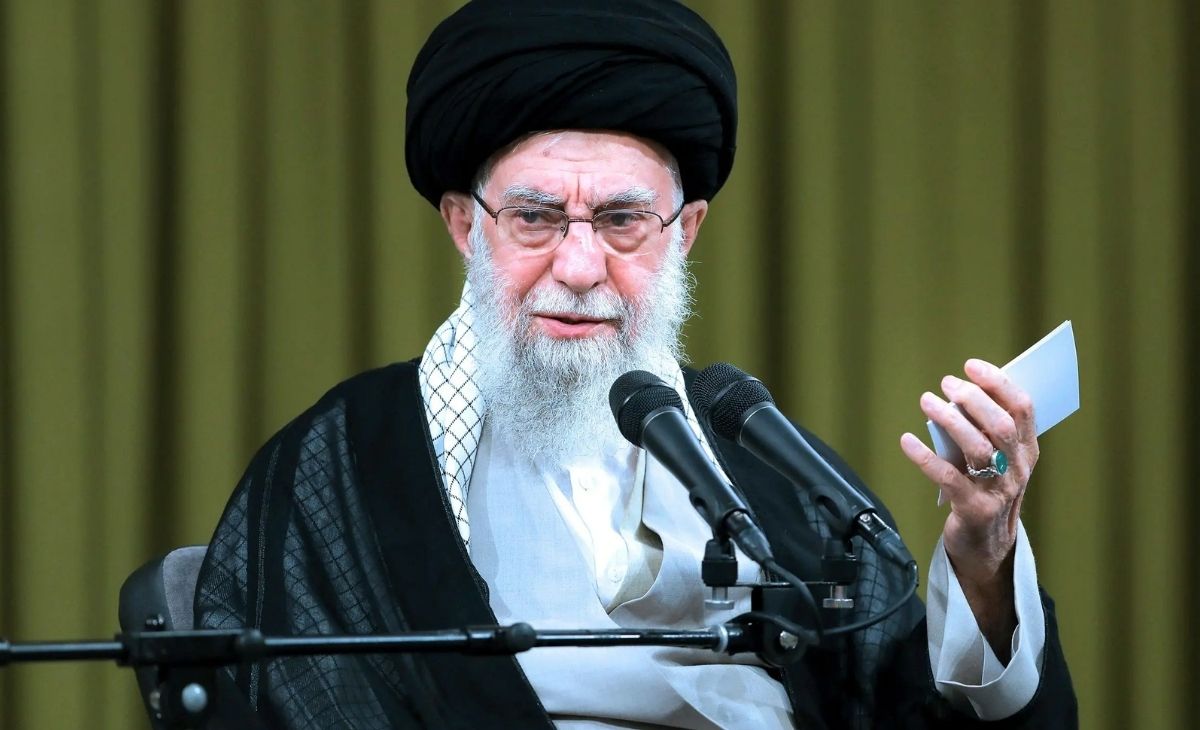
Iran stares at an uncertain future after Tehran confirmed the death of Iranian Supreme Leader Ayatollah Ali Khamenei in a US-Israel joint strike on Tehran. While the US and Israel are calling for regime change in Tehran, Iran's Islamic Revolutionary Guard Corps has launched attacks in hopes of a power grab.
Meanwhile, Iran's two rival opposition figures are also jockeying for position in a new Iran. After US strikes, opposition leader Maryam Rajavi and exiled crown prince Reza Pahlavi released dual messages urging Iranians to unite — while also making clear their different visions for the Islamic Republic's future.
Until the time Iran decides on its new leader, Iran's news agency IRNA reported that a leadership council made up of the president, the judiciary chief, and a jurist from the Guardian Council will temporarily assume the duties of Iran's supreme leader.
What Trump Said About Iran's New Leader
After announcing on Truth Social that Iran's Supreme Leader was assassinated, US President Donald Trump said there are “some good candidates” to lead Tehran.
In a phone interview with CBS News, he said, “I know exactly who, but I can't tell you.”
When pressed on whether there is someone in Iran he would prefer to see assume leadership, Trump said, “Yes, I think so. There are some good candidates.” He did not elaborate further on whom he was referencing.
Iran's Two Oppositionists Figures
Rajavi is the president-elect of the Paris-based National Council of Resistance of Iran (NCRI). In a message to Iranians, she called on Iranians to overthrow the country's ruling clerical regime and to create a democratic republic.
“Our homeland continues to endure greater pain and destruction under the rule of religious fascism,” Rajavi said, according to a report by The New York Post, as conflict intensifies over Tehran's nuclear and missile programme.
She urged Iranians — particularly the nation's “courageous youth” — to protect civilians amid mounting instability.
Founded after the 1979 Islamic Revolution, the NCRI presents itself as a government-in-exile. According to the party, it has a ready blueprint for a six-month transitional administration that would organise free elections and transfer sovereignty to the people.
“Now is the time for solidarity,” Rajavi said. “[Iranians] reject both the Shah and the mullahs,” she added, dismissing any return to monarchy.
Meanwhile, Reza Pahlavi, the son of Iran's last monarch, also said in a post on X that he has plans for a democratic transition if the Islamic Republic collapses.
In a post on X, Pahlavi called US action a “humanitarian intervention” aimed at the regime, and not the Iranian people.
“The final victory will still be achieved by us,” he wrote. “It is we, the people of Iran, who will finish this task in this final battle. The time to return to the streets is approaching.”
Both leaders also appealed directly to Iran's military and security forces to make way for a democratic transition of power.
Rajavi asked members of the Islamic Revolutionary Guard Corps and other security bodies to lay down their weapons and side with the people. Pahlavi, meanwhile, warned security personnel that they would “sink with Khamenei's ship” if they continued defending the regime.
The Power Grab Threat
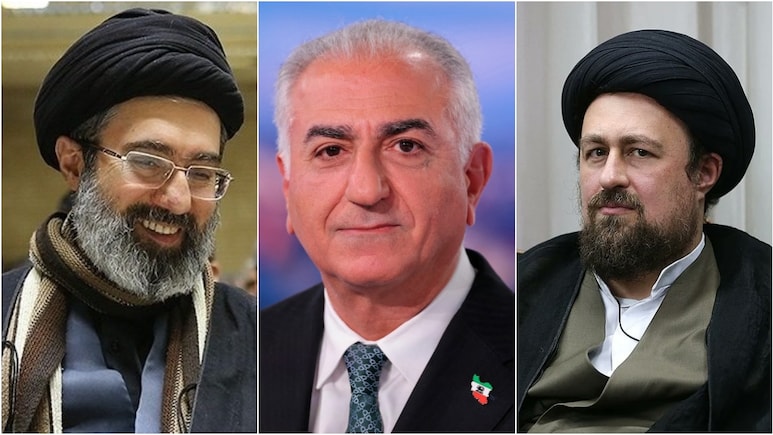
Experts have also warned that in the absence of Khamenei, Iran's Islamic Revolutionary Guard Corps could also make a power grab. Khamenei never publicly disclosed who would be his successor, but his second-eldest son, Mojtaba Khamenei, has long been seen as the rational successor to the Islamic regime, Reuters reported, citing sources with knowledge.
The 56-year-old is in line with his father's hardline policies, insiders told the outlet.
Another regime holdover is Hassan Khomeini, the grandson of the father of the Islamic Revolution, Ruhollah Khomeini.
Hassan Khomeini, 53, has emerged within the last month as a serious candidate and represents a more conciliatory choice internationally and domestically than Khamenei, according to the New York Post report.
How Succession Works In Iran
The contours of a complex succession process began to take shape the morning after Khamenei's assassination. As outlined in its constitution, Iran on Sunday formed a council to assume leadership duties and govern the country.
The council is made up of Iran's sitting president, the head of the country's judiciary and a member of the Guardian Council chosen by Iran's Expediency Council, which advises the supreme leader and settles disputes with parliament.
Iran's reformist President Masoud Pezeshkian and hard-line judiciary chief Gholamhossein Mohseni Ejei are its members who will step in and “temporarily assume all the duties of leadership.”
Though the leadership council will govern in the interim, an 88-member panel called the Assembly of Experts “must, as soon as possible” pick a new supreme leader under Iranian law.
The panel consists entirely of Shiite clerics who are popularly elected every eight years and whose candidacies are approved by the Guardian Council, Iran's constitutional watchdog. That body is known for disqualifying candidates in various elections in Iran, and the Assembly of Experts is no different. The Guardian Council barred former Iranian President Hassan Rouhani, a relative moderate whose administration struck the 2015 nuclear deal with world powers, from election for the Assembly of Experts in March 2024.
Clerical deliberations about succession and machinations over it take place far from the public eye, making it hard to gauge who may be a top contender.
There has been only one other transfer of power in the office of the supreme leader of Iran, the paramount decision-maker since the country's 1979 Islamic Revolution. In 1989, Grand Ayatollah Ruhollah Khomeini died at age 86 after being the figurehead of the revolution and leading Iran through its bloody eight-year war with Iraq. This transition now comes after Israel launched a 12-day war against Iran in June 2025 as well.
The supreme leader is at the heart of Iran's complex power-sharing Shiite theocracy and has the final say over all matters of state. He also serves as the commander-in-chief of the country's military and the powerful Revolutionary Guard, a paramilitary force that the United States designated a terrorist organization in 2019 and which Khamenei empowered during his rule. The Guard, which has led the self-described “Axis of Resistance,” a series of militant groups and allies across the Middle East meant to counter the U.S. and Israel, also has extensive wealth and holdings in Iran.
Track Latest News Live on NDTV.com and get news updates from India and around the world


