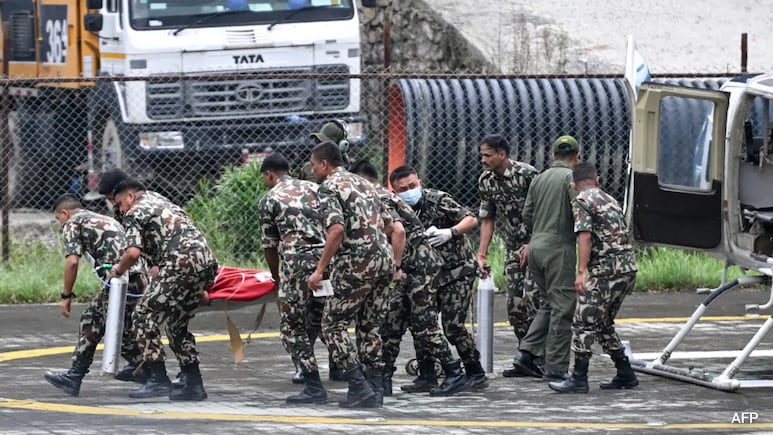
At least two people have been rescued alive after being buried in a hydropower tunnel for nine days after deadly flash floods hit Nepal, leaving them trapped in deep mud. The two men were rescued during an ongoing operation at the Trishuli 3A tunnel, a hydropower project in one of the areas worst affected by the catastrophic Himalayan flooding.
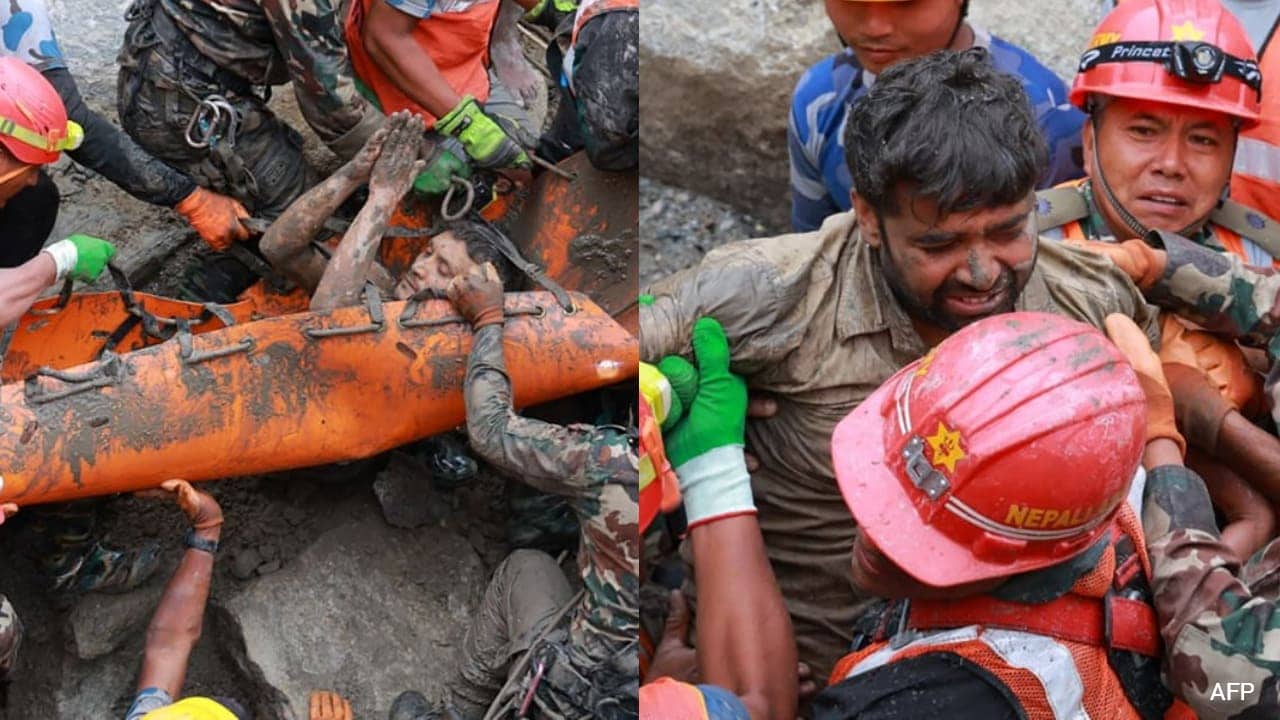
Sanjay Shah, a foreman at Upper Trishuli 3A, and Kabir Maharjan, a mechanical supervisor, were rescued from a depth of 170 meters inside the tunnel, according to Nepal Army spokesperson Brigadier General Raja Ram Basnet.
Shah, 30, was the first to be rescued and was in a "stable condition." Maharjan, who was rescued second, was in intensive care, the Nepal prime minister's office said.
ALSO READ: 2 Nepal Workers Survive 9 Days Trapped In A Tunnel: What Happens To The Body And Mind
The Rescue Video
A video posted by the Nepal Army showed a rescue team entering the air pocket in the narrow tunnel, where the two men were stuck. Men in orange vests can be seen strapping a man on a makeshift stretcher before carrying him outside.
१० दिनको कठिन संघर्षपछि—दुई जीवनको पुनर्जन्म, आशाको अद्भुत विजय#Trishuli3A सुरुङबाट दुई जनाको जिवितै उद्धार#NepaliArmy#नेपालीसेना#BhotekoshiFlood pic.twitter.com/MTnY9UlOG5
— Nepali Army (@NepaliArmyHQ) September 4, 2026
Rescuers called their discovery a "miracle" after the August 26 glacial and mountain collapse on the China-Nepal border, which has killed at least 1,280 people and left more than 5,500 missing.
ALSO READ: The Men Who Survived Blocked Nepal Tunnel For Nine Days
How The Two Were Rescued
According to experts and those monitoring the rescue operation, the deep underground sections of the massive 4.5-kilometer-long tunnel structure contained a stable air pocket with breathable oxygen and trapped water.
Australian rescue expert Arnold Dix, who has been supporting the operation remotely, explained that as floodwaters surged, workers likely ran upward through the tunnel, essentially being chased by rising water, boulders, sediment, and mud.
While the tunnel entrances were heavily choked by mud, boulders, and water for the past nine days since the glacier collapse and flood, the specific inner chamber where the men sheltered protected them from drowning or direct impact.
Dix told news agency AFP that earlier on Friday, teams at the Trishuli 3A hydropower project believed they had heard a faint response from inside the tunnel.
"They believe they received a faint response from inside saying, 'hunchha', yes or OK," Dix, president of the International Tunnelling and Underground Space Association, told AFP, adding that he was en route to Nepal to join the rescue effort.
He said rescuers had called into the tunnel: "Don't worry, we are rescuing you."
Experts believe the emergency power inside the tunnel likely failed early on, and two rescued men survived without light, relying on whatever water and food supplies they could find inside and rationing their physical energy in the dark, damp underground environment until rescuers detected their voices using listening devices and bored into the blockage.
The rescue of two men has renewed hope for at least 35 additional workers believed to be trapped inside this specific tunnel.
ALSO READ: 2 Rescued Alive From Hydropower Tunnel 9 Days After Nepal Floods
The Search Continues
Searches were, meanwhile, continuing at the Trishuli 3A tunnel, where the two men were rescued, as well as multiple other sites, with at least 12 hydropower projects smashed by the floods. Rescuers have spent the past nine days clearing tons of debris using excavators while simultaneously pushing in pipes to pump clean air inside and prevent the air from turning toxic.
The government had initially said it believed more than 100 workers could be alive inside multiple tunnels.
Nepali rescuers, aided by experts from India, China, and South Korea, have continued searching for survivors feared trapped inside hydropower tunnels, but teams have repeatedly hit walls of hard-packed debris.
Track Latest News Live on NDTV.com and get news updates from India and around the world


