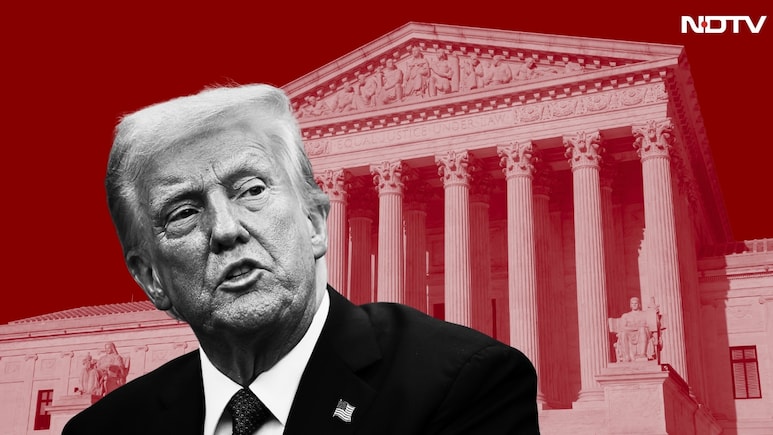
The US Supreme Court has upheld the principle of birthright citizenship, ruling against President Donald Trump's attempt to change who counts as an American citizen at birth.
On Tuesday, the court rejected an executive order from Trump that sought to deny citizenship to children born in the United States to parents who are in the country illegally or on a temporary basis.
The court, on the final day of its term, ruled 6-3 to maintain the right to American citizenship for nearly everyone born on US soil. Earlier, lower courts blocked the move. The Supreme Court agreed in a majority opinion penned by Chief Justice John Roberts.
"Children born in the United States to parents unlawfully or temporarily present are 'subject to the jurisdiction' of the United States and are citizens at birth under the Fourteenth Amendment's Citizenship Clause," Roberts wrote.
“Citizenship, then and now, was the right to have rights, to freely participate in our political community. The Framers of the Fourteenth Amendment extended that promise to ‘every free-born person in this land. We keep that promise today,” he wrote.
Minutes before the ruling was announced, Trump shared an article on his social media platform Truth Social headlined "Trump's efforts to reverse birthright citizenship may succeed with or without SCOTUS." According to a report by the right-leaning US outlet Just The News, several Congressional Republicans have legislation pending that could achieve much the same outcome a different ruling would have delivered.
Republican Representative Brian Babin of Texas told the platform, "American citizenship is a priceless privilege that must be protected, not exploited. We must restore integrity to our immigration system, uphold the rule of law, and protect the value of American citizenship for generations to come."
The ruling keeps in place the long-standing judicial reading of the 14th Amendment, which has historically guaranteed citizenship to those born on American soil.
The amendment was originally intended to ensure that Black people, including former slaves, had citizenship, although the Citizenship Clause itself is written more broadly. It states: "All persons born or naturalised in the United States, and subject to the jurisdiction thereof, are citizens of the United States and of the State wherein they reside."
Trump personally attended the oral arguments on birthright citizenship at the Supreme Court in April. His administration had argued that the widely accepted view of citizenship is mistaken. Officials claimed that children of noncitizens are not "subject to the jurisdiction" of the United States and are therefore not entitled to citizenship.
The birthright citizenship order, which Trump signed on the first day of his second term, forms part of his administration's broader immigration crackdown. It was also the first of Trump's immigration-related policies to reach the Supreme Court for a final ruling.
Track Latest News Live on NDTV.com and get news updates from India and around the world


