- US President Trump was not in Islamabad but stayed in constant contact during Iran talks
- US delegation spoke to Trump "consistently" during 21-hour long peace talks with Iran
- US sought a fundamental Iranian pledge against nuclear arms, which was not secured
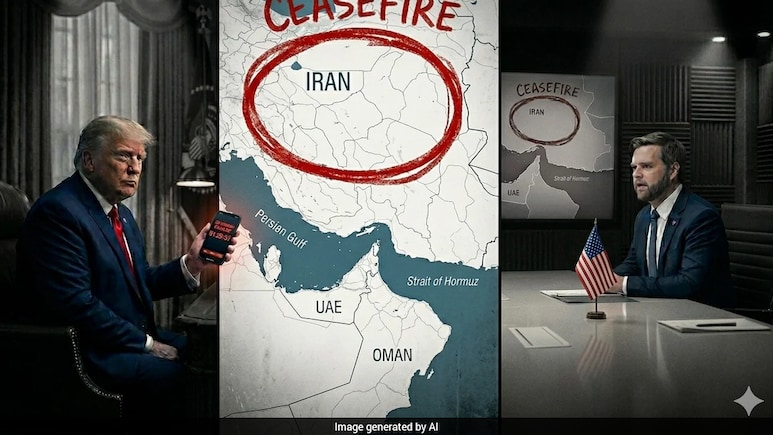
US President Donald Trump was not physically in Islamabad for the peace talks with Iran, but he was in constant touch with his team leading the negotiations, hoping to end the Middle East conflict. The US delegation, led by Vice President JD Vance, talked to Trump a "dozen times" during multiple rounds of talks with Iran in Pakistan. The talks, however, remained inconclusive.
The peace talks mediated by Pakistan lasted 21 hours on Saturday but failed to produce any result, Vance said during a media briefing early today.
When asked how often he communicated with the President throughout those rounds of negotiations, Vance said: "We were talking to the President consistently. I don't know how many times we talked to him, a half dozen times, a dozen times over the past 21 hours."
Vance said the delegation also spoke to Admiral Brad Cooper, Secretary of War Pete Hegseth, Secretary of State Marco Rubio, and the entire national security team.
"We talked to Scott Bessent (Treasury Secretary) a number of times," he added.
Elaborating on the conversations they had, Vance said: "We were constantly in communication with the team because we were negotiating in good faith. And we leave here with a very simple proposal, a method of understanding that is our final and best offer."
Why Did US-Iran Talks Crumble
Vance refused to go into details and negotiate in public after 21 hours of private talks, but he did mention that the core dispute was on nuclear weapons.
"The simple fact is that we need to see an affirmative commitment that they will not seek a nuclear weapon and they will not seek the tools that would enable them to quickly achieve a nuclear weapon," Vance said, adding that it is the "core goal of the President (Donald Trump)", and that is what they attempted to achieve through negotiations.
Trump's veep made it clear that the US sought a "fundamental commitment of will for the Iranians not to develop a nuclear weapon" in the long term but found it missing.
"We haven't seen that yet. We hope that we will," Vance said.
Iran blamed the US' "unreasonable demands" for the standoff in the Islamabad talks aimed at ending war in the Middle East, Iranian state broadcaster IRIB said on Sunday.
"The Iranian delegation negotiated continuously and intensively for 21 hours in order to protect the national interests of the Iranian people; despite various initiatives from the Iranian delegation, the unreasonable demands of the American side prevented the progress of the negotiations. Thus the negotiations ended," IRIB said on Telegram.
Track Latest News Live on NDTV.com and get news updates from India and around the world


