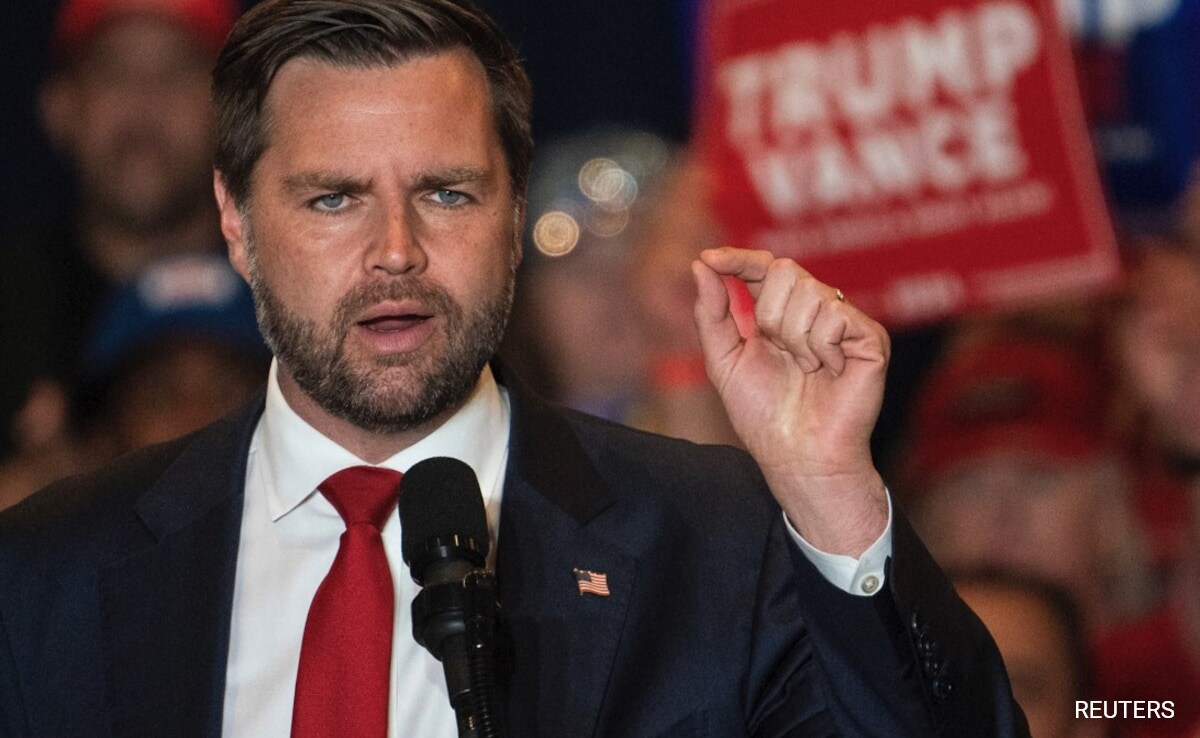
US Vice President JD Vance has blamed Pakistan's freedom of the press for the delay in releasing the full text of the US-Iran peace deal, which was signed recently.
Speaking in a podcast called 'Interesting Times with Ross Douthat', Vance said that although the US wanted to release the agreement on June 15, they could only do so two days later.
"We actually wanted to get it out. I think part of the misalignment here is that in the Pakistani and Qatari systems, they don't quite have the First Amendment and freedom of the press," Vance said.
JD Vance:
— Aditya Raj Kaul (@AdityaRajKaul) June 20, 2026
In the Pakistani and Qatari systems, they don't quite have the First Amendment and freedom of the press.
Source: NYT pic.twitter.com/gO6wULZhi5
In the United States, the First Amendment is part of the Bill of Rights. It prevents the government from infringing upon five fundamental freedoms.
It prohibits the government from creating laws that establish a state religion, censor the press, or restrict citizens from expressing themselves freely, assembling peacefully, or petitioning for change.
He said that in Pakistan, there is no expectation for the text to be released for the people to interrogate and analyse it.
"And so, there isn't this expectation that the text is going to be out there for the American people to actually interrogate and look at and analyse and understand for themselves. But it will be out," Vance added.
His comments come after seething criticism from Democrats who questioned why the administration withheld the text of the Memorandum of Understanding (MoU) for two days following US President Donald Trump's June 15 announcement of the interim agreement.
In the Reporters Without Borders World Press Freedom Index, Pakistan was placed at the 153rd position out of 180 countries in 2026.
Iran-US Agreement
The interim US-Iran agreement signed this week has already reopened the Strait of Hormuz, which Iran had closed as the war unfolded – cutting off the global economy from significant supplies of oil and natural gas. The deal also envisages the relaunch of talks on Iran's nuclear programme, a core issue in the war.
The talks in Switzerland were expected to focus on Iran's nuclear programme.
The interim deal gives negotiators 60 days to come up with a nuclear agreement, but that can be extended. It outlines lucrative incentives if Iran does reach a new agreement, including the eventual lifting of all international sanctions and a $300 billion fund for postwar reconstruction.
Iran has already won some concessions. Following the signing of the interim deal, the US lifted its blockade of Iran's ports and is allowing it to sell its oil freely. The deal also calls for Iran's assets to be unfrozen, though it's not clear how quickly.
Track Latest News Live on NDTV.com and get news updates from India and around the world


