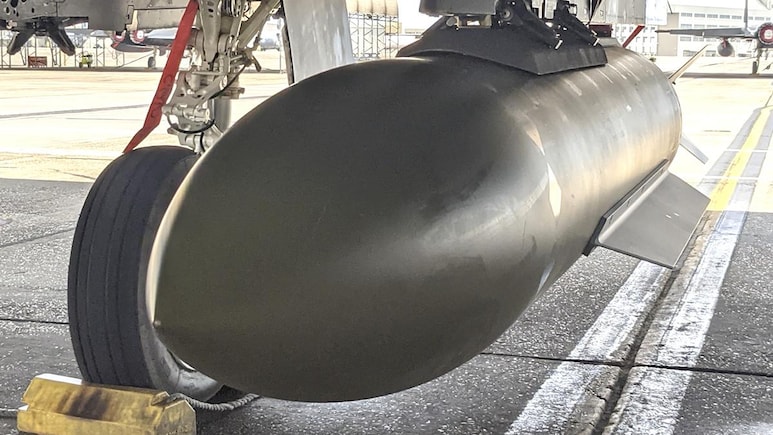
The United States on Tuesday dropped 5,000-pound GBU-72 'bunker buster' bombs on Iran missile launch sites along the Strait of Hormuz, marking a significant escalation in fighting in the Middle East. The bombs targeted 'hardened' pads firing anti-ship cruise missiles at commercial vessels and oil tankers in the Hormuz, CENTCOM said on X.
Hours ago, U.S. forces successfully employed multiple 5,000-pound deep penetrator munitions on hardened Iranian missile sites along Iran's coastline near the Strait of Hormuz. The Iranian anti-ship cruise missiles in these sites posed a risk to international shipping in the… pic.twitter.com/hgCSFH0cqO
— U.S. Central Command (@CENTCOM) March 17, 2026
This is the second time in less than a year 'bunker busters' have been dropped on Iran.
In June 2025 USAF B-2 'Spirit' stealth bombers dropped over a dozen GBU (Guided Bomb Unit)-57 MOPs on three Iranian nuclear facilities, i.e., underground sites at Fordow, Isfahan, and Natanz. Those were much more powerful; each MOP, or Massive Ordnance Penetrator, tipped the scales at 30,000 pounds and can only be carried by the B-2.
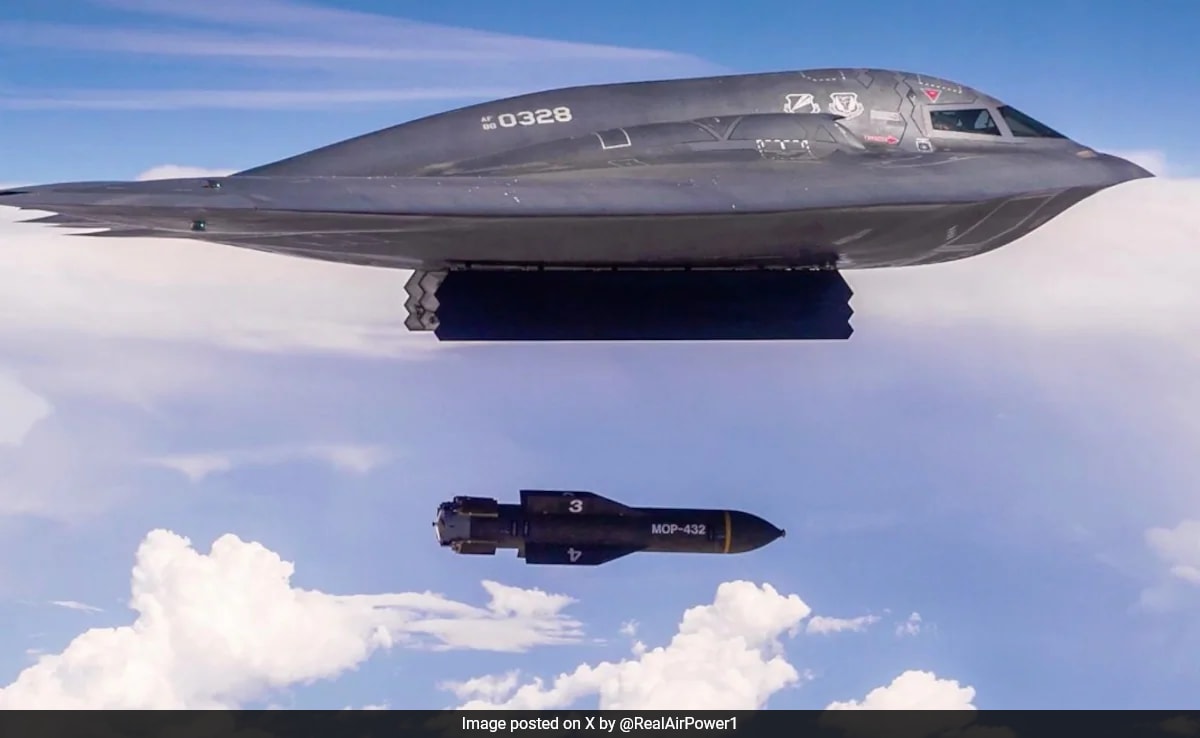
The GBU-57 being dropped by a B-2 'Spirit' stealth bomber.
It was also the first time the US had fired GBU-57s in anger.
EXPLAINED | GBU-57, Only 'Bunker Buster' Capable Of Hitting Iran's Nuclear Sites
So what are 'bunker busters'?
Conventional bombs detonate on or near the target and damage is caused by the blast itself and resulting fragmentation. This works against any exposed target.
But it is less effective against targets - such as missile launch pads, command centres, or nuclear sites - built with layers of reinforced concrete and buried deep underground.
'Bunker busters' are designed with hardened steel casings that allow them to punch through layers of soil and concrete, and explode only after reaching specific depths.
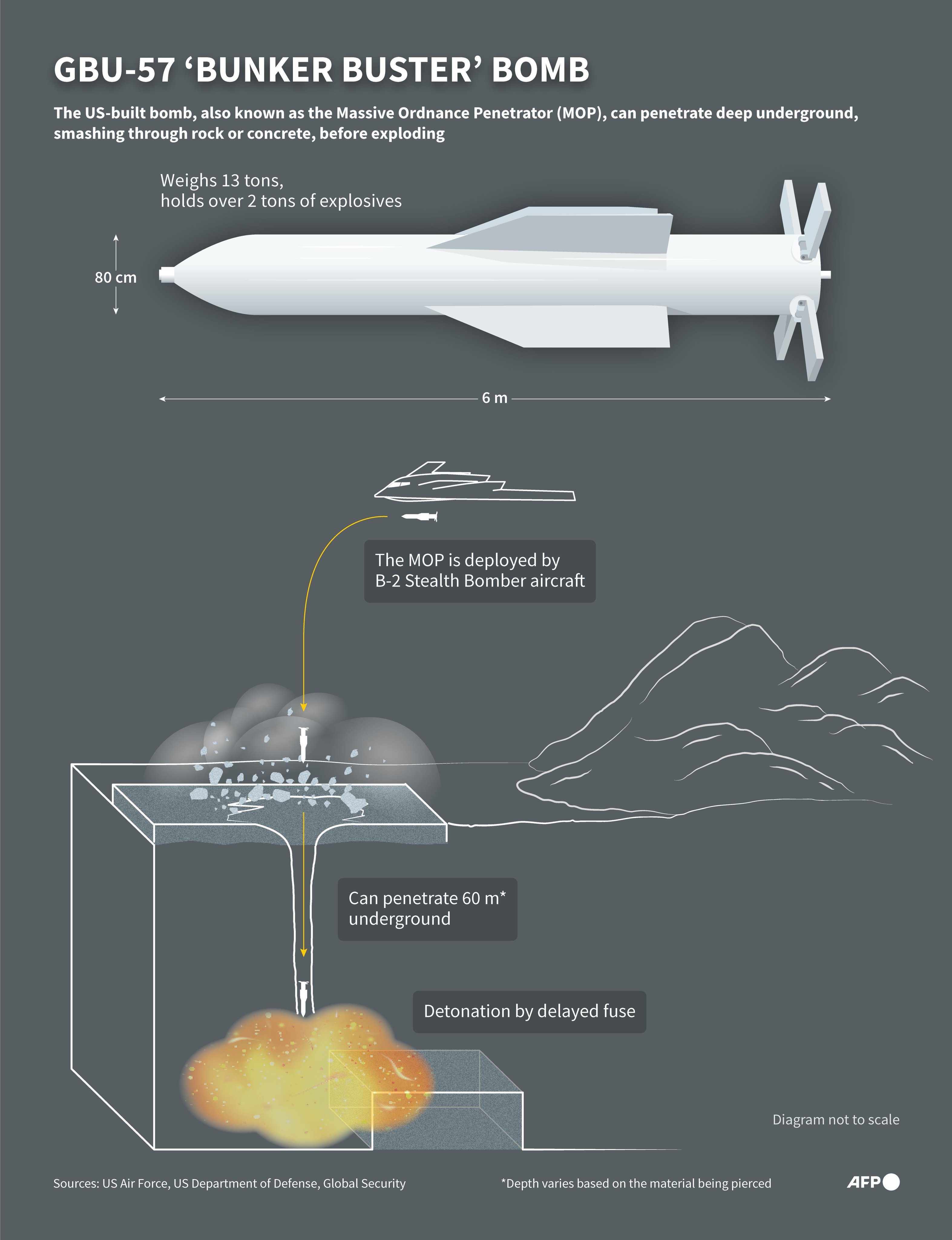
How GBU-57 'bunker busters' work. Credit: AFP
"They actually often have smaller explosive payloads... but it is the casing that allows them to dig into the ground, kind of like a drill, and then destroy these targets," Ryan Brobst, a munitions expert at US-based think tank Foundation for Defense of Democracies, told broadcaster NPR.
Some even use HTSF, or a 'hard target smart fuze', that allows it 'count' floors it passes through or changes in density, when it enters an open chamber like a missile silo, before exploding.
Some are even fitted with microphones so it detonates only when it hears voices.
What makes a 'bunker buster' is dangerous not the volume of explosives it packs - though that is sizeable too - but because it can time the explosion to reach targets other bombs cannot.
The GBU-72 used against Iran this week are part of a new generation of 'penetrator bombs' that were developed at an estimated cost of US$288,000 per piece. Significantly, these can be carried by bombers, such as the B-2, and fighter jets, expanding operational capabilities.
READ | US Hits Iran Missiles Near Hormuz With 2,200 kg 'Bunker Buster' Bombs
Equally significantly, these seem to slot into the space between lower-strength 'bunker busters' like the BLU (Bomb Live Unit)-109, which can drill through four to six feet of reinforced concrete, and the GBU-57 MOP that can reportedly reach targets through 60 feet barriers.
And it sits several notches above its smaller cousin, the GBU-28, in terms of lethality.
'Bunker busters' aren't exactly new weapons; they've been around since World War II and the BLU-109, for example, entered service in 1985. But it wasn't till American military operations in Afghanistan and Iraq - countries with mountainous terrain and deep caves within which command centres were set up - that a need for precision-guided bombs emerged.
Track Latest News Live on NDTV.com and get news updates from India and around the world


