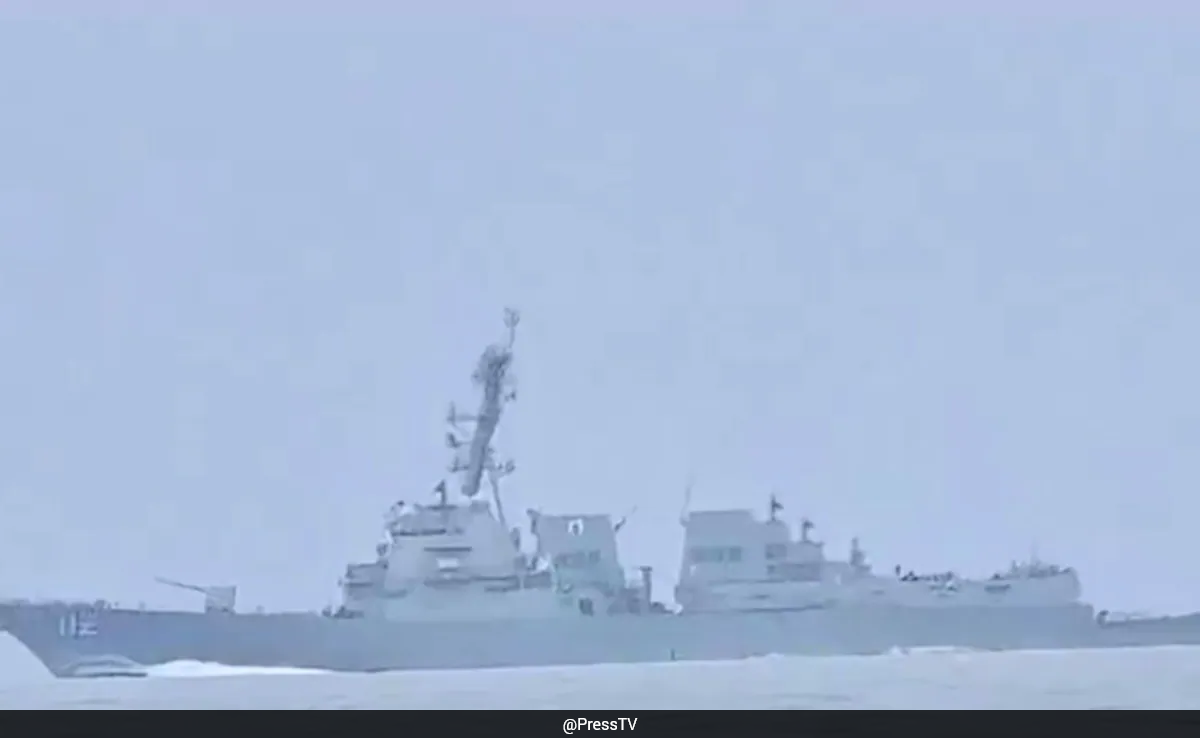
The first alleged attempt by US Navy warships to transit the Strait of Hormuz since the start of the US-Iran war has brought contradictory accounts with Washington claiming a successful passage for mine-clearance operations and Tehran insisting the ships were intercepted and turned back.
The USS Frank E Peterson and USS Michael Murphy, both Arleigh Burke-class guided-missile destroyers, entered the strait on April 11 as part of what the US Central Command (CENTCOM) described as a mission to set conditions for clearing sea mines laid by Iran's Islamic Revolutionary Guards Corps (IRGC).
-

-
 Andrew Ng On AI At Scale: Building The Intelligence Economy | NDTV World Summit 2026
 -
 NDTV World Summit 2026: Behind The Scenes As Ayush And Vedika Preview Two-Day Mega Event
 -
 Who Is Rajiv Mehta? Lilavati Hospital Trustee To Speak At NDTV World Summit 2026
 -
 Ex-CIA Director To Decode 'War In Times Of AI' At NDTV World Summit
 -
 From Call Centre To Billion-Dollar Disruptor: Nikhil Kamath At NDTV World Summit
 -
 'Every 5 Years, You'll See A New India': Swami Sarvapriyananda Ahead Of NDTV World Summit
 -
 Alain Ebobisse, Africa50 CEO, To Attend NDTV World Summit 2026. All About Him
 -
 Kriti Sanon At NDTV World Summit: A Look At Her Career And Business Ventures
 -
 Ex-CIA Director To Decode 'War In Times Of AI' At NDTV World Summit
 -
 Who Is Vikram Rai, CEO, South Asia GE Aerospace, Set To Attend The NDTV World Summit 2026
"Today, we began the process of establishing a new passage and we will share this safe pathway with the maritime industry soon to encourage the free flow of commerce," CENTCOM commander Admiral Brad Cooper said.
Iran rubbished the CENTCOM version, with the Islamic nation's military spokesperson saying "the initiative for the passage and movement of any vessel is in the hands of the armed forces of the Islamic Republic of Iran." The IRGC also warned of a strong response to any American military vessel attempting passage.
Iran's state broadcaster Press TV quoting "highly placed military-security sources" said its cruise missiles locked onto the destroyers and attack drones were deployed, forcing the US ships to retreat within a 30-minute ultimatum.
Press TV Exclusive: US destroyers' Strait of Hormuz transit stunt failed, came close to destructionhttps://t.co/zVeCCKGJlO https://t.co/m348SyV1uz pic.twitter.com/KhKXTTwWA5
— Press TV 🔻 (@PressTV) April 12, 2026
The exclusive report alleged the American vessels had attempted to disguise themselves as Omani commercial ships by spoofing their Automatic Identification System signals. These claims could not be independently confirmed.
A US official told the news website Axios the ships crossed the strait from east to west and then back through to the Arabian Sea, and that Washington received no warning from Iran of any kind.
Control of the Strait of Hormuz is one of the principal points of disagreement in the Islamabad negotiations, with Iran insisting it must retain leverage over the waterway as part of any final deal, a position Washington has called a non-starter.
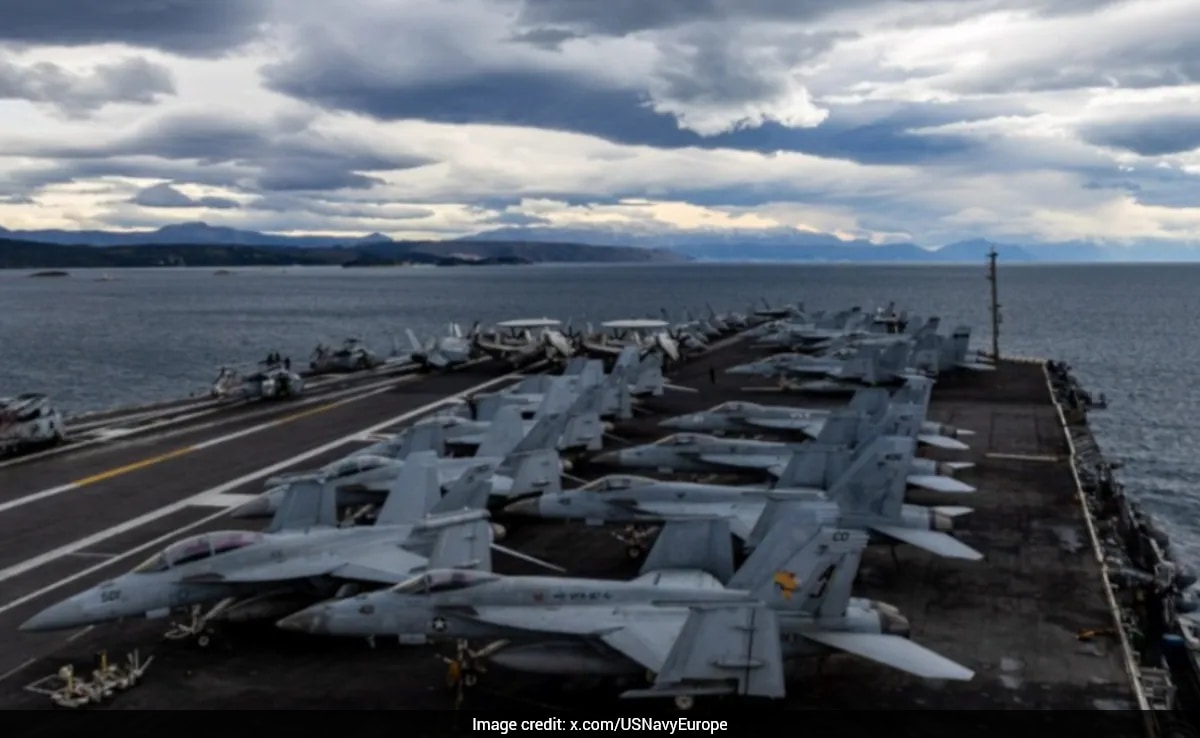
The USS Michael Murphy did activate its Automatic Identification System in a departure from standard navy protocol of sailing dark as the destroyers crossed the strait. Maritime analysts noted the move was deliberate, intended to signal that the passage had been made.
The transit came as Iran-US talks in Pakistan ended after 21 hours without a breakthrough. US Vice President JD Vance said Iran had rejected "our final and best offer," adding that the situation was "bad news for Iran."
Commercial shipping through the strait has dropped to near zero since March, after Iran deployed mines, drones, and missiles to deter transit and demanded fees of over $1 million per vessel, a practice widely seen as illegal under international maritime law.
Track Latest News Live on NDTV.com and get news updates from India and around the world


