The world is at a precipice as the flow of liquefied natural gas or LNG from the Gulf comes to an abrupt end in the next 10 days, said a Financial Times report.
Qatar, which produces a fifth of the world's liquefied natural gas, had to stop exports after Iran blockaded the Strait of Hormuz at the mouth of the Gulf, in the first few days of the conflict.
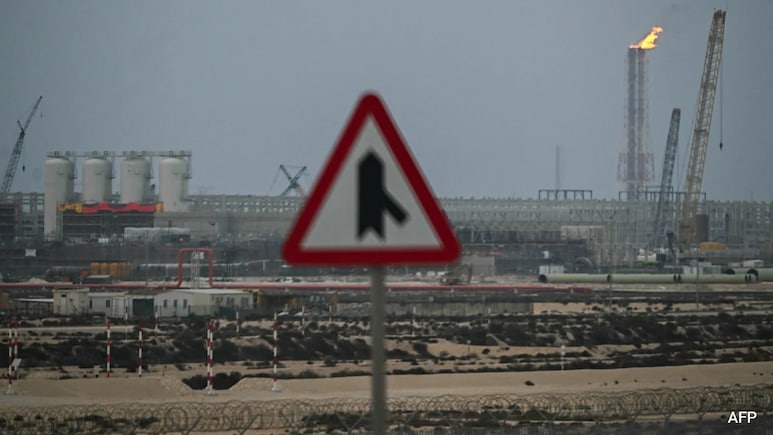
Missile attacks on Qatar's Ras Laffan Industrial City have significantly disrupted global energy supplies, reducing the country's liquefied natural gas (LNG) export capacity by 17 per cent and raising concerns for import-dependent nations like India.
In an official statement, QatarEnergy said the strikes, which occurred on March 18 and early March 19, caused extensive damage to key production facilities and are expected to result in an estimated loss of $20 billion in annual revenue.
The company added that repairs could take up to five years, forcing it to declare long-term force majeure on some LNG contracts after the US-Israeli war on Iran broke out on February 28, halting shipments via the Strait of Hormuz, a narrow channel along the Iranian coast.
But many LNG carriers that loaded at Qatar and the United Arab Emirates were already on their way to destinations before the war started, according to analysis by independent ship broker Affinity, meaning that some customers are only now about to feel the pain of lost supply.
Countries reliant on imports to power their economies will have to pay sky-high prices to compete for LNG supplies from the US and elsewhere, switch to other fuels or force households and businesses to use less.
India, the world's fourth-largest LNG importer, relies on Qatar for about 41% of its gas imports.
In 2024/25, India imported over 27 million metric tons of LNG, with Qatar supplying 11.2 million tons, according to government data.
"(LNG) capacity of Qatar has been hit, this will hit us too," Sujata Sharma, a joint secretary in Petroleum Ministry, told reporters last week.
India is Qatar's second biggest LNG customer.
Indian industry officials, however, are hopeful that Qatar will continue supplies to India after the lifting of the force majeure, as the facilities catering to Indian demand have not been affected by the attack.
Three weeks of conflict in the Middle East have upended the entire energy supply chain.
With virtually no spare capacity, no strategic reserves and no easy replacements, LNG may be one of the most acute pain points in an expanding crisis.
The longer this continues, the only solution is for the world to use less gas - and that's a major setback for a fuel promoted by the industry as a reliable and affordable bridge from dirty coal to full reliance on renewable power. Without gas, power plants curtail output, fertilizer and textile factories shut.
Countries reliant on imports to power their economies will have to pay sky-high prices to compete for LNG supplies from the US and elsewhere, switch to other fuels or force households and businesses to use less.
So far, the crisis has removed about 400 million barrels - about four days of world supply - from the market, triggering price increases of around 50%.
Oil, gas, and their refined byproducts are critical to many parts of the modern world, from fueling cars, trucks and planes, to powering homes and industry, to producing plastics and fertilizers.
Global benchmark oil prices have already risen more than 50% to over $110 a barrel since the war started. The impacts are more pronounced for Middle East crudes - a staple for Asian economies - with prices hitting records near $164.
That has translated to soaring prices for transport fuels, pressuring consumers and businesses across the globe, and triggering government action to conserve supplies.
Thailand, for example, ordered civil servants to conserve energy by suspending overseas trips and using stairs instead of elevators, while Bangladesh closed its universities.
Sri Lanka has imposed fuel rationing, China has banned refined fuel exports, and the UK government's energy contingency plan includes a cut in speed limits to save fuel.
On Friday, the International Energy Agency outlined other proposals to reduce demand, such as working from home and avoiding air travel, which has already been severely disrupted after the war forced the closure of key Middle Eastern hubs.
(With agency inputs)
Track Latest News Live on NDTV.com and get news updates from India and around the world


