
Spanish Prime Minister Pedro Sanchez on Friday called on office workers to throw sartorial caution to the wind and ditch their ties amid scorching summer temperatures.
In a move some might be surprised was even necessary given Spain's famously hot climate, Sanchez urged office workers to follow his own tie-free lead.
-

-
 Who Is Rajiv Mehta? Lilavati Hospital Trustee To Speak At NDTV World Summit 2026
-
 Ex-CIA Director To Decode 'War In Times Of AI' At NDTV World Summit
-
 From Call Centre To Billion-Dollar Disruptor: Nikhil Kamath At NDTV World Summit
-
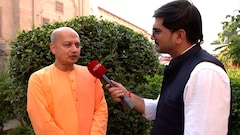 'Every 5 Years, You'll See A New India': Swami Sarvapriyananda Ahead Of NDTV World Summit
-
 AI Can Think, But Can It Be Conscious? Swami Sarvapriyananda Weighs In
-
 Alain Ebobisse, Africa50 CEO, To Attend NDTV World Summit 2026. All About Him
-
 Kriti Sanon At NDTV World Summit: A Look At Her Career And Business Ventures
-
 Ex-CIA Director To Decode 'War In Times Of AI' At NDTV World Summit
-
 Who Is Vikram Rai, CEO, South Asia GE Aerospace, Set To Attend The NDTV World Summit 2026
-
 Rahul Kanwal: The World Is Changing. What Comes Next? | NDTV World Summit 2026
"I would like you to see that I am not wearing a tie," said Sanchez, smiling broadly, pointing to his open neck shirt during a news conference in Madrid.
Feeling a little more comfortable would save energy if it resulted in less air conditioning being used, he said.
"This means that we can all save energy," he said, adding that he had asked all ministers and public officials to stop wearing ties and hoped the private sector would also follow suit.
The Spanish government is on Monday set to adopt a set of "urgent" energy-saving measures, Sanchez said, "in line with what other European countries do", without elaborating.
Following Moscow's invasion of Ukraine, the European Commission released in mid-May a 210-billion-euro plan aiming to boost renewable energies and reduce energy consumption to put an end to dependency on Russian gas.
In response, Spain has adopted several measures including encouraging remote work and the limiting of air conditioning in offices in summer and radiators in winter.
The 27 EU states also agreed on Tuesday "to reduce their gas demand by 15 percent compared to their average consumption in the past five years, between 1 August 2022 and 31 March 2023, with measures of their own choice," the European Council said in a statement.
Several German cities said this week they would step up efforts to save energy, with Hanover in the north announcing plans to only offer cold showers at public pools and sports centres and Berlin switching off spotlights illuminating its historic monuments.
(Except for the headline, this story has not been edited by NDTV staff and is published from a syndicated feed.)
Track Latest News Live on NDTV.com and get news updates from India and around the world


