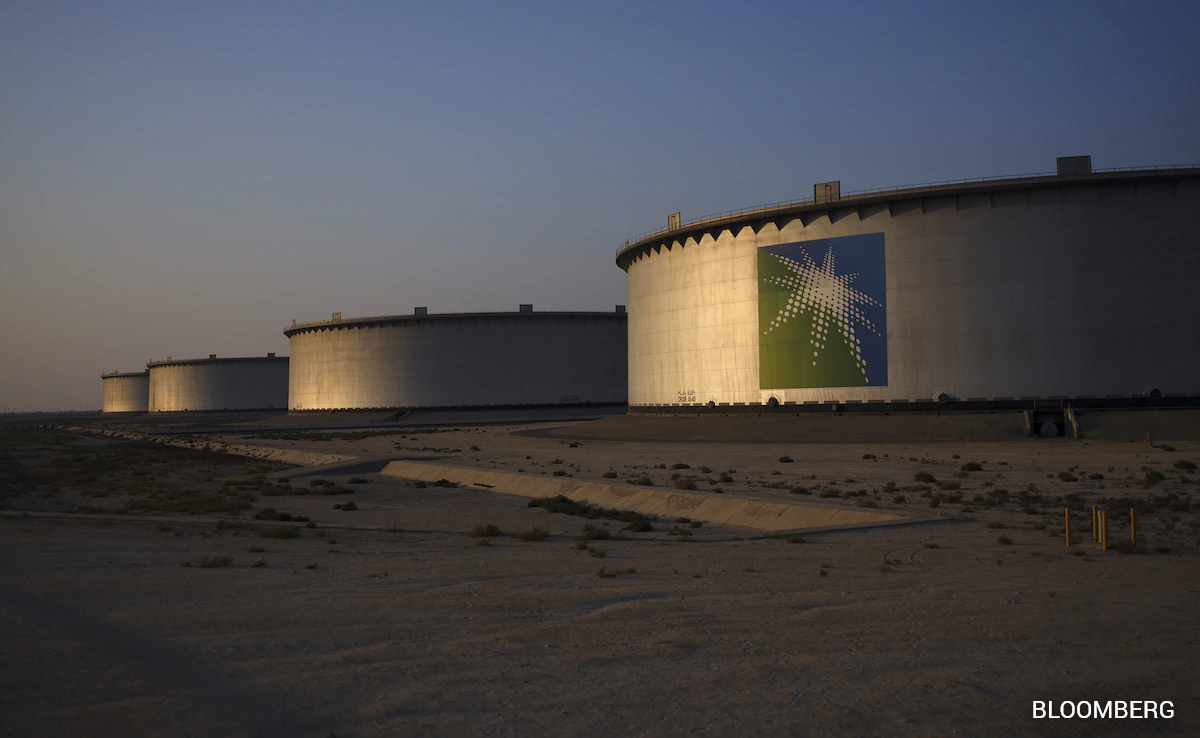
Saudi Arabia has started reducing oil production as the near-blockage of the critical Strait of Hormuz starts filling storage tanks, according to a person familiar with the matter, even as it rushes to reroute some supplies through the Red Sea.
The cuts by the kingdom, the world's biggest oil exporter, follow the United Arab Emirates, Kuwait and Iraq. Some of the countries have been preemptively turning production lower so as not to overwhelm storage too quickly and avoid a complete shutdown of output.
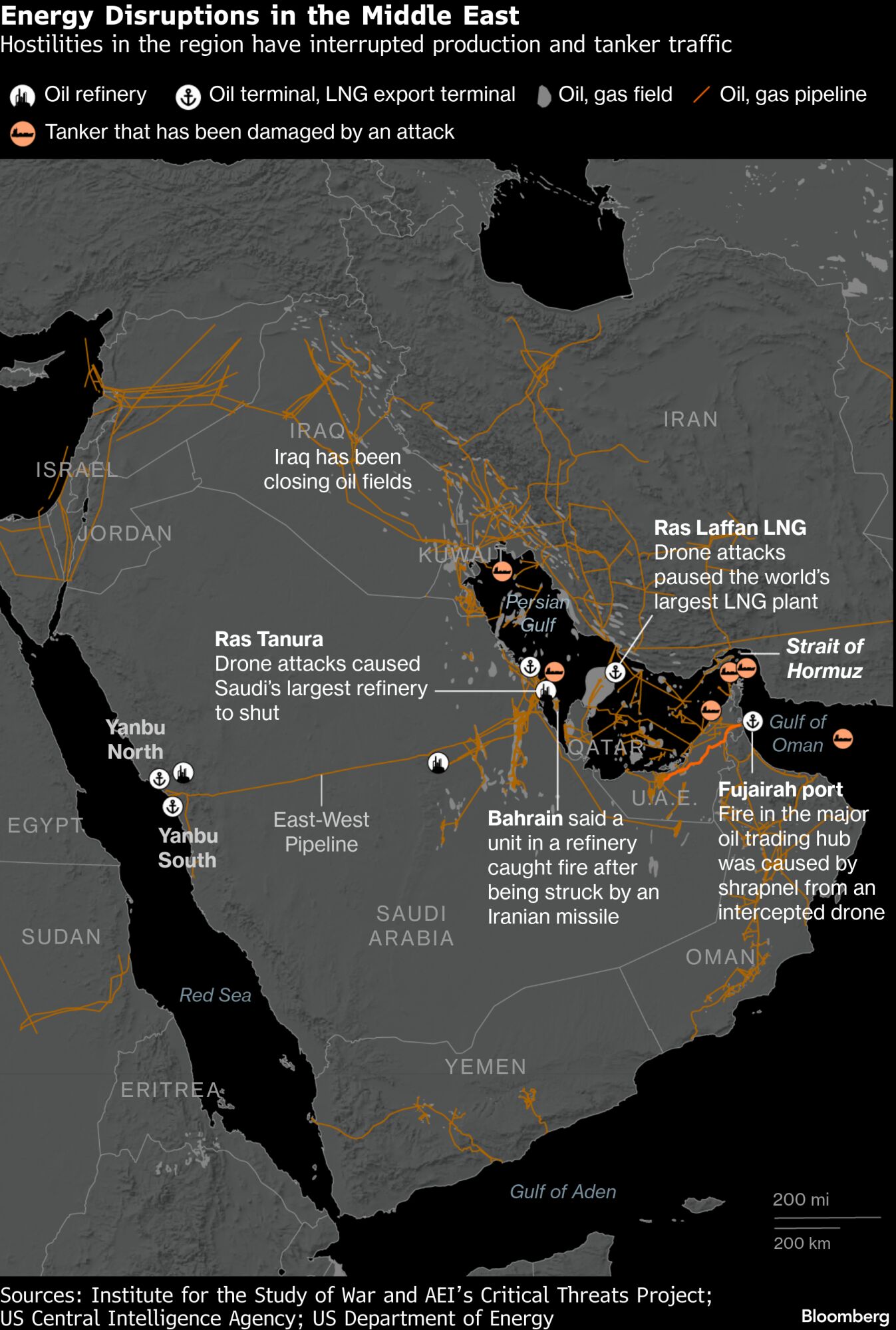
The war in the Middle East that's entered its second week has all but closed Hormuz to maritime traffic from around the Persian Gulf, with mostly only Iranian supply going through. The near-standstill has clogged up exports, sending oil above $100 a barrel and risking a spike in global inflation.
Energy disruptions in the Middle East
Photo Credit: Bloomberg
State-run Saudi Aramco declined to comment.
Saudi Arabia produces about 10 million barrels a day of oil and exports about 7 million a day. Aramco has been diverting some of those shipments away from its usual Hormuz route toward Yanbu in the Red Sea. But the pipeline that carries those volumes doesn't have enough capacity to fully replace the export volumes.
JPMorgan Chase & Co. had earlier estimated that Saudi Arabia would exhaust its oil and fuel storage capacity in over two months from the start of the conflict.
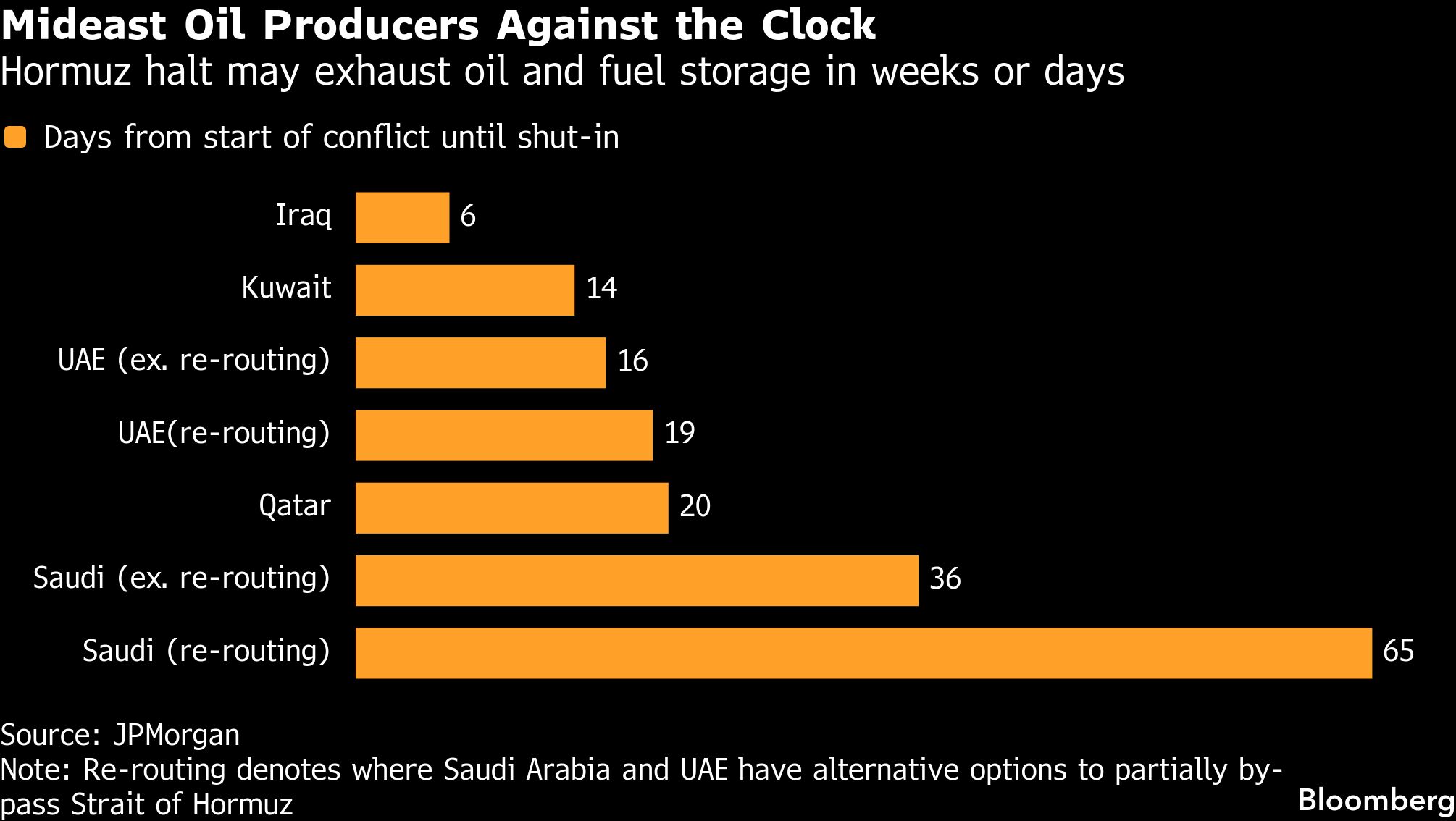
Photo Credit: Bloomberg
In theory, the Arab producers around the Persian Gulf - including Saudi Arabia, the UAE, Kuwait, and Iraq - collectively have just over 100 million barrels of storage capacity left, or about a third of their total, according to Antoine Halff, co-founder and chief analyst of geospatial analytics company Kayrros.
But the effective level will in practice be lower, and in any case operational usage rarely exceeds 80% of nameplate levels, he said in a post on LinkedIn last week.
(Except for the headline, this story has not been edited by NDTV staff and is published from a syndicated feed.)
Track Latest News Live on NDTV.com and get news updates from India and around the world


