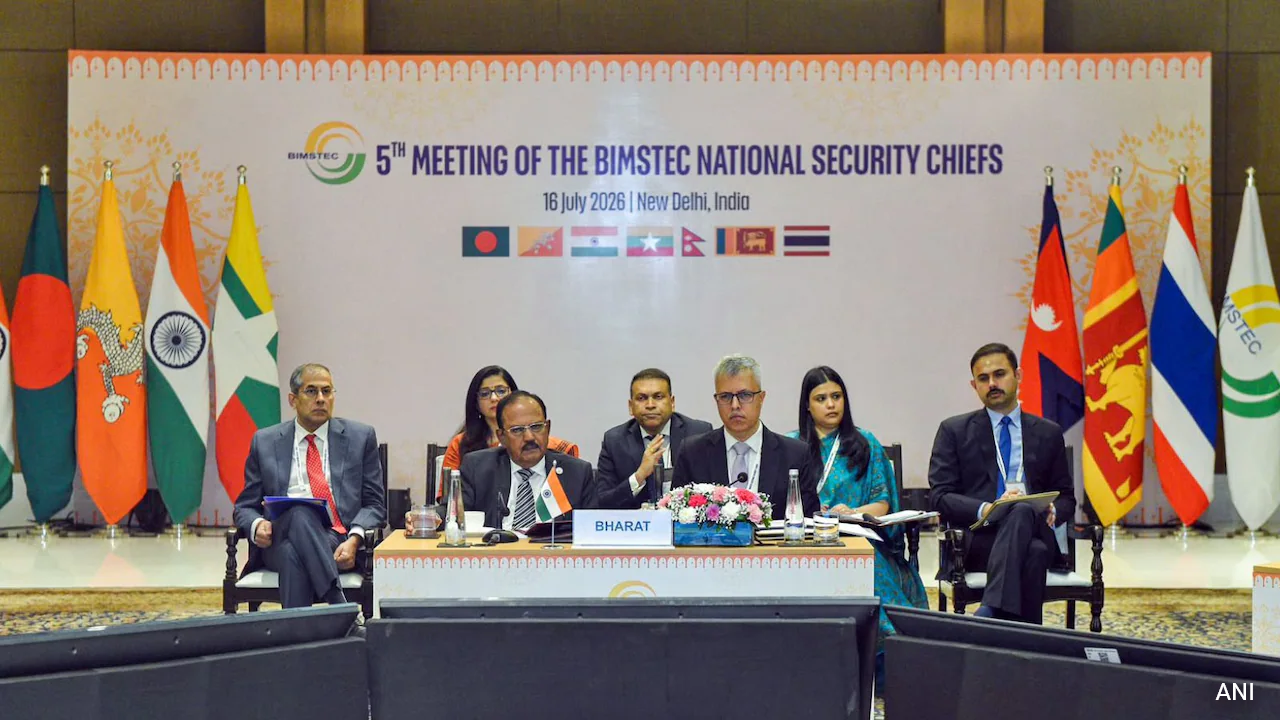
- Bangladesh urged SAARC and BIMSTEC to collaborate rather than compete
- The BIMSTEC National Security Chiefs meeting was hosted by Ajit Doval
- Discussions covered terrorism, cyber security, maritime, and energy security
Bangladesh on Thursday emphasised that the South Asian Association for Regional Cooperation (SAARC) does not have to be a rival of the Bay of Bengal Initiative for Multi-Sectoral Technical and Economic Cooperation (BIMSTEC), amd can instead work hand-in-hand for now.
The issue, which Bangladesh has been pitching for months, was raised at the fifth meeting of BIMSTEC National Security Chiefs, hosted by National Security Adviser Ajit Doval.
Brig. Gen. AKM Shamsul Islam (Retd.), defence adviser to the Bangladesh Prime Minister, reminded the room that SAARC had built up nearly four decades of groundwork, on disaster response, health cooperation, cross-border crime, that simply can't be wished away.
As the current BIMSTEC chair, he added that Dhaka is ready to work with every member state to make that happen.
According to a statement by the Ministry of External Affairs, the meeting pulled together security advisers and heads of delegations from all six other member states, Bangladesh, Bhutan, Myanmar, Nepal, Sri Lanka and Thailand.
The BIMSTEC Secretary General laid out where the bloc currently stands on security cooperation, before the conversation moved into thornier territory: terrorism, organised crime, cyber and maritime security, energy security, connectivity gaps, and the newer threats nobody had to worry about a decade ago.
The release also said that the member-countries discussed guidelines to speed up maritime disaster relief when crises hit, and a set of principles for how maritime law enforcement agencies should conduct themselves when they run into each other at sea, aimed at making those encounters a little more predictable and a lot less risky. With BIMSTEC heading into its 30th year, delegations used the moment to recommit to deeper collaboration and stronger regional security capacity, the MEA said.
SAARC, made up of India, Pakistan, Bangladesh, Nepal, Bhutan, Sri Lanka, Afghanistan and the Maldives, has sat largely frozen for a decade now, after India skipped the 2016 summit that Pakistan was set to host in the wake of the Uri attack. Several other members walked out alongside India. Ever since, New Delhi has put its energy into BIMSTEC instead, the smaller grouping of Bangladesh, Bhutan, India, Myanmar, Nepal, Sri Lanka, and Thailand.
This isn't the first time Dhaka has brought SAARC up. Prime Minister Tarique Rahman mentioned it at his first press conference after taking office in February. Even before Rahman took over, the idea was already in the air, Muhammad Yunus, who ran the interim government after Sheikh Hasina was ousted in August 2024, made the same pitch publicly as Dhaka grew closer to Islamabad.
At a briefing last September, external affairs ministry spokesperson Randhir Jaiswal was asked about SAARC directly. He said New Delhi remains committed to regional connectivity, but was blamed Pakistan for the bloc's paralysis without blaming it.
BIMSTEC hasn't exactly had a smooth run of its own. It was founded almost 30 years ago, but its charter only came into force in 2024.
Track Latest News Live on NDTV.com and get news updates from India and around the world


