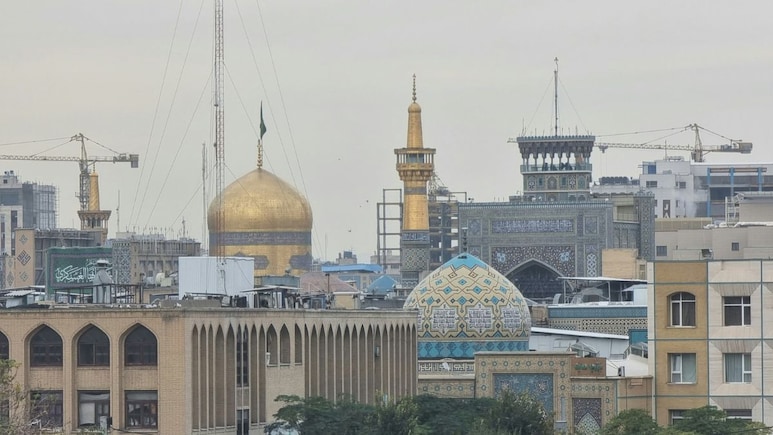
When global headlines group Iran with countries such as Saudi Arabia or the United Arab Emirates, many assume they all share the same ethnic roots. Iran is located in West Asia, most of its people are Muslim, and its written language uses a script that looks similar to Arabic.
Yet Iran is not an Arab country.
The difference lies in history, language, ethnicity, and culture. There are layers that stretch back thousands of years.
The Meaning Of “Iran”
The name Iran comes from an ancient word linked to “Aryan,” meaning “Land of the Aryans.” It comes from the Indo-Iranian roots of the people who built early Persian civilisation. Modern Iran was historically known as Persia. The two names refer to the same country, but “Iran” connects more directly to its ancient identity.
Ethnicity In Iran
The most important distinction is ethnic identity. Most people in Iran are Persian, not Arab. Persians make up roughly 60 per cent of the population. There are also large communities of Azeris, Kurds, Lurs, and Baluchis. A small minority in the southwest identifies as Arab.
Arab identity is tied to people whose native language is Arabic and whose ancestry traces to the Arabian Peninsula. Arab populations are concentrated across the Arabian Peninsula and parts of North Africa and the Levant.
Iran is geographically close to Arab countries, but ethnicity is not defined by geography alone.
Language In Iran
Language provides one of the clearest differences. The official language of Iran is Persian, also known as Farsi. It belongs to the Indo-European language family, the same as English, Hindi, and French.
Arabic belongs to the Semitic language family.
Although Persian today uses a script derived from Arabic letters, the structure, grammar, and core vocabulary are different. An Arabic speaker cannot automatically understand Persian, and a Persian speaker cannot automatically understand Arabic.
Persian also contains letters that Arabic does not use, including sounds like “p,” “ch,” “g,” and “zh.” The visual similarity in writing often leads to confusion, but linguistically, they are separate languages.
History: Persia Long Before Islam
Iran's identity was moulded by powerful empires long before the rise of Islam.
In the 6th century BCE, Cyrus the Great founded the Achaemenid Empire, one of the largest empires of the ancient world. Its ceremonial capital, Persepolis, still stands in ruins today. Persian rule once stretched from parts of South Asia to the Mediterranean.
The Persian world later included the Parthian and Sasanian empires. These states developed systems of governance, architecture, trade, science, and literature that formed a distinct civilisation.
Arab identity, though, developed in the Arabian Peninsula. In the 7th century CE, the rise of Islam united Arab tribes and led to the expansion of Arab rule across large parts of West Asia and North Africa.
Arab Muslim forces conquered Persia in the 7th century. Islam gradually became the dominant religion. But the Persian language and identity, instead of disappearing, adapted and continued.
Religion In Iran
Religion is another area where similarities can hide differences. Iran is a Muslim-majority country. Most Iranians follow Shia Islam, while most Arab countries are majority Sunni Muslim.
Before Islam, ancient Persians largely followed Zoroastrianism, one of the world's oldest monotheistic religions. Elements of that ancient belief system still shape Iranian culture today. Nowruz, the Persian New Year celebrated at the start of spring, predates Islam by centuries and remains one of Iran's most important national traditions. It is not an Arab cultural festival.
Iran also observes Islamic holidays such as Eid al-Fitr and Eid al-Adha, as do Muslim communities worldwide.
Political Identity
Iran is not a member of the Arab League, the regional organisation made up of Arabic-speaking states. Membership is generally based on Arab identity and Arabic as the main language.
While Iran and Arab states have interacted for over 1,400 years, they remain historically and ethnically distinct. Iran sits in West Asia, a region that includes both Arab and non-Arab countries. Geography alone does not determine ethnic or cultural identity.
Just like Europe contains many different ethnic groups and languages, West Asia is diverse. Turkey is not Arab. Iran is not Arab. The region includes multiple civilisations with distinct roots.
Track Latest News Live on NDTV.com and get news updates from India and around the world


