- Iran confirms two-week Middle East ceasefire, praising Pakistan's mediation efforts
- US President Trump endorses Pakistan's role in peace talks via social media
- Pakistan invites US and Iran delegations to Islamabad for further negotiations
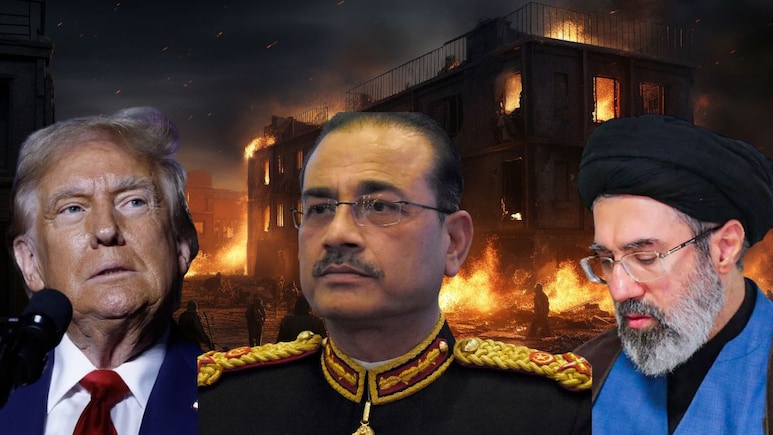
Iran's Foreign Affairs Minister Seyed Abbas Araghchi's social media post confirming the two-week ceasefire in the Middle East started with expressing "gratitude and appreciation" for "my dear brothers", Prime Minister of Pakistan Shehbaz Sharif and Field Marshal Asim Munir, "for their tireless efforts to end the war in the region". US President Donald Trump shared Araghchi's note on Truth Social, suggesting Washington's affirmation of Islamabad's role in the peace talks.
Soon after, Pakistan Prime Minister Shehbaz Sharif said in a post on X, "With the greatest humility, I am pleased to announce that the Islamic Republic of Iran and the United States of America, along with their allies, have agreed to an immediate ceasefire everywhere, including Lebanon and elsewhere, EFFECTIVE IMMEDIATELY."
"I warmly welcome the sagacious gesture and extend deepest gratitude to the leadership of both the countries and invite their delegations to Islamabad on Friday, 10th April 2026, to further negotiate for a conclusive agreement to settle all disputes," he added. "We earnestly hope, that the 'Islamabad Talks' succeed in achieving sustainable peace and wish to share more good news in coming days," Sharif said.
CBS News reported that President Trump spoke to Israeli Prime Minister Benjamin Netanyahu and Pakistan's Field Marshal Munir before finalising the two-week ceasefire. According to reports, Field Marshal Munir was in contact "all night long" with US Vice President JD Vance, special envoy Steve Witkoff, and Iran's Foreign Minister Araqchi.
Islamabad's diplomatic high, however, was marred by a social media error. Sharif's earlier post, in which he appealed to Trump for an extension to his deadline to allow diplomacy to run its course, was inadvertently posted with a line at the top: "Draft - Pakistan's PM Message on X." It was removed in a subsequent edit, but screenshots of the edit history circulated with claims that the Pakistani Prime Minister "cut and pasted" a message sent by the White House.
Pakistan's Diplomatic Push
Hours before the ceasefire, Trump said a "whole civilisation will die tonight, never to be brought back again". How then did Washington and Tehran manage to agree on the ceasefire? The answer lies in deft diplomacy led by US Vice President JD Vance, Iran's Foreign Affairs Minister Araghchi, and mediated by Pakistan's Field Marshal Munir.
Islamabad has been pushing for peace in the Gulf since late March. It hosted foreign ministers from Turkey, Saudi Arabia, and Egypt on March 29 to discuss a way out of the Middle East conflict.
As the war dragged on, Pakistan emerged as the key mediator in the backchannel talks as both Washington and Tehran sought an off-ramp. It was Pakistan that conveyed the US's 15-point proposal to Iran and later transmitted Iran's responses back to Washington.
Why Both the US, Iran Trust Islamabad
For a country to be a mediator in a conflict, it needs to be trusted by both parties. Iran no longer trusts its Arab neighbours owing to their deep ties with the US. In fact, Tehran even bombed the Gulf nations in retaliation for the US-Israel airstrikes. Pakistan shares a border with Iran, and the two countries have had a close diplomatic relationship, signalled by Araghchi referring to Sharif and Munir as "dear brothers". Also, Pakistan has no diplomatic ties with Israel owing to the Palestine issue, and this is another reason why Tehran would trust it.
As for the US, its ties with Pakistan have improved since last year. Islamabad also joined Trump's Board of Peace, which aims to ensure peace in Gaza. Trump has already referred to Pakistani Army Chief Munir as his "favourite Field Marshal". Munir, according to reports, has deep connections within the US and Iranian defence establishment, giving Pakistan an edge in such negotiations.
To add to this, Pakistan also enjoys good ties with other Gulf nations, enabling it to take everyone along to find a way out of the conflict.
Why Pak Needed Ceasefire Too
Pakistan's push for a ceasefire is not just a dash for a bigger geopolitical role, but out of practical considerations. The country gets most of its oil from the Middle East, and many Pakistanis work in the region and send home remittances. The tension in the region and Iran's blockade of the Strait of Hormuz raised global fuel prices, forcing Pakistan to hike prices and building pressure on the Shehbaz Sharif government.
And this is playing out against the backdrop of Pakistan's existing financial difficulties and its own conflict with neighbouring Afghanistan. Pakistan's ties with India are already tense and instability in another neighbouring country, Iran, is not in its interest.
There are domestic stability concerns, too. The killing of Ayatollah Ali Khamenei in the US-Israel offensive triggered massive protests in Pakistan, leading to several deaths.
Pakistan's own interests in a ceasefire also helped it win the trust of both parties as a mediator. And China's solid backing boosted its credibility.
Why Pak Must Not Celebrate Yet
The ceasefire between the US and Iran is fragile at best and the coming days will show how Washington and Tehran take the talks forward. So while Pakistan may score diplomatic brownie points by emerging as the mediator, a collapse of this truce will be a big dent in its credibility. Also, one of the two parties -- the US and Iran -- may then blame Islamabad even if it is not at fault.
A collapse of the ceasefire and a potential deterioration in its ties with the US will also be a massive setback for Islamabad, which has worked very hard to boost its relationship with Washington and Trump.
Most importantly, Pakistan lacks the geopolitical muscle to enforce the ceasefire it has mediated. And if fighting resumes, Pakistan would face a Catch-22 situation. If it is seen as tilting towards the US, it would face instability and resistance at home. And if it backs Iran, it would alienate Washington and its Gulf partners.
Track Latest News Live on NDTV.com and get news updates from India and around the world


