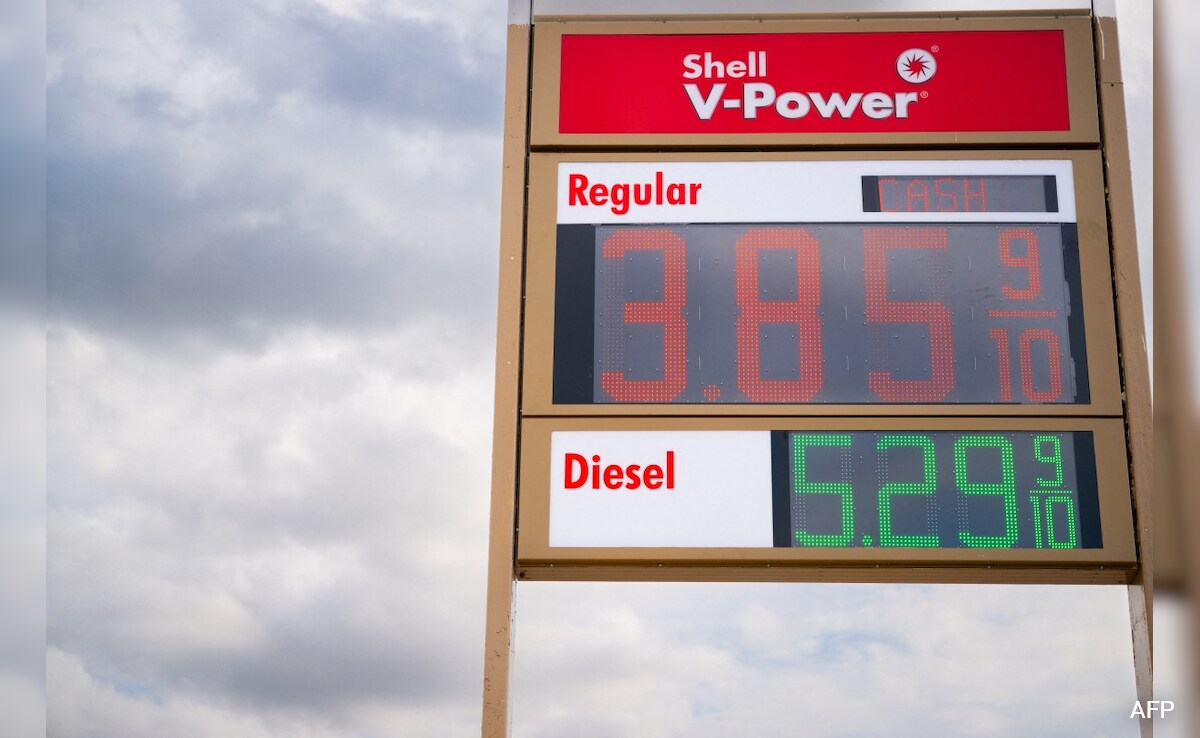
The US-Israeli war with Iran and the subsequent closure of the Strait of Hormuz -- a vital energy route -- have triggered one of the biggest oil supply disruptions in history. This has led to a massive hike in global crude prices, but not all fuels are moving the same way. In the United States, diesel prices saw a spike of roughly 45 per cent, compared to about 35 per cent for petrol.
That could have severe consequences for the diesel-dependent industries in the US, including the transportation and farming sectors. While most of the individuals buying petrol can, for example, carpool or forgo some trips, diesel-dependent truckers, farmers and other users of diesel may not be able to cut back easily.
Why Diesel Is A Bigger Crisis
Even before the war started, the global diesel supplies were tight in the US. That meant there wasn't much buffer when exports from the Gulf, a major source of diesel and jet fuel, were disrupted. Adding to the challenge is the fact that, unlike petrol, which is relatively well supplied, production of diesel and jet fuel depends on specific types of crude oil and refining processes-- a lot of which happens in the Gulf region.
"This is why diesel more than doubles, while gasoline (known as petrol in most parts of the world) basically moves up in tandem with crude," Joe DeLaura, a global energy strategist at Rabobank, told the New York Times.
"You have a shortage of diesel, you have a shortage of jet fuel, you have a shortage of fuel oil. Gasoline is relatively well supplied," he added.
Before the war started, refineries in the Middle East exported more diesel and jet fuel than petrol, and no other nation in the world has the capacity to make up for that loss.
"You've lost that supply in a market that was already tight, and there's no way to replace that," Jason Gabelman, an energy analyst at the investment bank TD Cowen, told NYT.
Gabelman noted that China has refineries that could have picked up some of the slack, but Beijing decided to restrict fuel exports when the war started so that it would not experience shortages.
The United States is the biggest exporter of petroleum products, including diesel. When the war started, nations like Australia and UK, that depend on US oil, increased their imports. But with a fifth of the world's oil supply choked off at Hormuz, even the US could not make up for the shortfall. "The US can produce quite a bit, but we can't fuel the world," DeLaura said.
Why US Can't Increase Diesel Production
While both diesel and petrol are made from crude oil, they have different qualities that make them suited for specific uses. Petrol is mainly used in passenger cars and has less energy per litre than diesel, which is typically used in trucks, tractors and other heavy equipment.
But the refineries producing oil from crude are only so flexible. They use heat and chemical processes to "crack" molecules and turn them into petrol, diesel or other fuels.
But once a refinery has decided how much of each fuel it intends to produce, it is stuck with that choice unless a lot of money is spent to rejigger its equipment and processes.
"Generally, the refinery has chosen investments over time to allow it to produce more or less of certain products, within reason," Patrick De Haan, an analyst at GasBuddy, told NYT. "You can't bend science enough to just get all diesel out of a refinery."
Biggest Energy Crisis In History
The International Energy Agency this week said the conflict in Iran has triggered the worst energy crisis the world has faced when combined with the tail end of the European gas crisis caused by Russia's invasion of Ukraine in 2022.
The scale of the disruption has revived comparisons with past energy shocks, from the 1973 Arab oil embargo to the Iranian Revolution and the 1991 Gulf War, while underscoring how much global energy markets have changed.
Track Latest News Live on NDTV.com and get news updates from India and around the world


