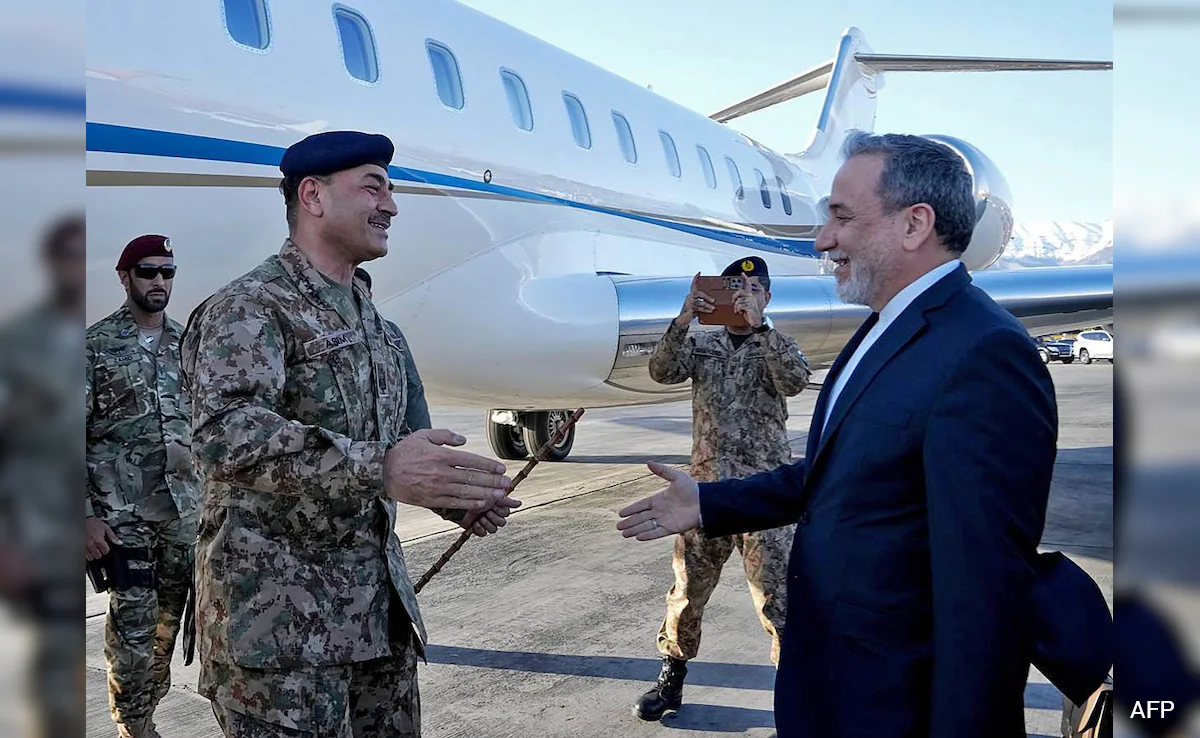
Pakistan's army chief, Field Marshal Asim Munir, has landed in Tehran along with a high-level delegation as part of Islamabad's ongoing efforts to renew talks between the United States and Iran after the two warring nations failed to reach a peace agreement in Islamabad over the weekend. The development came as the White House indicated that diplomatic engagement with Tehran is continuing, and the next round of ceasefire talks will likely take place in Islamabad.
Munir, along with Pakistan's Interior Minister Mohsin Naqvi, arrived in Iran's capital "as part of the ongoing mediation efforts", Pakistan's military said in a statement, sharing a photograph of Pakistan's army chief dressed in military gear being greeted by Iran's Foreign Minister Abbas Araghchi.
Pak's Mediator Role
Pakistan has emerged as a central player in helping de-escalate the conflict between the US, Israel and Iran, with Munir, alongside Prime Minister Shehbaz Sharif, leading mediation efforts. Islamabad has used its close ties with Gulf nations, including Saudi Arabia, Iran, the US and China, to provide a communication channel between the warring parties.
Both Washington and Tehran--currently in a ceasefire, which is set to expire next week--appreciated Islamabad's efforts to mediate a way out of the seven weeks of war that had killed thousands, churned energy markets, and threatened global inflation.
Tehran has also indicated that Islamabad has facilitated communication with Washington even after the failed talks. "Since Sunday, when the Iranian delegation returned to Tehran, several messages have been exchanged through Pakistan," Iran's foreign ministry spokesman Esmaeil Baqaei said.
In Washington, White House Press Secretary Karoline Leavitt was equally effusive about Islamabad's efforts in the US-Iran negotiations.
PRESS SEC on U.S.-Iran negotiations: The Pakistanis have been incredible mediators and we really appreciate their friendship and efforts to bring this deal to a close.
— Department of State (@StateDept) April 15, 2026
The President feels it's important to continue to streamline this communication through the Pakistanis. pic.twitter.com/3iIeF0oUpn
"The Pakistanis have been incredible mediators, and we really appreciate their friendship and efforts to bring this deal to a close," she said. "The President feels it's important to continue to streamline this communication through the Pakistanis."
Three Issues In Peace Deal
The talks between the US and Iran failed in Islamabad due to disagreement on three crucial issues, including Tehran's highly enriched uranium (HEU) and its nuclear future, the reopening of the Strait of Hormuz, and Israel's war in Lebanon.
Iran has asserted its right to enrich uranium. However, it has been said that the level of enrichment could be negotiated.
"The right to peaceful use of nuclear energy cannot be taken away under pressure or through war," Esmaeil Baqae said, adding that "the level and type of enrichment" remain open for discussion based on Iran's needs. He dismissed some of the US demands during the Islamabad talks as "unreasonable and unrealistic".
On the Lebanon issue, US President Trump has said that Tel Aviv and Beirut will hold talks in Washington on Friday.
On the Hormuz issue, Iran could consider allowing ships to sail freely through the Oman side of the Strait of Hormuz without risk of attack as part of proposals it has offered in negotiations with the United States if a deal is clinched to prevent renewed conflict, a source briefed by Tehran said.
Track Latest News Live on NDTV.com and get news updates from India and around the world


