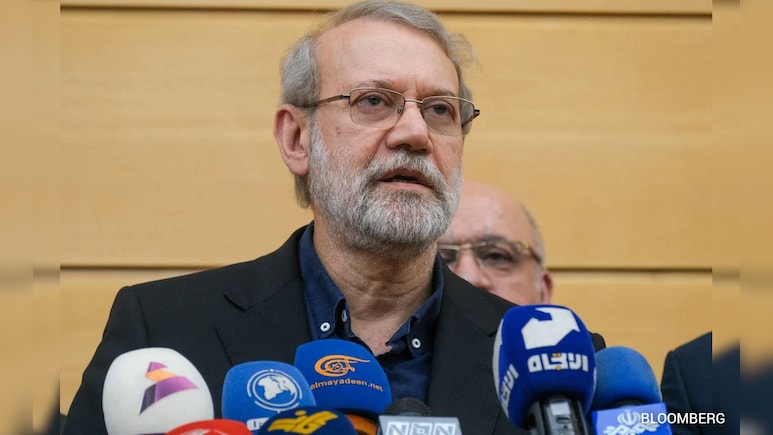
Ali Larijani, a veteran politician who helped lead Iran's wartime efforts against the US and Israel, was killed in an Israeli airstrike, Iranian state media confirmed. He was 67.
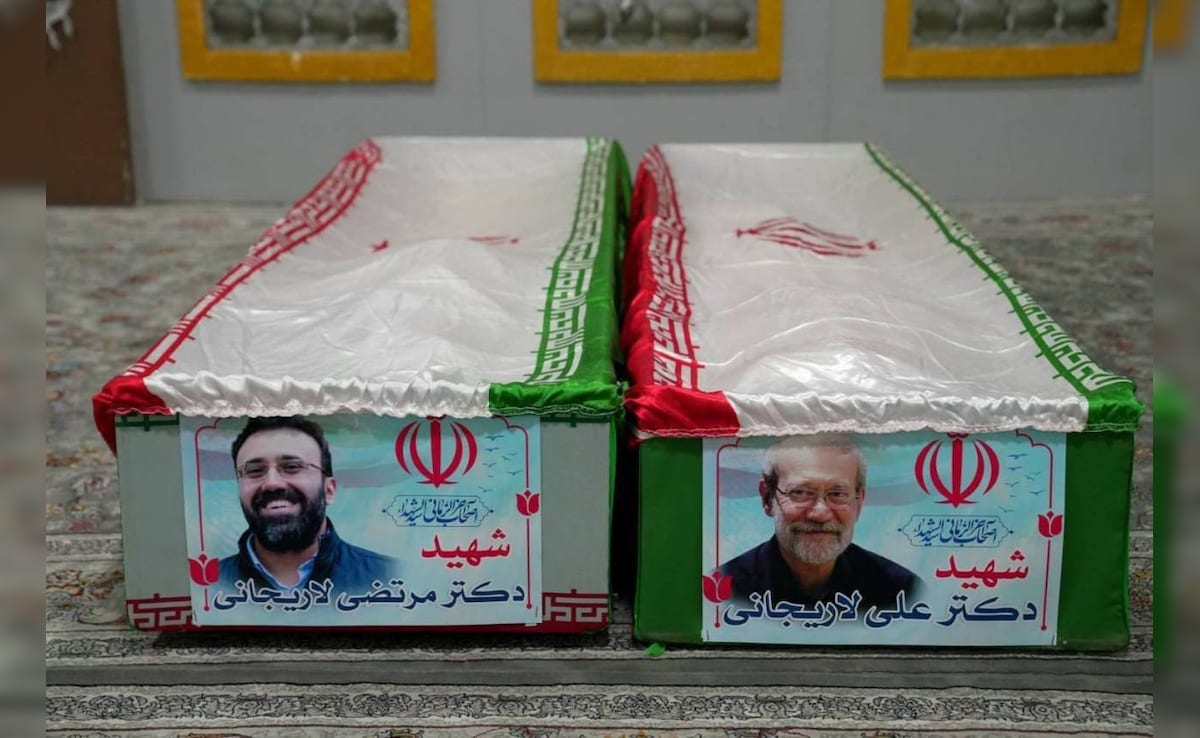
He was killed alongside his son, according to a statement released by Iran's Supreme National Security Council on Tuesday and published by state media. It didn't give any details about the circumstances of his death. Israel had said earlier on Tuesday that it had killed Larijani in an overnight strike, calling him Iran's de facto leader.
Larijani had been a mainstay of conservative politics in the Islamic Republic for decades, known for his shrewd pragmatism and ability to build alliances between the hardline and moderate blocs of the country's dominant Principlist faction. The loss of Iran's top security official, an integral part of its current leadership structure, further depletes the Islamic Republic's reserve of highly experienced senior figures who can be entrusted to keep the regime functioning.
"Larijani has long been the bridge builder between the military and political establishment," said Ellie Geranmayeh, senior policy fellow at the European Council on Foreign Relations. "He had been at the forefront of recent negotiations aimed at finding a political breakthrough with Washington."
Follow LIVE Updates
Larijani was appointed to his second stint as Iran's top security official in 2025 following Israel's first war on Iran. His role took on increased importance after February 28, when US and Israeli strikes killed Supreme Leader Ayatollah Ali Khamenei and impelled the country's surviving political and military command to pursue a strategy of maximum economic disruption in the region.
In an interview with Iranian state TV on March 1, the second day of the war, Larijani said he believed Israel, unable to dominate a hostile country of Iran's size in a region where it lacks friends and allies, aimed to fragment and effectively dismantle the Islamic Republic. The US, he said, had become entangled in that plan.
Decision Maker
Larijani was widely thought to have been opposed to the appointment of Mojtaba Khamenei to succeed his slain father as supreme leader, on the grounds that hereditary rule is inconsistent with the principles of the Islamic Republic.
As secretary of the Supreme National Security Council, Larijani was at "the center of Iran's strategic decision-making apparatus," said Ali Alfoneh, senior fellow at the Arab Gulf States Institute, adding that he functioned "primarily as a coordinator - collecting proposals from across the security bureaucracy, presenting options to the leadership council and implementing the decisions."
The US sanctioned Larijani in January and accused him of deploying Iran's security forces to violently crack down on protesters during the anti-government uprising that began on December 28. Some 6,488 civilians were killed in the unrest, according to the Human Rights Activists News Agency which is still reviewing more than 11,000 reported cases. Larijani never addressed claims of his role in the suppression.
He was last seen alive in public on March 13 while attending a large state-organised rally in downtown Tehran. Images of him walking among crowds of people as the US and Israel bombed the city were shared widely on social media. A day later, he was among the names mentioned in a US State Department missive that offered a $10 million reward for information about the whereabouts of Iran's leaders.
Larijani was close to the elder Khamenei, who appointed him to head Iran's state TV and radio and serve as his representative on a political council that resolves legislative disputes. As head of the state broadcaster, he oversaw a vast organization that had a monopoly over the airways and was the Islamic Republic's main propaganda outlet. The institution also had strong ties to the country's intelligence and security apparatus.
He used his influence there to stifle and censor criticism and dissent at a time when a reformist government was struggling to fulfill a popular mandate to bring about tangible political change and progress.
After Iran's nuclear program became a major concern in the west, Larijani took on the top national security post in 2005, making him the country's lead nuclear negotiator.
Seen as Pragmatist
The role put him in contact with top European, Russian and Chinese diplomats and helped him develop a reputation as a pragmatist. It also set him up to become the regime's diplomatic envoy of choice. He traveled to Moscow in January to meet Vladimir Putin and shuttled between Gulf-Arab states during last month's fruitless nuclear talks with the US.
At home, Larijani was often at odds with the combative and hardline former president Mahmoud Ahmadinejad, their spats sometimes escalating to the point that Khamenei had to intervene.
In 2007, Larijani stepped down from the Supreme National Security Council, and Ahmadinejad quickly replaced him with a staunch hardliner with little diplomatic experience. Ahmadinejad's supporters continued to target Larijani even after he left office. In 2013, he cut short a speech marking the anniversary of the Islamic Revolution after hecklers threw shoes and devotional clay runes at him.
Over the years, Larijani moderated his politics. In 2015, he leveraged his influence with the late Khamenei as well as his national security experience, deep knowledge of Iran's nuclear file and his position as head of parliament to shepherd a landmark nuclear deal with the US and help it gain crucial legislative approval.
Born in the Iraqi city of Najaf in 1958 to Iranian parents, Larijani came from a well-known and deeply religious family. All four sons excelled either as hardline politicians or as clerics within the Islamic Republic. A younger brother, Sadiq Amoli Larijani, is an influential ayatollah and former head of the judiciary who is frequently mentioned as a potential future supreme leader.
After studying theology, Larijani earned a degree in computer science and math at one of Iran's most prestigious universities before going on to train in philosophy and publish books on the German enlightenment philosopher Immanuel Kant.
After US President Donald Trump abandoned the nuclear deal in his first term, Larijani was briefly sidelined from Iranian politics. He was twice barred from running for president - a decision that was broadly seen as driven by the late Khamenei's office as more fundamentalist, hardline elements gained influence in politics.
(Except for the headline, this story has not been edited by NDTV staff and is published from a syndicated feed.)
Track Latest News Live on NDTV.com and get news updates from India and around the world


