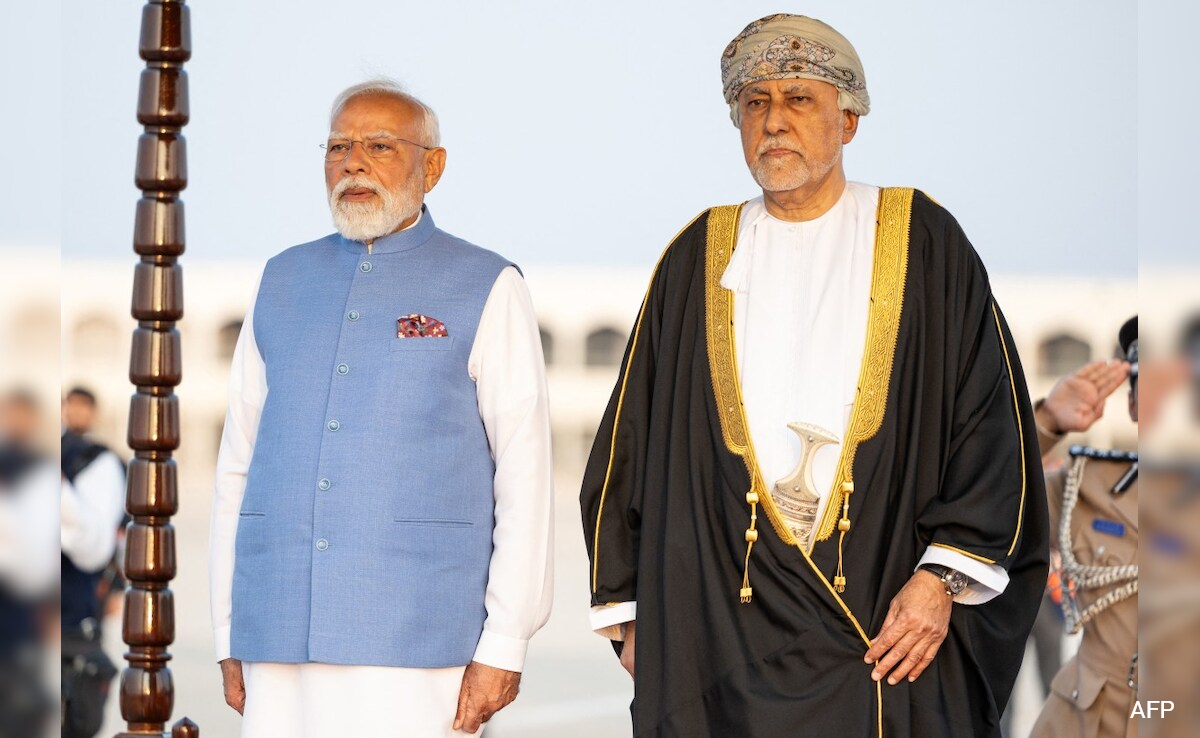
As Prime Minister Narendra Modi undertakes a landmark visit to Oman – sealed by the signing of a Comprehensive Economic Partnership Agreement (CEPA) and the conferment of the Sultanate's highest civilian honour, the Order of Oman-Yousuf Al-Balushi, Chairman of the Muscat Policy Council, says the real test of the relationship now lies in implementation.
In an interview with NDTV, Al-BalushFi underlined that the trade pact marks the start of a new phase in India-Oman ties, with opportunities stretching far beyond energy into pharmaceuticals, technology, defence and regional connectivity.
PM Modi's ongoing visit to Muscat has opened what Omani policymakers describe as a "new beginning" in India-Oman relations. The centrepiece of the visit is the signing of the Comprehensive Economic Partnership Agreement (CEPA), also referred to as the CEPA/FTA, which aims to significantly expand trade, investment and institutional cooperation between the two countries.
Calling the agreement a historic milestone, Yousuf Al-Balushi, Chairman of the Muscat Policy Council, said the deal reflects years of sustained diplomatic effort and growing trust between New Delhi and Muscat. "The fact that they concluded this agreement tells us that the intention and willingness to boost this relationship is clearly there in the minds of the leaders of both countries," he said.
Al-Balushi noted that negotiations for the agreement were initiated during Sultan Haitham bin Tarik's state visit to India a few years ago. The signing during PM Modi's visit, he added, signals that India and Oman are now ready to move towards deeper economic integration. Yet, he cautioned against viewing the agreement as an end in itself. "Today is the start of something, not the conclusion. The real hard job begins now," he said, warning that without sustained political and institutional commitment, CEPA risks remaining merely a document.
Traditionally, India-Oman ties have been anchored in energy cooperation, but Al-Balushi stressed that the scope of collaboration is now far wider. He highlighted pharmaceuticals, space technology, defence manufacturing, information technology and advanced services as key sectors where Indian expertise can support Oman's Vision 2040 development goals. According to him, Indian private sector engagement in Oman – through outsourcing, talent mobility and project support – has already been growing, and CEPA could significantly accelerate this trend.
Crucially, Al-Balushi argued for a shift in perspective among Indian businesses. "Oman should not be seen only as a final destination market," he said. With free trade agreements with the United States and Arab countries, Oman can serve as a strategic gateway for Indian investments into regional and global markets. "If you look at Oman as a market, you may not be convinced. But if you look at Oman as a joint connecting different markets, that's where the opportunity lies," he explained.
The interview also touched on broader regional connectivity initiatives such as the India-Middle East-Europe Economic Corridor (IMEC). While supportive of connectivity in principle, Al-Balushi cautioned that such projects must be inclusive and grounded in regional realities rather than driven by geopolitical polarisation. He pointed out that enduring regional conflicts have already raised questions about the viability of some proposed corridors.
PM Modi's visit has also carried strong symbolic weight. Oman conferred the Order of Oman, its highest state honour, on PM Modi, a gesture Al-Balushi described as recognition of his contribution to bilateral ties and global stability. "This honour reflects how much Oman values its relationship with India," he said, adding that it reciprocates the warmth shown to Sultan Haitham during his visit to India.
Against the backdrop of global trade disruptions and tariff tensions, Al-Balushi said India and Oman have an opportunity to complement each other through strategic autonomy and diversified trade. He emphasised that future cooperation should focus on technology transfer, skills and investment rather than simple trade rerouting.
With deep people-to-people links, a large and skilled Indian population, and strong cultural connections through food, cinema and shared history, both sides see CEPA as a foundation for a more comprehensive partnership. As Al-Balushi summed up, the agreement and PM Modi's visit mark not a culmination, but the beginning of a phase where India and Oman work together to "harvest the fruits" of a rapidly evolving relationship.
Track Latest News Live on NDTV.com and get news updates from India and around the world


