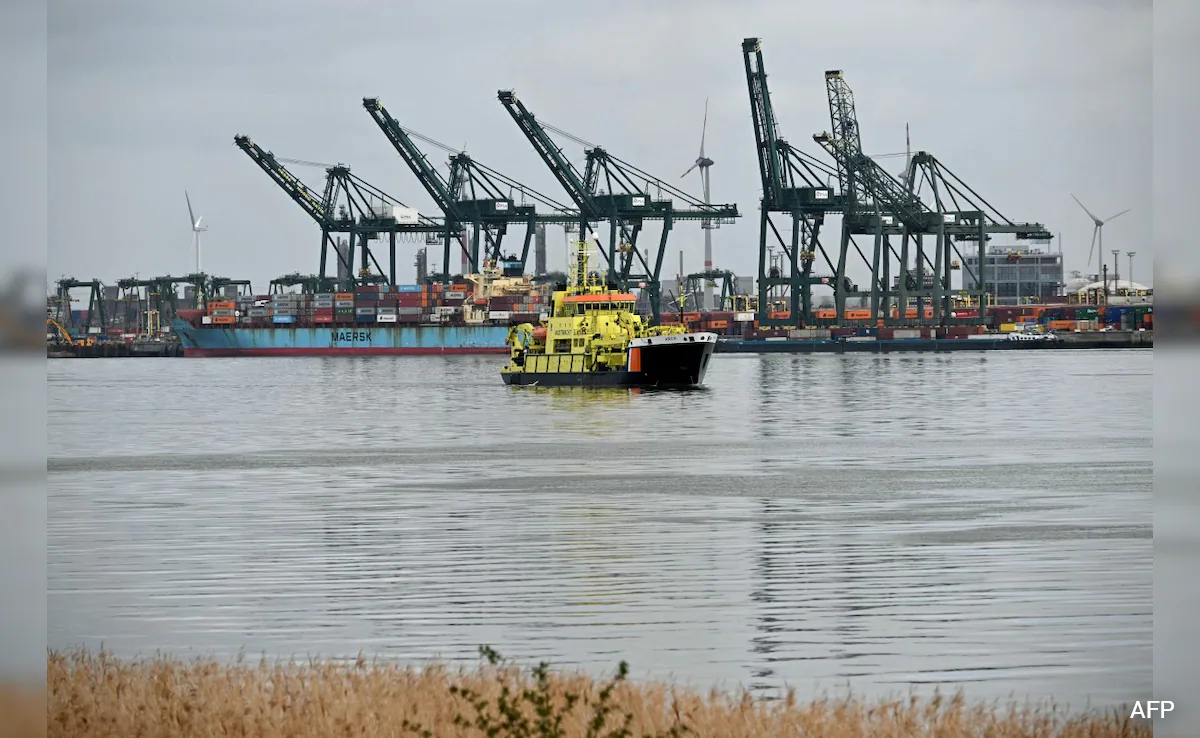
A simple Bluetooth tracking device hidden inside a postcard managed to expose the real-time location of a Dutch warship. The tracker, estimated to be worth around $5 (Rs 460), was discreetly placed inside a mailed postcard and sent to the naval vessel.
The Dutch warship HNLMS Evertsen received a normal-looking postcard on March 27. Once the postcard reached the ship, the tracker started quietly sending out signals about its location for nearly 24 hours. The ship was part of a NATO group led by the French aircraft carrier Charles de Gaulle, according to The Register.
These trackers do not need internet or GPS of their own. Instead, they use nearby phones to send location updates. On the ship, crew members' phones unknowingly helped the tracker transmit location data.
The Dutch defence ministry had shared mailing details online, so families and friends could stay in touch with personnel deployed at sea. However, this created a loophole, as it could expose the location of a warship worth hundreds of crores and put missions and the entire fleet's position at risk.
HNLMS Evertsen, valued at roughly $585 million, is designed to defend against aerial threats and operate in high-risk environments. Navy officials said the hidden tracker was discovered within 24 hours of the ship receiving the mail. It was spotted during routine sorting and then disabled.
Following the incident, Dutch authorities changed their rules and banned electronic greeting cards. Earlier, these items were not X-rayed like regular packages, which created a loophole that allowed the hidden tracker to slip onboard unnoticed.
"In a large-scale conflict, everyone must think: what can I contribute to the safety of our men and women? So, you should no longer base your actions on existing rules, but on what is necessary. We are still a bit naive, and that mindset needs to change," said former Lieutenant General Mart de Kruif.
A similar incident occurred in 2024 when sailors on the US Navy ship USS Manchester secretly installed a Starlink terminal to access the internet at sea, according to Tom's Hardware.
They created a private Wi-Fi network called "STINKY," which was hidden on the ship's deck for six months.
Last month, a French officer on the aircraft carrier Charles de Gaulle shared their running activity and route on the Strava app, which revealed the ship's location in the Mediterranean.
Track Latest News Live on NDTV.com and get news updates from India and around the world


