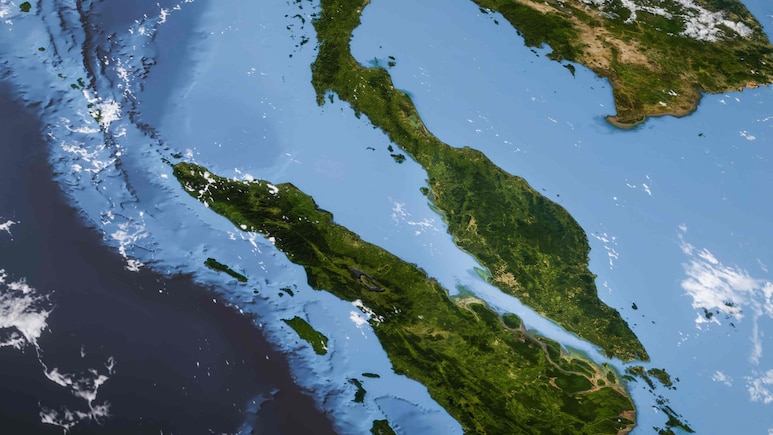
The Strait of Malacca has once again drifted into geopolitical conversation. As tensions simmer around the Strait of Hormuz, a fresh United States-Indonesia defence arrangement has prompted speculation that Washington may be widening its strategic gaze eastwards.
The Malacca passage, linking the Indian Ocean to the Pacific, is no mere alternative corridor. It is a central artery of global commerce.
Unlike Hormuz, which is overwhelmingly about oil, Malacca carries everything: crude, yes, but also electronics, machinery, coal, palm oil, and the innumerable goods that underpin modern economies.
Its narrow stretches make it a potential bottleneck. Its sheer traffic, often exceeding 80,000 vessels annually, makes it indispensable. For India, sitting close to its western approaches through the Andaman and Nicobar Islands, this renewed focus has both strategic and economic implications.
Yet, beneath this high politics and maritime calculus lies an older and interesting story.
The name "Malacca" itself, attached to one of the busiest waterways in the world, traces back to a tree. And not just any tree, but one deeply familiar to the Indian subcontinent: the amla.
A Narrow Corridor With Outsized Importance
Stretching roughly 900 kilometres, the Strait of Malacca separates the Malay Peninsula from the Indonesian island of Sumatra. At its narrowest, it shrinks to under 3 kilometres. This geography explains both its importance and its vulnerability.
The strait connects two immense bodies of water: the Andaman Sea (part of the Indian Ocean system) and the South China Sea, which feeds into the Pacific Ocean.
In practical terms, it is the shortest sea route between the Middle East, Africa and Europe on one side, and East Asia on the other.
Any vessel moving between these regions is almost compelled to pass through it unless it opts for longer, costlier detours such as the Lombok or Sunda straits.
This is why economies like China, Japan, South Korea and India depend heavily on Malacca. For China in particular, the reliance has been so acute that it has been described as the "Malacca dilemma", a strategic vulnerability centred on the fear that this narrow passage could be disrupted in times of conflict.
The geography also explains why global powers watch it so closely. A narrow channel with immense traffic is not just a trade route; it is leverage.
The Prince, A Tree, And A Sign
The story of how the strait acquired its name takes us back to the late 14th or early 15th century, and to a wandering Sumatran (a large, rugged island in western Indonesia) prince named Parameswara.
Parameswara, a ruler of Palembang, a city in Indonesia, with links to the fading Srivijaya world, had been displaced amid regional power struggles involving the Majapahit Empire.
After a series of movements that took him through Temasek (modern Singapore), he arrived on the Malay Peninsula in search of a new base.

Parameswara was a Hindu-Buddhist prince from Palembang who also founded Singapore. Photo: Wikicommons
According to Malay chronicles, one day while hunting near the mouth of a river, he paused to rest beneath a tree. During this pause, he witnessed an unusual scene: a small mouse deer, which was cornered by his hunting dogs, turned and kicked one of them into the water. The sheer audacity of the tiny animal, overcoming a stronger adversary, struck him as a sign.
Taking it as a marker of good fortune, Parameswara decided to found his new settlement at that very spot. He named it "Melaka", after the tree under which he had been sitting.
That tree, according to longstanding tradition, was the Indian amla, known botanically as Phyllanthus emblica. In Sanskrit, it is called amalaka. Over time, the settlement grew into a thriving port city, and its name extended outward to the surrounding waters. Thus, the Strait of Malacca.
The Indian Connect
The presence of an amla tree in this story hints at the deep and centuries-old connections between the Indian subcontinent and Southeast Asia.
The amla tree is native to India and widely used in traditional medicine, cuisine and ritual. Its fruit, rich in vitamin C, has long been prized in Ayurveda.
That such a tree was known, recognised, and culturally significant enough to lend its name to a settlement in Southeast Asia speaks to the intensity of early trade and cultural exchange across the Indian Ocean.
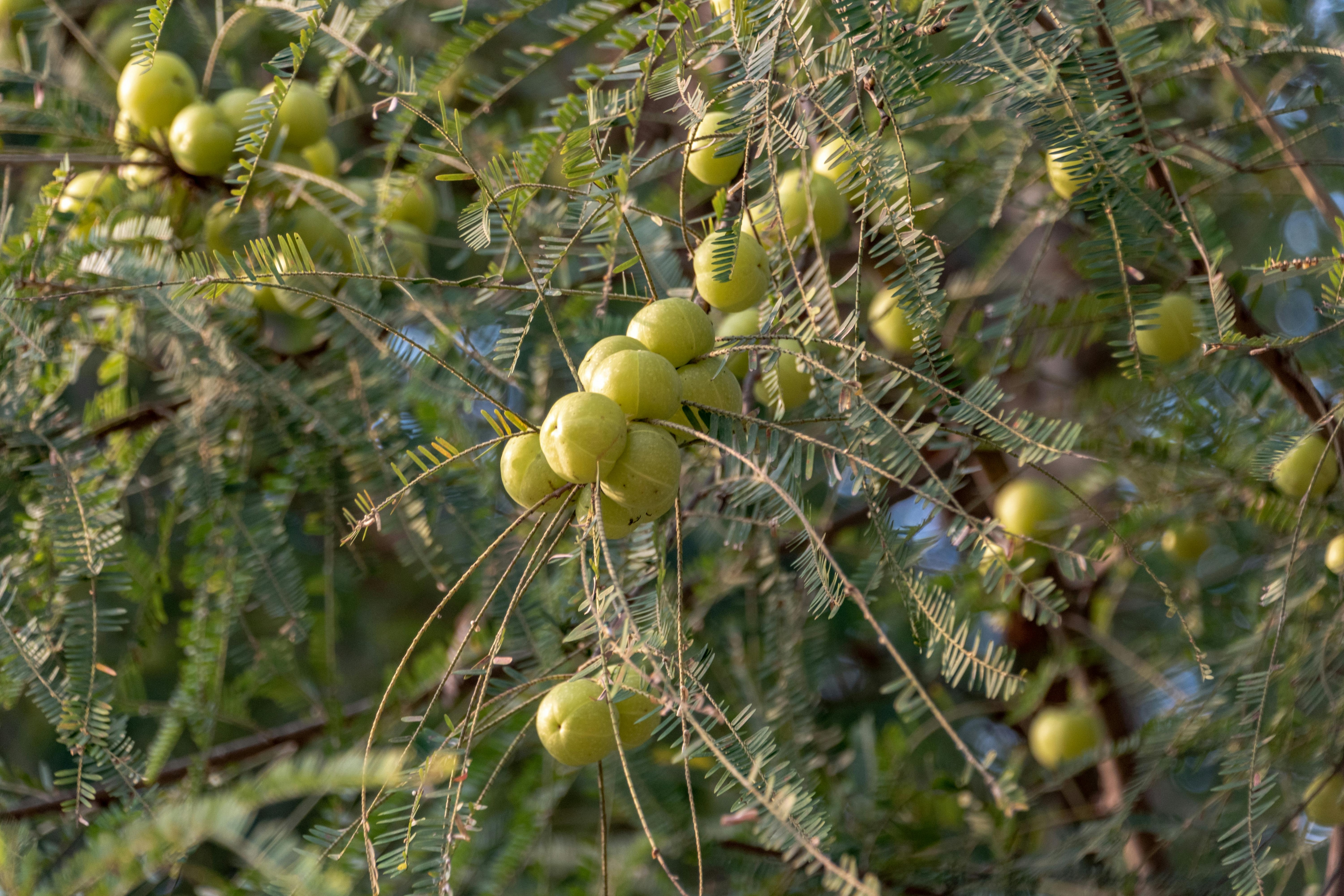
Amla. Photo: Pexels
Long before European colonial powers arrived, merchants from India, Arabia and Persia sailed with the monsoon winds to ports along the Malay Peninsula.
They brought with them goods, languages, religious ideas, and even plant species. The Malay world absorbed and adapted these influences, weaving them into local traditions.
The naming of Melaka after an amla tree reflects this layered interaction.
From Fishing Village To Maritime Powerhouse
What began as Parameswara's modest settlement soon evolved into the Malacca Sultanate, one of the most powerful trading states in Southeast Asia.
By the 15th century, Malacca had become a critical entrepot, sitting astride the maritime route between India and China.
Ships from across the world docked there, exchanging spices, textiles, ceramics, metals and more.
The Sultanate's rulers skilfully managed this traffic, offering protection, regulating trade and maintaining diplomatic ties with major powers including Ming China.
Control of the strait translated directly into wealth and influence.
Earlier, the Srivijaya Empire had exercised similar dominance. Later, the Portuguese captured Malacca in 1511, followed by the Dutch and then the British. Each recognised the same fundamental truth: whoever controlled this narrow waterway held a key to global trade.
Even today, that logic remains unchanged. The strait continues to function as one of the most vital maritime corridors in the world; its relevance undiminished despite advances in technology and alternative routes.
Congestion, Piracy, And Power Politics
Modern Malacca is not just busy; it is intensely congested. Thousands of vessels pass through annually, navigating narrow channels and shallow points that impose limits on ship size, often referred to as "Malaccamax".
This density brings risks. Piracy, though largely contained compared to its peak years, still occurs. Accidents are an ever-present concern in such a crowded passage. Environmental risks, including oil spills, add another layer of vulnerability.
At the same time, the strait sits at the intersection of great power competition. The United States views it through a strategic lens. China sees it as both a lifeline and a vulnerability. India, by virtue of geography, occupies a vantage position near its western approaches.
This makes Malacca not just a trade route, but a geopolitical stage.
READ MORE: The Strange Link Between The Himalayas And The Strait Of Hormuz
Track Latest News Live on NDTV.com and get news updates from India and around the world


