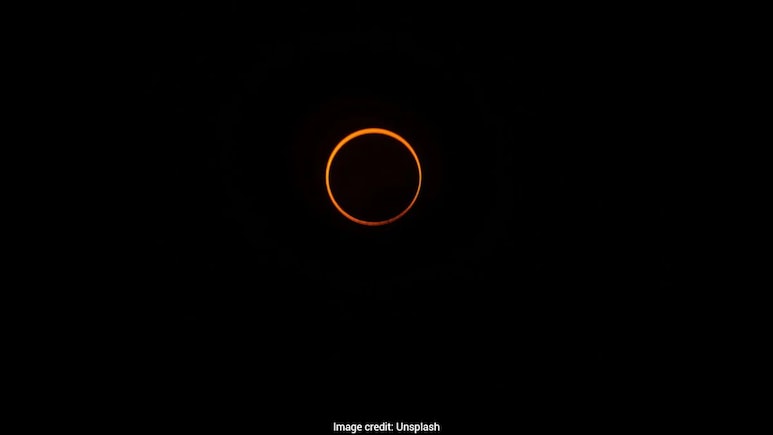
- The first solar eclipse of 2026 will occur on February 17, known as the 'Ring of Fire'
- Google has created an interactive animation to simulate the annual solar eclipse event
- Users can access the feature by typing "solar eclipse" or "Surya Grahan" in Google Chrome
The world will witness its first solar eclipse of 2026 on Tuesday, February 17. The astronomical event, which is also known as the ‘Ring Of Fire', has generated significant buzz among astronomers and stargazers.
Now, Google has come up with an interactive animation to make the annual solar eclipse phenomenon all the more special.
What is Google's Annual Solar Eclipse Animation?
Google, known for its amazing doodles to celebrate landmark events, has rolled out a fun eclipse feature that can be experienced from anywhere.
How Does It Work?
All you need to do is open google chrome brower on your device.
Next, type "solar eclipse" or "Surya Grahan" in the search bar and press enter.
Now, wait for the magic.
You will witness a graphic overlay depicting the phenomenon: a simulation of the Moon passing over the Sun, highlighting just the Sun's outermost layer called the corona.
What Is A Solar Eclipse? How It It Different From Annual Solar Eclipse?
A solar eclipse occurs when the Sun, the Moon, and Earth line up, either fully or partially. It provides an exciting view of the Sun or Moon based on the alignment.
As per NASA, an annular solar eclipse happens when the Moon passes between the Sun and Earth, but when it is at or near its farthest point from Earth. Because the Moon is farther away from Earth, it appears smaller than the Sun and does not completely cover the Sun. As a result, the Moon appears as a dark disk on top of a larger, bright disk, creating what looks like a ring around the Moon.
Track Latest News Live on NDTV.com and get news updates from India and around the world


