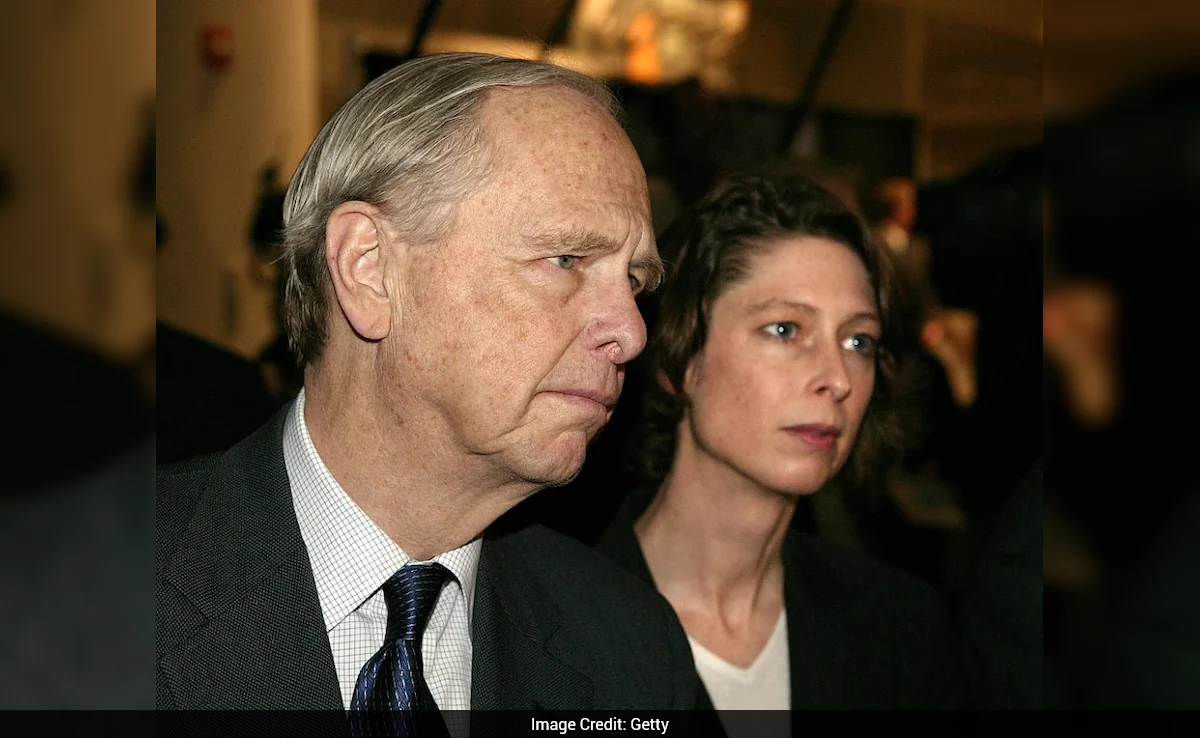
Fidelity is one of the world's most powerful investment firms that manages trillions in assets and serves millions of customers in US. Yet its rise has been shaped as much by internal family dynamics as by market success. In 2005, tensions within the Johnson family triggered a dramatic leadership crisis that threatened to unsettle the company's future.
At the centre of the episode was Abigail Johnson, daughter of then-chairman Edward Ned Johnson III, who had been leading Fidelity's flagship mutual-funds division. But her tenure was under strain. According to a report in Wall Street Journal, the business was struggling with weak fund performance, investor outflows and the fallout from a trading scandal.
Concerns among senior executives and board trustees had been building for months. The issue came to a point when trustee Marvin Mann went to Johnson's home to discuss her performance. According to the account, he told her she wasn't doing a good job. Days later, Ned informed his daughter that she would be removed from her role. There was a proposed reassignment to oversee the firm's philanthropy which was clearly a demotion.
Abigail responded with, I quit, according to the report. But the situation took a major turn when after some days, Ned offered her leadership of Fidelity Employer Services Company (FESCO), the firm's rapidly growing 401(k) business. Though successful in expanding its client base, the division faced criticism for prioritising growth over customer service
Abigail accepted the role and stepped into a unit built by Ned's deputy, Bob Reynolds, who was skeptical of her leadership. Behind the scenes, there were disagreements. There were divisions over Fidelity's long-term direction, including the possibility of a sale, an idea Abigail opposed. She feared that the sale would end six decades of family control.
In response, she took an unusually assertive step. As one of Fidelity's largest shareholders, Abigail signalled she could withhold votes for board re-elections.
Executives grew concerned she was attempting to rally support to remove her father as chairman. The standoff culminated at a board meeting in April 2005. But before tensions could escalate further, the Johnson family reached a compromise that defused the situation.
During the meeting, a move to issue additional stock reshaped voting power which increased Ned's stake and ultimately secured his control.
In its aftermath, Abigail continued to lead FESCO. In the years that followed, she went on to succeed her father as chairman and oversaw a period in which Fidelity further expanded its reach. Now, at 64, she leads one of the world's largest investment businesses.
Track Latest News Live on NDTV.com and get news updates from India and around the world


