Every time you ask ChatGPT a question, generate an AI image, or use an artificial intelligence tool, water is consumed in the background in large amounts.
As AI systems become more powerful, the data centres that run them require enormous amounts of energy and cooling. The United Nations has warned that by the end of this decade, AI data centres could consume as much water as 1.3 billion people.
Now, Nvidia, the company at the centre of the AI boom, believes it may have found a way to tackle one of the technology's biggest environmental challenges.
The Hidden Cost Of The AI Boom
AI chips are extremely powerful, but that power comes with a big heating problem.
To prevent these chips from overheating, data centres traditionally rely on cooling systems that use large amounts of water. In several parts of the world, communities have raised concerns about data centres putting pressure on local water supplies, increasing electricity demand and driving up costs.
For Big Tech companies racing to expand AI infrastructure, reducing this environmental impact has become a major challenge.
Nvidia says its latest AI servers could significantly reduce, and in some cases almost eliminate, the need for water-based cooling.
A New Way To Keep AI Chips Cool
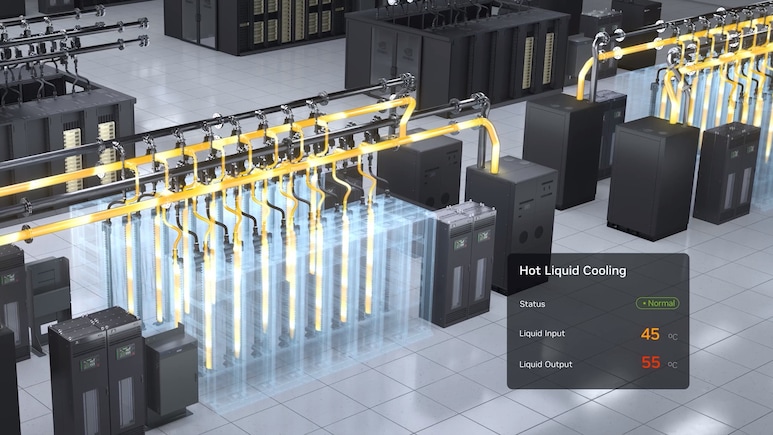
Instead of traditional cooling methods, Nvidia's new infrastructure uses a liquid coolant that moves through a closed-loop system.
The idea is similar to a car's cooling system in which the liquid continuously circulates, absorbs heat from the chips, and carries it away without constantly requiring fresh water.
The key development is that Nvidia's system can function at temperatures as high as 45 degrees Celsius.
That matters because the hotter the coolant can safely operate, the less need there is for massive chillers and energy-intensive air-conditioning systems used in traditional data centres.
Nvidia estimates that large AI facilities using this technology could save millions of dollars every year in cooling-related energy and water costs.
But Can This Really Make AI Greener?
The technology could be a major step forward, but it does not completely solve AI's environmental impact.
For one, these advanced systems are expensive, and replacing existing data centre infrastructure across the world will take time.
More importantly, even if AI data centres use less water for cooling, they will still require huge amounts of electricity. Depending on how that electricity is generated, producing it can also consume significant amounts of water.
There is also a bigger question: if AI becomes cheaper and more efficient to run, will companies reduce their environmental footprint or will they simply build even more data centres and expand AI even further?
History has shown that when technology becomes more efficient, it often leads to greater usage rather than less.
Nvidia's breakthrough could mark an important change in the way AI infrastructure is built. A future where artificial intelligence does not need vast amounts of water just to stay cool may be possible.
But whether this makes AI truly greener or simply helps power the next phase of AI expansion is a question that will continue to shape the debate around the technology.
Track Latest News Live on NDTV.com and get news updates from India and around the world


