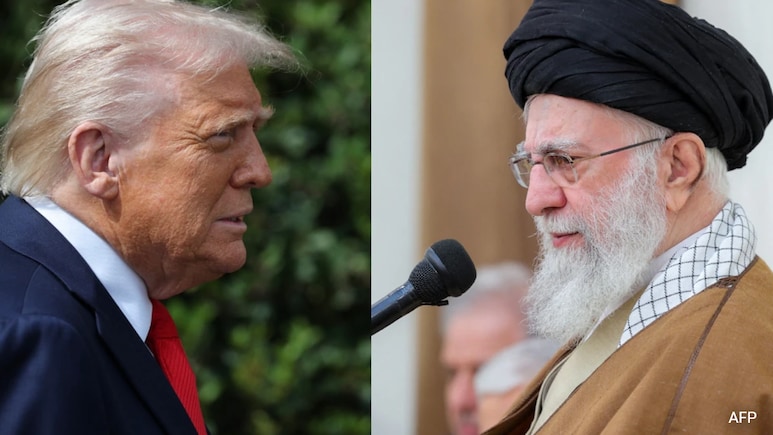
Secretary of State Marco Rubio said in an interview that US President Donald Trump's preference was for a deal with Iran and that he is also open to meeting Iran's supreme leader, Ayatollah Ali Khamenei.
"Nation states need to interact with one another - I serve under a president that's willing to meet with anybody," he told Bloomberg. "I'm pretty confident in saying that if the Ayatollah said tomorrow he wanted to meet with President Trump, the president would meet him, not because he agrees with the Ayatollah, but because he thinks that's the way you solve problems in the world."
Rubio also warned that Europe's leaders must return to the traditions and values they share with the US while seeking to reassure allies about Washington's commitment to the continent.
"We want Europe to prosper because we're interconnected in so many different ways, and because our alliance is so critical," Rubio told Bloomberg News Editor-in-Chief John Micklethwait. "But it has to be an alliance of allies that are capable and willing to fight for who they are and what's important."
"What is it that binds us together? Ultimately, it's the fact that we are both heirs to the same civilisation, and it's a great civilisation," he said. "It's one we should be proud of."
Rubio's comments elaborated on a speech he delivered to the Munich Security Conference earlier Saturday morning that struck a friendlier tone than combative remarks delivered at the event a year earlier by Vice President JD Vance, even as it leaned into Trump's nationalist message.
The top US diplomat offered a double-edged message, citing the shared US security and cultural ties with Western Europe - Michelangelo, the Rolling Stones, and even better American beer.
At the same time, he framed the issue as one where Europe must change, saying the US had no interest "in being polite and orderly caretakers of the West's managed decline." He criticised "an unprecedented wave of mass migration that threatens the cohesion of our societies" and cited the West's "shared history, Christian faith", culture and language.
In the interview, Rubio said he was not turning away from Vance's message, which warned European nations of dangers from their own policies, but wanted to help explain why President Donald Trump's team felt compelled to make it.
"The alliance has to change," Rubio told Bloomberg. "When we come off as urgent or even critical about decisions that Europe has failed to make or made, it is because we care."
Tensions between the US and its allies have only gotten worse in the year since Vance's speech, with tariff fights, Trump's renewed threat to take over Greenland, and a National Security Strategy unveiled late last year that, like Rubio, warned of Europe's "civilisational erasure".
Asked about the Russia-Ukraine war, Rubio said he believes President Vladimir Putin's war aims have changed and he now only wants to take the 20% of the Donetsk region that his forces don't now occupy. He characterised Trump's decision to send a second aircraft carrier to the Middle East as a bid to make sure Iran doesn't "come after us and trigger something larger beyond that", declining to say if the US was running out of patience with the regime.
Rubio spoke a day after German Chancellor Friedrich Merz said the transatlantic relationship must evolve and warned against a new era of great power politics. He said Germany and Europe need to bolster their security and independence together.
Rubio's speech was the most anticipated of the three-day conference, with world leaders eager to hear if he would double down on Vance's tone or diverge from it. The audience applauded loudly at its conclusion.
"Mr Secretary, I'm not sure you heard the sigh of relief through this hall when we were just listening to what I would interpret as a message of reassurance of partnership," Wolfgang Ischinger, the chairman of the Munich Security Conference, told him.
Others were less accommodating. European Commission President Ursula von der Leyen said she was reassured by Rubio's speech but also said, "Some lines have been crossed that cannot be uncrossed." "And UK Prime Minister Keir Starmer cautioned that Europe "shouldn't get in the warm bath of complacency" about its own defence and security.
Track Latest News Live on NDTV.com and get news updates from India and around the world


