






- US extracts Maduro from Venezuela, gaining control of more than 300 billion barrels of oil reserves
- US attacks Iran and Tehran blocks Strait of Hormuz, halting 20-25% of global seaborne crude shipments
- US gains increased military access to Indonesia, likely targeting control over Strait of Malacca
Let's play chess, global oil supply edition.
January 2026 - the US moved its knight to Venezuela, captures its rook. Fighter jets - F-22 and F-35 - and elite troops, including the storied Delta Force, infiltrated and kidnapped now ex-president Nicolas Maduro and his wife.
Venezuela has the world's largest proven oil reserves - around 303 billion barrels, according to the US' Energy Information Administration.
February 2026 - the US moved its queen to Iran to capture a second rook. The USS Gerald R Ford delivered F-35 stealth fighters and F/A-18 Super Hornets for precision air strikes. Tomahawks pounded Iranian military and energy infrastructure.
The Strait of Hormuz - shipping 20-25 per cent of global seaborne crude - effectively shut down.
March 2026 - the US moved its bishop to Indonesia to pin the queen. Under a new deal, US military aircraft get increased operational access to Indonesian airspace, potentially enhancing surveillance and control over the Strait of Malacca.
Less than three kilometres wide at its narrowest, the strait funnels between 25 and 30 per cent of all commercial shipping past Singapore, Malaysia, and Indonesia. It is also the world's busiest oil route, handling 22 to 29 per cent of seaborne crude.
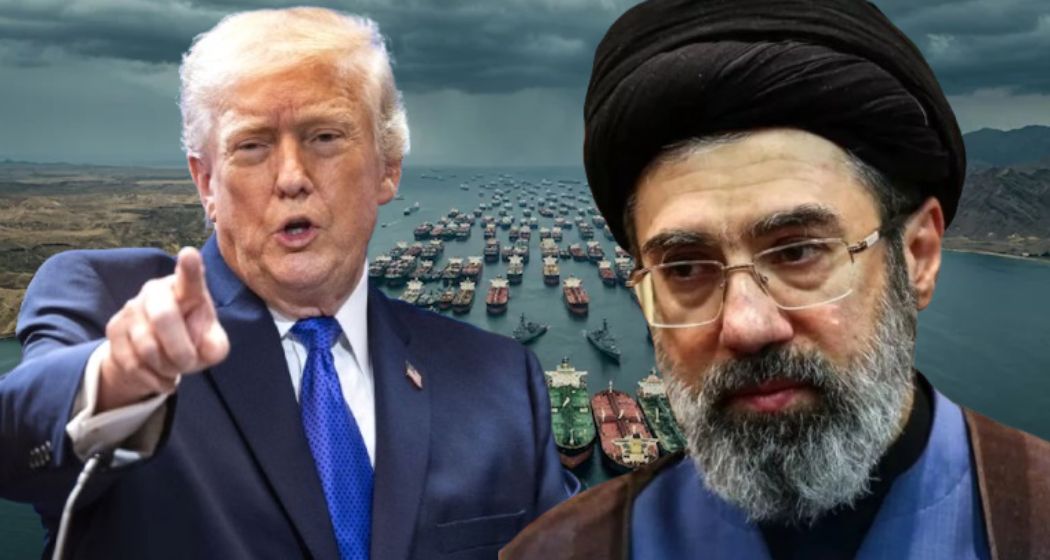
Image generated by AI
'Chokepoint calculus'
Experts have said this suggests US President Donald Trump has a plan, though most critics might disagree. The plan is likely to achieve strategic superiority over China by squeezing oil supply lines, rather than a direct, possibly military, face-off.
The idea - to choke sanctioned crude oil shipping lines to Beijing via an escalating ladder of energy denial. Venezuela was the test, Iran amplified the calculus, and Malacca, potentially, seals it.
Tactical execution in Venezuela was clean. The US now controls 300+ billion barrels.
How Iran Sucker-Punched Trump Into 'Escalation Trap' 'Hellhole'
But Iran was not Venezuela and launched counter-strikes - asymmetric warfare kept US forces off-balance and the 'mosaic doctrine' maintained resistance despite early decapitation strikes that included Supreme Leader Ali Ayatollah Khamenei.
Image generated by AI
From one perspective, the Hormuz blockade actually worked in the US' favour; Trump has repeatedly said the US, as the world's largest oil producer and backed by his 'drill, baby, drill' policy, doesn't need the oil coming through the strait.
China, he has pointed out, does, though he vastly overestimated that reliance.
'Five Straits' Trap: How Hormuz Blockade Exposes Global Oil Flow Risk Issue
But most of Asia and Europe does rely on Hormuz-shipped crude, and a blockade put pressure on Trump to find a clean off-ramp and restore global energy supply. Trump projected a swift end to the fighting to placate runaway Brent crude prices but that has not happened so far.
And Tehran's blockade has remained intact while China continued to pick up sanctioned crude.
But the US' blockade now adds a double-bluff layer that increases regional uncertainty and threat of spiralling conflict if China-flagged tankers are attacked.
China Defence Minister Admiral Jong Jun has already warned the US to "not interfere in our affairs", possibly setting up the military confrontation Trump hoped to avoid.
Any end to the fighting now will likely include, as US negotiators made it clear last week, the control over the Hormuz that Iran has demanded, i.e., the right to impose 'tolls' that would offer any collector the de facto ability to prevent passage to certain tankers or ships.
The Malacca move has just begun, but it is what underscores the idea that the United States is trying to build a crude oil supply-based coercive architecture around China.
The passage is jointly managed by Singapore, Indonesia, and Malaysia, and the deal with Jakarta gives Washington access to airspace over the strait - critical to establish a chokepoint.
Image generated by AI
The Strait of Malacca handles nearly a third of the world's seaborne crude oil trade and is even more important to China than the Hormuz because it ships around 80 per cent of its crude.
Beijing knows this, hence the 'Malacca dilemma' red flag raised by Hu Jintao in 2003.
The answer included Venezuela, Iran, and Russia as diversified sources, and the building of overland pipelines - through central Asia, Russia, and Pakistan, to offset marine interference.
China's counters
Before the early-January Caracas raid, China was the largest buyer of sanctioned Venezuelan crude, picking up 50 to 80 per cent of its estimated 921,000 barrels a day output.
A majority went to 'teapot refineries', i.e., small-scale units in the Shandong region that act as geopolitical cushions, refining the cheaply bought crude to generate vital buffer stocks.
After the US raids, China twitched.
Shadow fleets - tankers with sanctioned oil that bypass checks by masking final destination or by disabling AIS tracking aids to run dark - scrambled to find new routes after the US launched 'Operation Southern Spear' to identify and seize them.
But Beijing recovered. It had stocked up on Venezuelan crude in end-2025 and millions of barrels more had already left; markets analyst Kpler said around 43 million were in transit.
And Beijing learned. Russian crude imports shot up over Jan-Feb 2026 to 40.9 per cent year-on-year, while Iran-origin crude fell by roughly 13 per cent over the same time.
Pre-Iran war, China shipped 45-50 per cent - around 5.4 million barrels daily Q1 2025 - via the Hormuz, almost as much as the next three - India, South Korea, and Japan - buyers combined.
The blockade forced smaller Asian nations to act as Brent crude skyrocketed past the US$110 a barrel red line and fuel prices soared; Myanmar regulated sale of new cars, Thailand told people to work from home, and the Philippines announced a full emergency.
But vast buffer stocks and years of policy measures that have reduced China's vulnerability to energy shocks, such as the administration's push on electric vehicles, kicked in.
In 2025 EVs consumed roughly the same amount of oil China imports from Saudi Arabia, the Centre for Research on Energy and Clean Air said. And the country's coal-powered electricity grid remained insulated, and has even been switching to renewable or clean energy sources.
Malacca a checkmate move?
No, though it will further churn global shipping.
China has three levers it can pull if the US tries to weaponise Malacca.
The first is, of course, to re-route crude supply overland. The infrastructure is either already in place or is being built. It will be some time, certainly, before it can deliver enough to offset loss from seaborne supply line. But a prescient Beijing has been working this for several years.
It also has, experts suggest, the world's largest emergency oil reserves at over 1.3 billion barrels, which gives it plenty of room to play a wait-and-see game or absorb the US' squeeze for now.
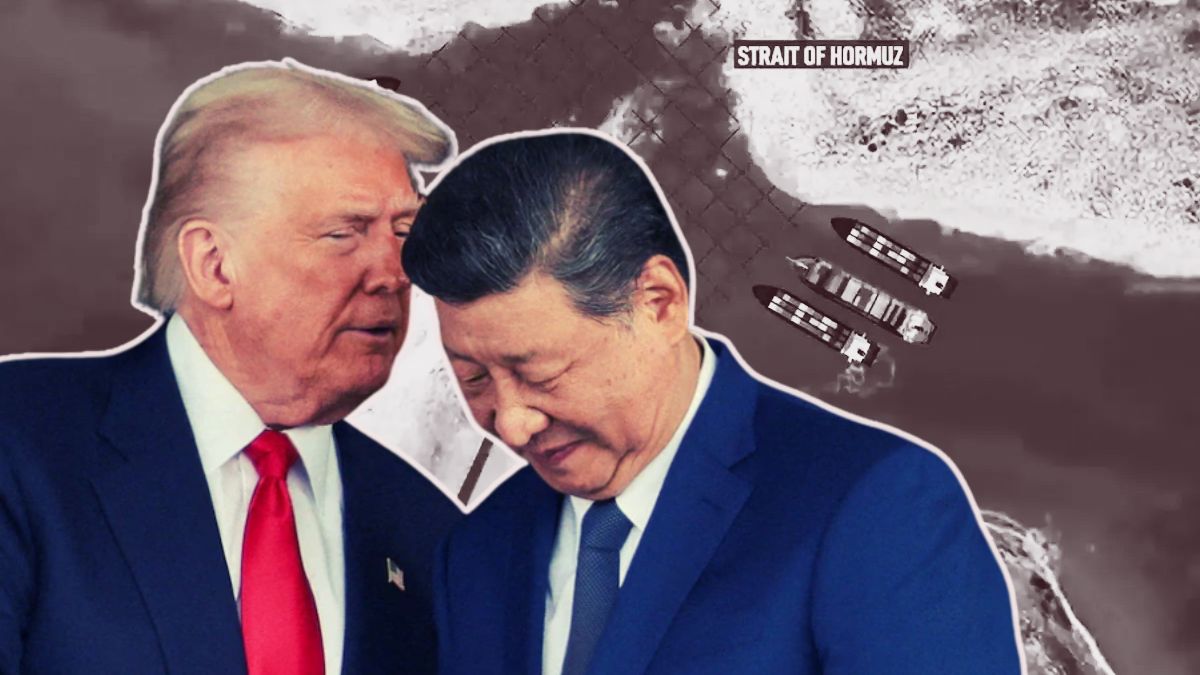
US President Donald Trump and his Chinese counterpart, Xi Jinping. Photo: AFP (File Photo)
The second is to expand an already significant hold over the world's shadow tanker fleet, which will, in the case of Malacca, potentially drop the region into a zone of legal ambiguity has linked maritime security risks, particularly in an area where piracy is already a major concern.
Finally, and most importantly, Beijing could exert pressure on any one, or all, of Jakarta, Kuala Lumpur, and Singapore to drive a wedge, either between the three or between them and the US. The tried-and-tested infrastructure financing method - which yielded Beijing critical access to ports in Sri Lanka, that allow it to keep an eye on India, for example, will be used.
Beijing could also amp up maritime security rhetoric in the region, which will unsettle smaller nations and force Trump into a balancing act - pressure Malacca or soothe allies.
So what's the end game?
This is chess at the highest level of global geopolitics and security.
But there is no definite end game. China can, has, and will, redefine trade and oil flows - using 'dark' tankers or pipelines or diplomacy - to counter any American move.
What this probably is a game of 'who blinks first'. If the aim is to squeeze Chinese oil seaborne oil supply lines dry, the question is - how far is Washington prepared to go to achieve that aim.
For India
The evolving dynamics around Malacca place India in a position of relevance.
Located close to its western side, the Andaman and Nicobar Islands provide Delhi with a natural vantage point over maritime traffic in the region and military infrastructure, including an air base at Campbell Bay, allows it to monitor key shipping lanes.
US Eyeing Malacca After Hormuz? Why It Matters To India
And regional infrastructure initiatives further bolster maritime capabilities, strengthening India's presence and offering the US a trusted military and diplomatic ally that can continue to balance China's influence in the region.

