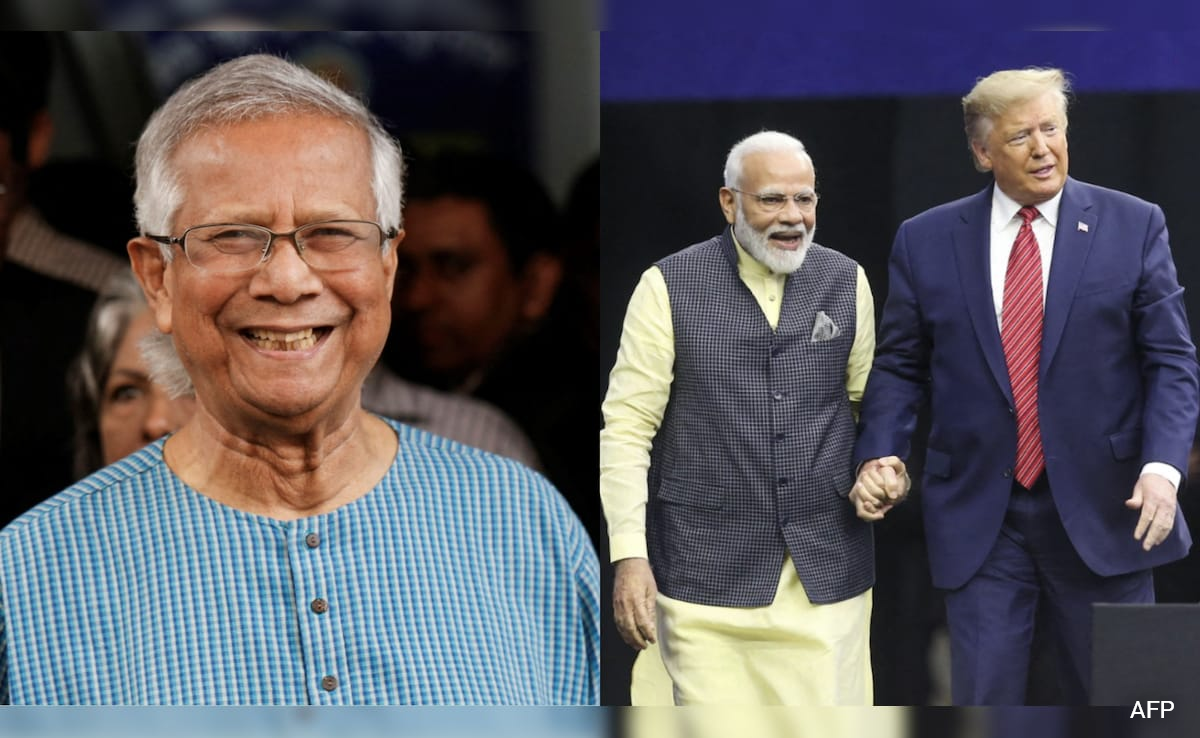
- The US and Bangladesh will sign a trade deal on February 9, three days before elections
- Bangladesh fears losing garment exports to India due to US tariff reductions
- Bangladesh’s garment sector risks millions of jobs if trade terms do not match India’s deal
The United States and Bangladesh are set to sign a trade agreement on February 9, just 72 hours before the national election on February 12. The deal has faced significant criticism because of secrecy surrounding its terms.
Bangladesh has scrambled to finalise the deal after the India-US trade agreement that reduced tariffs on Indian goods to 18 per cent. Bangladesh fears losing market share to India if it cannot secure equally competitive or better terms, as its economy relies heavily on ready-made garment (RMG) exports to the US, which make up nearly 90 per cent of its American exports.
Read | Key Parties Contesting Bangladesh Elections 2026
Bangladesh Tariffs
The deal comes after Washington hit Dhaka with a steep 37 per cent tariff in April 2025. In July the tariffs were negotiated down to 35 per cent and then eventually to 20 per cent in August. The upcoming trade deal is further expected to reduce the tariffs to 15 per cent.
'Secret' US Trade Deal
Moreover, in mid-2025, the interim government led by Muhammad Yunus signed a formal Non-Disclosure Agreement with the US, committing to keep all tariff and trade negotiations confidential. No draft of the agreement has either been shared with the public, the parliament or key industry stakeholders.
In August last year, the Commerce Adviser, Sk Bashir Uddin, said, "There will be nothing in the agreement that goes against the country's interests. Subject to US consent, it will also be made public," according to Prothom Alo.
US Conditions In The Deal
The publication also reported that there are several 'conditions' in the deal. First, to reduce imports from China and increase military imports from the US rather than China. Second, US imports should be able to enter Bangladesh freely, and the South Asian nation would need to accept US standards and certifications without raising questions. Inspections regarding the import of the US' vehicles and parts should not be carried out, as Washington wants easy access for its vehicles in the Bangladesh market.
Devpriya Bhattacharya, a distinguished fellow of the private research organisation Centre for Policy Dialogue (CPD), told Prothom Alo that the trade deal is not transparent, as there has been no opportunity to weigh its advantages and disadvantages.
"Had the tariff agreement been signed after the election, political parties could have discussed it. It is also worth considering whether the hands of the incoming elected government are being tied," he said.
Since an unelected interim administration is signing the deal three days before the elections, it means the onus of implementing the agreement would fall on the party that forms the newly elected government.
Bangladesh's Garment Industry In The Dark
Bangladesh sells a massive amount of clothes and textiles to the US every year (around $7 to $8.4 billion). This makes up nearly 96 per cent of everything Bangladesh sends to the US. In contrast, Bangladesh only buys about $2 billion worth of goods from the US. Any change in trade rules is a huge deal for Bangladesh because the US is such a big customer.
Since India and Bangladesh sell similar products, like clothes, a lower tax for India means Indian clothes become cheaper for Americans to buy. If Bangladesh's "secret" deal doesn't match or beat India's 18 per cent rate, American buyers might switch their orders to India, putting millions of Bangladeshi jobs at risk.
The garment sector in Bangladesh is the engine of the country, as it employs 4 to 5 million people, most of whom are women. It brings in over 80 per cent of the money Bangladesh makes from all exports. It accounts for nearly 20 per cent of the entire country's economy.
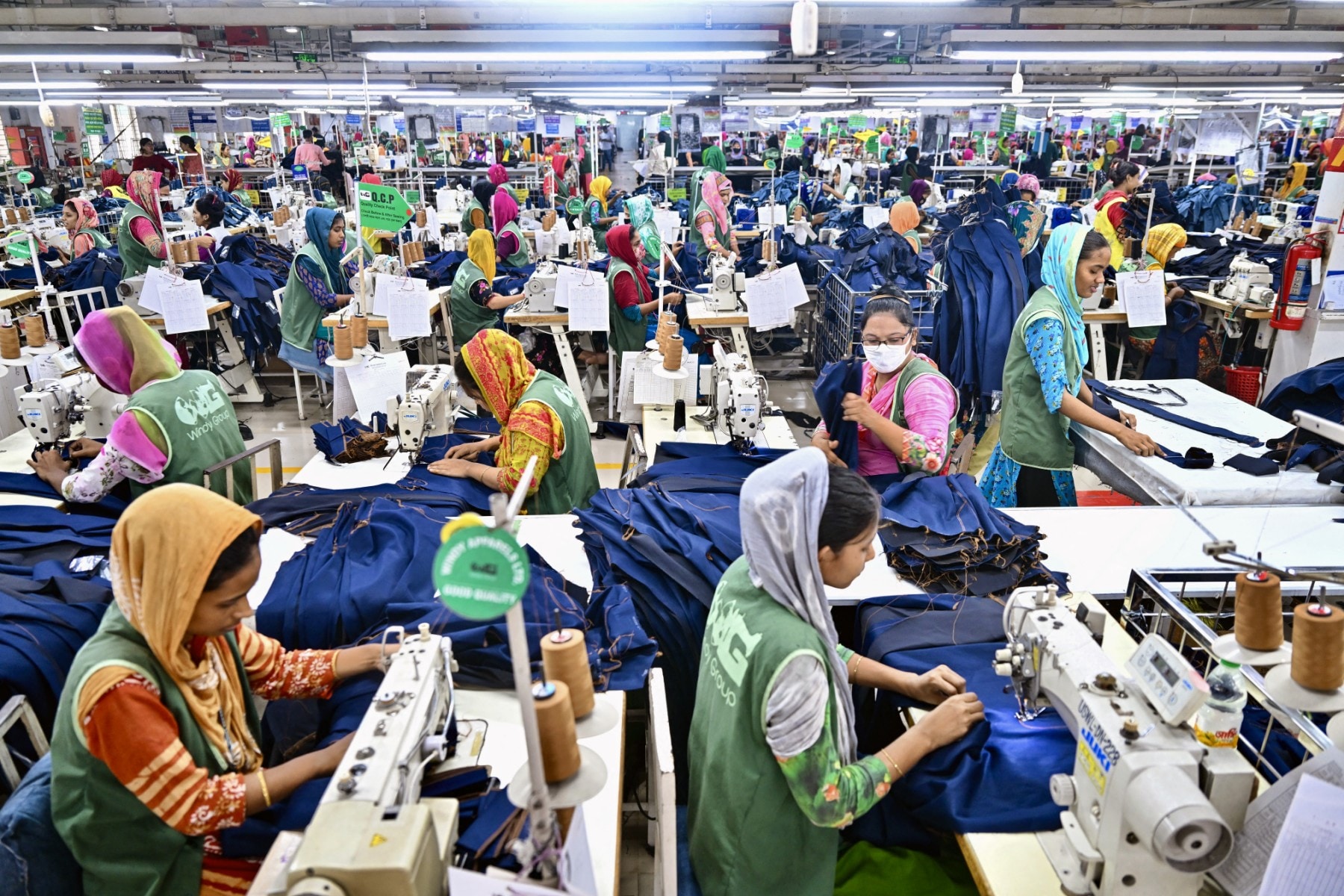
Garment workers tailor clothes at their sewing stations in a garment factory in Tongi, on the outskirts of Dhaka
Photo Credit: AFP
Business leaders are concerned regarding the terms of the deal, as they are in the dark about which sectors would be negatively impacted.
"Based on the target for purchases from the US, it can be expected that the reciprocal tariff rate will come down to 15 per cent (currently 20 per cent). I had heard that national security adviser Khalilur Rahman had streamlined this. I was surprised to see the signing of the agreement come just three days before the election. I still believe this should have been done after the election, because it carries major implications," Bangladesh Garment Manufacturers and Exporters Association (BGMEA) senior vice president Inamul Haque Khan told Prothom Alo.
Anu Muhammad, a Bangladeshi economist, said that the country is entering the agreement without transparency and criticised it for being absurd.
"Mr Yunus has actually appointed some foreign companies and foreign state lobbyists in this government under the guise of advisers and special assistants. These foreign lobbyists appointed as chief advisers are jumping around to make these deals from within the government," he wrote on Facebook.
He questioned, "Do they have a commitment or an obligation to someone that they must do this contract? Otherwise, why are they pushing the country into a terrible, dangerous situation?"
It is interesting to note that US diplomats have signalled that they are open to working with Jamaat-e-Islami, which has also been banned multiple times in Bangladesh's history, most recently under Sheikh Hasina.
Track Latest News Live on NDTV.com and get news updates from India and around the world


