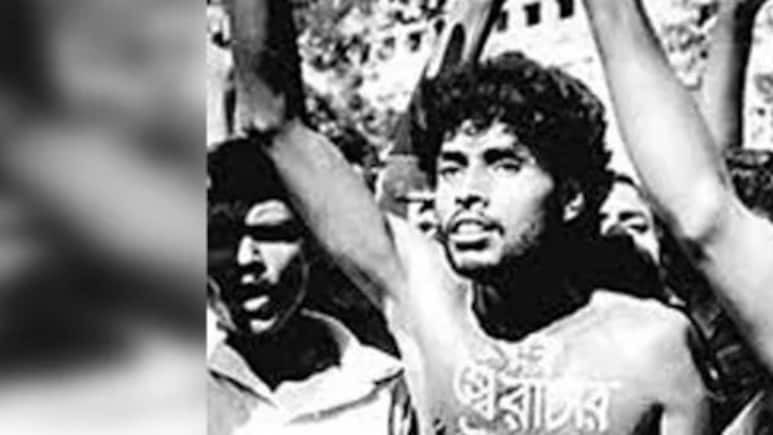
- Noor Hossain was killed during a 1987 pro-democracy protest in Dhaka, Bangladesh
- He carried slogans painted on his body opposing autocracy and demanding democracy
- President Ershad had banned gatherings and used emergency powers to suppress protests
As Bangladesh moves towards another national election, the country's political calendar turns back to its defining moments. Under deposed former Prime Minister Sheikh Hasina's rule, rallies filled the streets, opposition leaders faced restrictions, and the language of democracy competed with the language of control.
Nearly four decades ago, under a military dictatorship, the same tensions were seen in Dhaka. On November 10, 1987, they converged on the body of a 26-year-old man named Noor Hossain. He carried no weapon. What he carried were words across his body.
Bangladesh Under Muhammad Ershad
By early November 1987, President Hussain Muhammad Ershad had effectively sealed off Dhaka. Communications were cut. Educational institutions were shut. Political gatherings were banned. Emergency powers allowed mass arrests of opposition activists. Ershad, who had seized power in a 1982 military coup, was determined to crush a growing pro-democracy movement.
Yet opposition parties pressed ahead. On the morning of November 10, thousands attempted to march. Many never reached the rally as riot police intercepted protesters across the city. Some were beaten and detained, others were shot.
Among those detained that day was journalist Moazzem Hossain, who later recalled seeing a body dumped inside a police cell.
“One body stood out, it had a slogan painted on the bare chest,” he wrote in his report for the BBC. “Sairachar nipat jak (Down with autocracy).”
The man was Noor Hossain.
Who Was Noor Hossain?
Noor Hossain came from a working-class family in old Dhaka. His father, Mujibur Rahman, drove an autorickshaw. He was politically active but held no formal position.
The night before the protest, Noor Hossain walked into a small signboard shop in Motijheel run by an 18-year-old painter named Ikram Hossain.
“He took me into a narrow alley nearby,” Ikram Hossain told the BBC. “There he wrote the slogans on the wall with chalk. Then he took off his shirt and requested me to write the slogans on his body.”
Ikram refused at first. “You could be arrested. You could be killed,” he told him.
Noor insisted and told Ikram that the next day there would be a hundred people with the same slogans painted on their bodies.
Ikram finally agreed. He painted two lines in white enamel paint- “Sairachar nipat jak” (Down with autocracy) on the front. “Gonotontra mukti pak” (Let democracy be freed) on the back.
Shaheed Noor Hossain Day: A Valiant Sacrifice to Bring Back Democracy in #Bangladesh https://t.co/Vv3HqdCvyg pic.twitter.com/nzSnT1UqJB
— Bangladesh Awami League (@albd1971) November 10, 2016
He added two full stops after each line. “So that I could recognise my writing from the hundred others,” he said.
There would be no hundred others.
Noor Hossain's Photograph
On November 10, police opened fire on protesters near Zero Point in Dhaka, close to Gulistan. Noor Hossain was shot dead, along with at least two others. Dozens were injured. Photojournalist Pavel Rahman noticed Noor only from behind.
Another photographer, Dinu Alam, captured Noor from the front, unaware that his back also bore a slogan.
“Probably I captured the last moments of Noor Hossain,” Alam told the BBC.
The decision was made to print them and the photograph spread across Bangladesh.
No police officer was ever charged for Noor Hossain's death. During Ershad's rule, hundreds of protesters were killed in police actions without accountability.
Noor's body was buried secretly by police in an unmarked grave at Jurain cemetery, alongside two other protesters. His family learned the location days later.
The 1987 protests failed in the short term. Three years later, a mass uprising forced Ershad to resign in December 1990.
November 10 is observed in Bangladesh as Shaheed Noor Hossain Day.
Track Latest News Live on NDTV.com and get news updates from India and around the world


