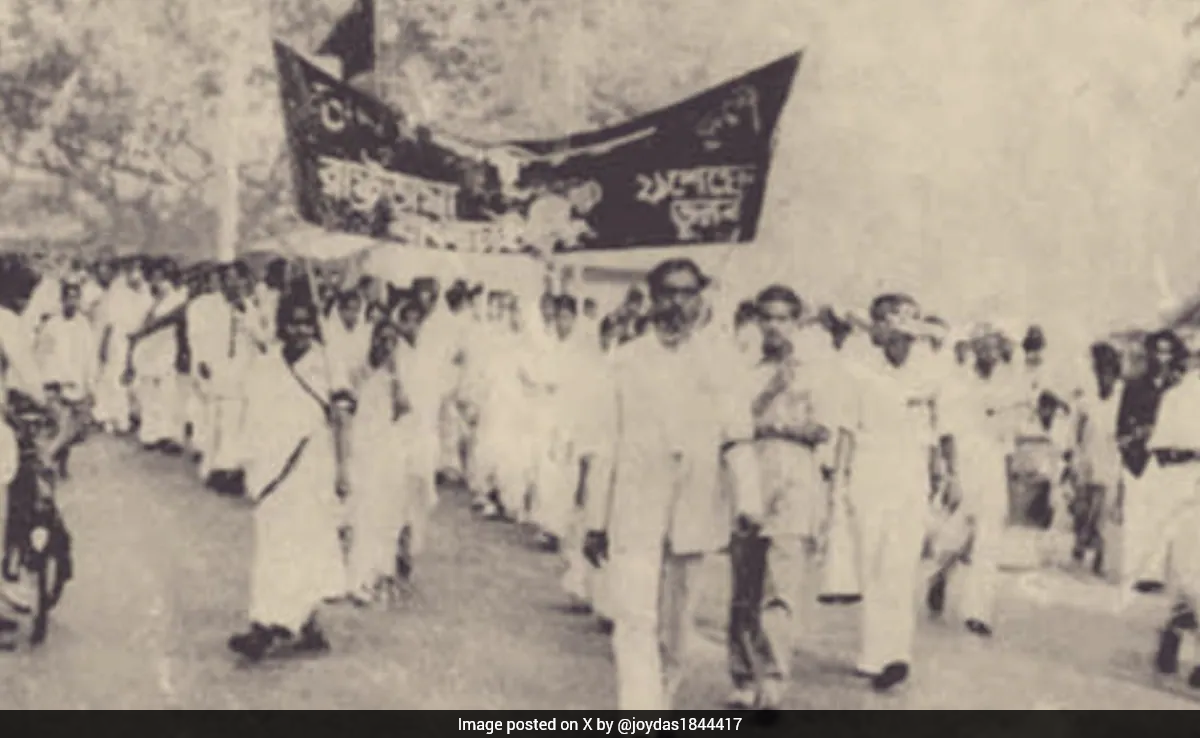
The 1947 partition led to the creation of two nations, India and Pakistan. While India consisted of 565 princely states, Pakistan was one country but with two geographically separated regions: West Pakistan and East Pakistan.
The struggle for Bengali rights began soon after Pakistan emerged as an independent nation.
In the years following Partition, tensions grew as Bengali was denied recognition as a state language. This was compounded by widening economic inequality between the two regions.
The dominance of the West Pakistani ruling elite, repeated imposition of martial law, and a dismissive attitude towards Bengali culture and its people worsened the relations between the two regions.
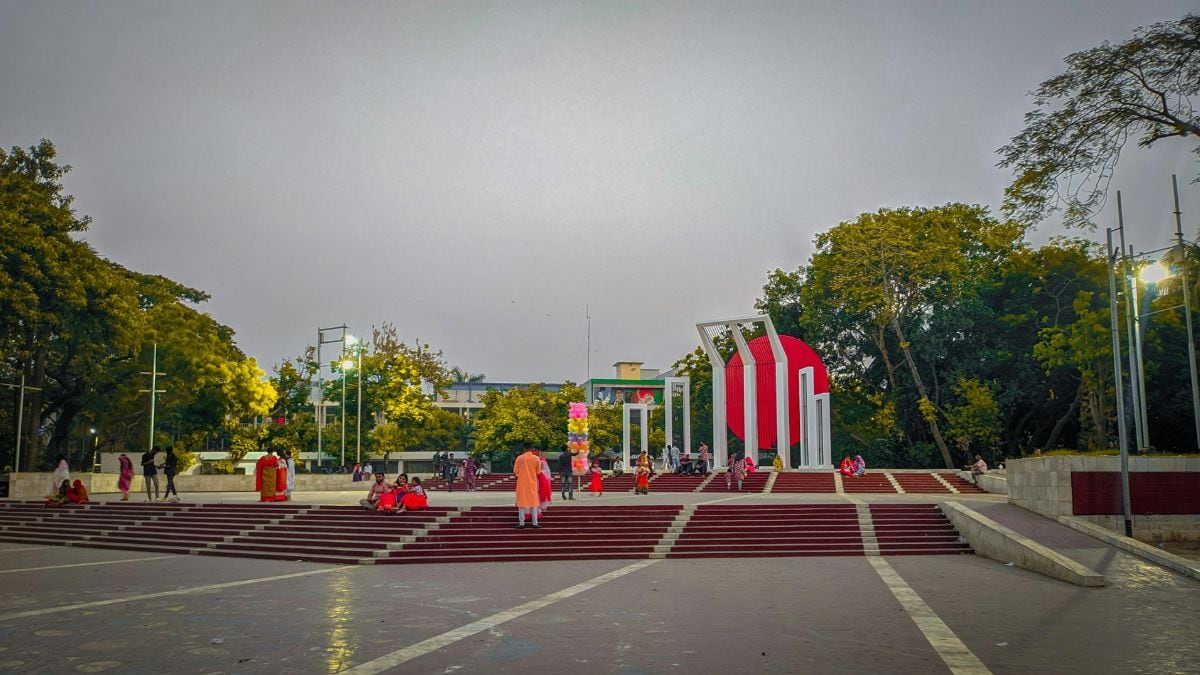
The Shaheed Minar in Dhaka commemorates those killed during the Bengali language movement in 1952
Many Bengalis began to feel marginalised across administration, economic structures, and defence systems. This imbalance laid the foundation for early resistance.
At this stage, it was less about armed rebellion and more about protecting cultural identity, particularly the right to use Bangla as a state language.
Discontent intensified when the central government moved towards making Urdu the sole national language, despite Bengali speakers forming the majority population in Pakistan.
Language Dispute Sparks Mass Protests
The earliest signs of what could be described as mutiny-like resistance were rooted in the language dispute between East and West Pakistan. The conflict reached its most visible and emotionally charged phase during the language movement of 1952.
The decision by West Pakistan's leadership to impose Urdu as the only national language was viewed by Bengalis as a direct attack on their cultural identity. The language movement, from 1948 to 1956, involved demonstrations, strikes, and political mobilisation demanding recognition of Bengali as a state language.
Read: Bangladesh's Bengali Cultural Institutions Targeted, Pattern Points To Pak
Students and activists in Dhaka organised protests defending the status of Bengali as their mother tongue. The movement was met with a violent government crackdown, and several protesters were killed when police opened fire in February 1952.
February 21 is now observed worldwide as International Mother Language Day, with the United Nations stating that the idea originated from Bangladesh.
The movement marked the beginning of a broader struggle in East Pakistan, one that gradually expanded beyond language to demands for political recognition, dignity, and equal status.
Bangabandhu Sheikh Mujibur Rahman's Role
Bangabandhu Sheikh Mujibur Rahman, regarded as the architect of independent Bangladesh, played a key role in the language movement and its commemoration.
He was involved in organising processions, leading demonstrations, and mobilising public support. During the first anniversary of the Language Movement in 1953, he urged authorities to officially recognise February 21 as Martyrs' Day and demanded immediate recognition of Bangla as a state language.
Read: Pakistan Army Committed Genocide: US Resolution On 1971 Bangladesh Atrocities
Later, during the Legislative Assembly session on January 17, 1956, he demanded that parliamentary proceedings be printed in Bangla. In another session on February 16, he again demanded recognition of Bangla as a state language.
Recognition Of Bangla
Bangla was recognised as one of Pakistan's state languages on May 7, 1954. The Constitution was formally amended on February 29, 1956, recognising Bengali as the second state language alongside Urdu.
Later developments reinforced the language's central role in national identity. In the 1972 Constitution, Bangla was adopted as the state language, marking the first constitution written in Bangla.
On March 12, 1975, the first government directive was issued to introduce Bangla in offices and institutions in place of English.
Track Latest News Live on NDTV.com and get news updates from India and around the world


