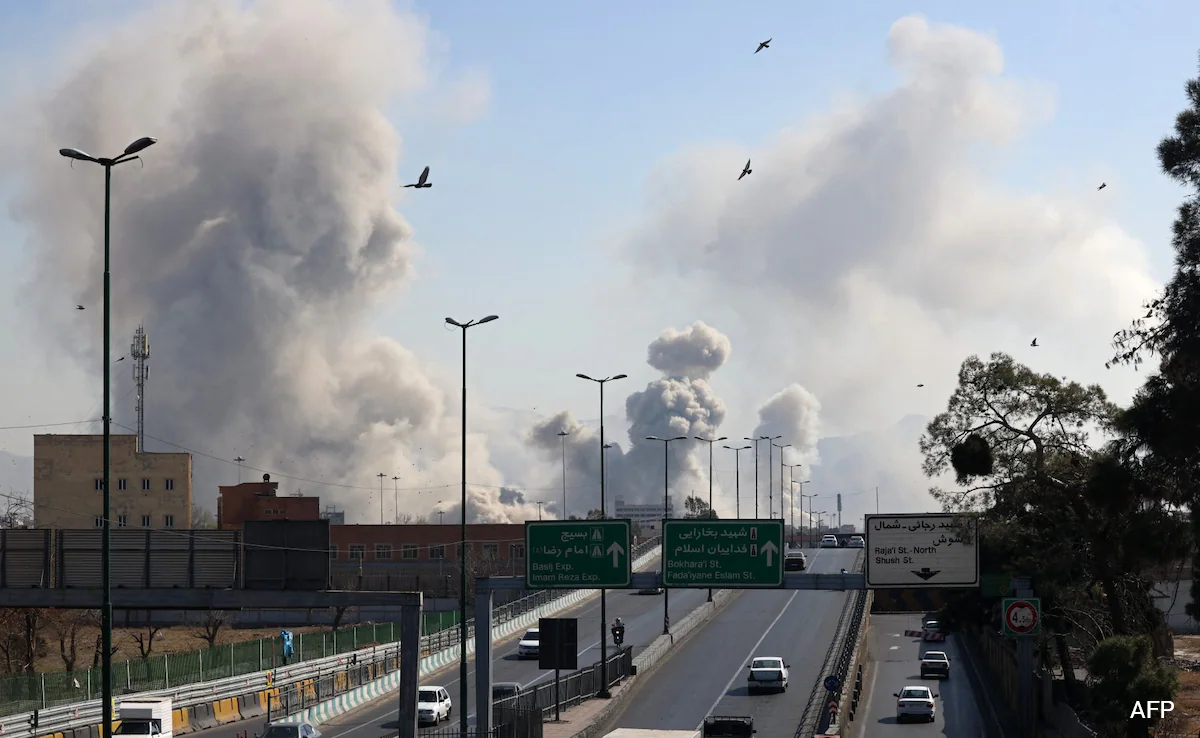
Tehran's air quality registered in the “good to moderate” range on Wednesday, with readings between 32 and 67 on the Air Quality Index (AQI). This comes despite bombings, missile strikes at oil depots, and explosions in Iran by the US and Israel since February 28.
Delhi recorded “poor to unhealthy” levels above 110 during the same period.
Why Is Delhi More Polluted Than Tehran?
Tehran, home to nearly nine million people, has air quality surprisingly better and cleaner than the national capital. New Delhi sits in the Indo-Gangetic Plain and is surrounded by heavy industry, dense traffic, construction dust, and seasonal crop burning in neighbouring states such as Punjab and Haryana. These factors release large amounts of PM2.5, the fine particulate matter responsible for most smog. The city and its surrounding National Capital Region are home to over 30 million people.
The region's weather and geography add to the problem. Weak winds and temperature inversions often trap pollutants close to the ground, particularly in winter and early summer.
Low wind speeds and surrounding terrain, including the Himalayas to the north and the Aravalli hills to the southwest, prevent effective dispersion of pollutants. These conditions act like a “pollution trap.”
Delhi and its surrounding areas frequently exceed national air quality standards, ranking among India's most polluted regions.
While Tehran faces its own challenges (traffic remains the main source of urban pollution) it avoids the large-scale crop burning and industrial density that plague Delhi.
Though the city's basin-like terrain can trap pollution during winter, background particulate levels are generally lower.
Health Impacts Of The US-Israeli War In Iran
The ongoing war has given rise to environmental concerns in Iran. Recent Israeli and US airstrikes on Iranian oil depots and refineries have caused massive fires and thick plumes of black smoke, releasing soot, sulfur and nitrogen compounds, and hydrocarbons into the atmosphere.
Black rain fell as airborne oil droplets mixed with precipitation, coating streets, cars, plants, and pets. Residents reported burning eyes, migraines, dizziness, and coughing.
The World Health Organisation (WHO) has warned that such toxic rain and air pollutants pose immediate health risks, including respiratory harm, irritation, and long‑term disease risks if people inhale contaminated air.
“There are all sorts of nasty, complex hydrocarbons in those black clouds of smoke,” John Balmes, professor emeritus of environmental health sciences at the University of California, Berkeley, told The NY Times. “The smoke from a bombed oil depot would include benzene, formaldehyde and other carcinogens.”


