The tremors that triggered the deadly flash floods in Nepal on Wednesday morning were caused by a landslide, not an earthquake, the United States Geological Survey (USGS) clarified late Wednesday evening.
The agency said seismic activity initially reported as an earthquake "was instead a glacial collapse and debris flow" that "caused subsequent catastrophic impacts downstream."
At 8:37 am Nepal time, the USGS said Thursday reported seismic activity as a 4.4-magnitude earthquake along the Nepal-China border, north of Kathmandu. However, the agency later clarified that the event that was initially reported as an earthquake "was instead a glacial collapse and debris flow."
"No earthquake had occurred."
An initial study of Planet Labs satellite imagery indicated instead that a landslide of ice and rock triggered a debris-laden flood in the Lhende River, about 20 km (12 miles) northeast of the Nepal-China Rasuwagadhi border crossing.
Lhende Khola River is a tributary of the Bhote Koshi that flows from China into Nepal. The flash floods that followed and killed over 157 people were thus caused by this exceptionally powerful landslide, later registered as equivalent to an earthquake measuring 5.2.
Nepal Flash Floods
Relief and rescue operations are currently underway in Rasuwa and other areas following the floods.
The Nepal police have recovered 157 bodies, and officers are working towards moving families from flood-risk areas. At least 403 tourists, 341 of them foreigners, were unaccounted for several hours after the disaster struck, according to the tourism ministry.
The missing foreigners included 142 Indians, as well as others from Australia, Britain, Malaysia, the Netherlands, Portugal, South Africa, South Korea, and the United States, the tourism board said.
Rescuers are racing against time to find survivors and bodies buried under the slush, with Prime Minister Balendra Shah pledging all government resources to relief work.
The flood surged through the Bhote Koshi River around 9 am (local time) as it crossed over from the Tibet side. Rasuwa and Dhading, bordering Tibet, and Nuwakot were among the affected districts.
Meanwhile, on the Tibet side, China's state broadcaster said three people were killed and 265 missing in Gyirong. It said the deaths were still being verified and rescue efforts were ongoing.
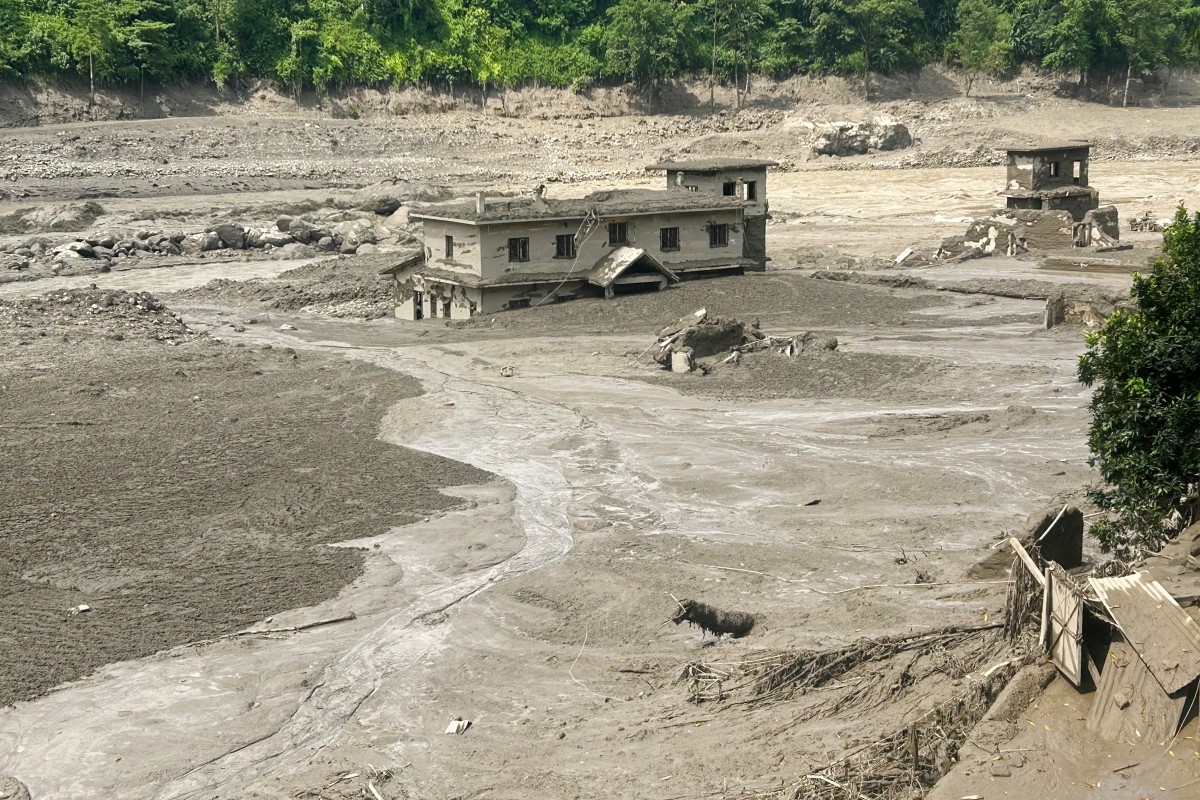
Security footage captured on the Tibetan side of the Nepal-Tibet border showed many people fleeing before a torrent of rock, mud, and water destroyed buildings and vehicles and took many lives.
Locals from the affected areas of Nuwakot and Dhading were seen gathering outside a Nepali army training centre — the base for helicopter rescue operations — seeking information about missing family members.
Police were recording the names of the missing just outside the barracks gate, using mobile phone flashlights as their only source of light as the area remained without electricity due to damaged hydropower infrastructure.
In the affected areas, houses, trees and vehicles were submerged or buried in mudslides. Helicopters hovered overhead all day in the area bringing in survivors.
Track Latest News Live on NDTV.com and get news updates from India and around the world


