Starburst Galaxies
- All
- News
-
Astronomers Discover Shockingly Hot Young Galaxy Cluster That Defies Theory
- Saturday January 10, 2026
- Written by Gadgets 360 Staff
Astronomers have identified an exceptionally hot galaxy cluster forming just 1.4 billion years after the Big Bang. Observations reveal gas temperatures far exceeding theoretical limits, suggesting an unexpectedly violent early formation. The discovery challenges standard models of galaxy cluster evolution and points to intense activity from starbur...
-
www.gadgets360.com
-
Extreme Star Factory: ALMA Detects Galaxy Y1 Forming Stars 180 Times Faster Than the Milky Way
- Wednesday November 19, 2025
- Written by Gadgets 360 Staff
Using ALMA’s ultra-sensitive Band 9 observations, astronomers identified galaxy Y1 as an extreme star-forming system in the early universe. Producing stars at 180 solar masses per year, Y1 reveals how intense, short-lived starbursts helped shape young galaxies and may have been more common than previously believed.
-
www.gadgets360.com
-
James Webb Telescope Uncovers the Turbulent Birth of the First Galaxies
- Saturday October 25, 2025
- Written by Gadgets 360 Staff
Using JWST data, astronomers analyzed more than 250 galaxies from the universe’s first 1.5 billion years and found most were chaotic, with gas swirling in all directions. Only a few showed early signs of ordered rotation. The findings reveal how intense star formation and gravitational turbulence gave way to stability, transforming the early univ...
-
www.gadgets360.com
-
James Webb Telescope Spots Rare ‘Cosmic Owl’ Formed by Colliding Galaxies
- Monday July 14, 2025
- Written by Gadgets 360 Staff
NASA’s James Webb Space Telescope has unveiled the “Cosmic Owl,” a jaw-dropping image of two colliding ring galaxies forming a structure that resembles an owl’s face. This double-ring formation is extraordinarily rare, and the event is shedding light on galaxy evolution, black hole dynamics, and rapid star formation. Led by Ph.D. student Mi...
-
www.gadgets360.com
-
Hubble Telescope Captures NGC 4536, a Starburst Galaxy with Intense Star Formation
- Wednesday March 26, 2025
- Written by Gadgets 360 Staff
NASA’s Hubble Space Telescope has captured a striking image of NGC 4536, a starburst galaxy 50 million light-years away in the Virgo constellation. The galaxy’s sweeping spiral arms are filled with young blue star clusters and ionized hydrogen gas, indicating rapid star formation. Astronomers believe its bar-like structure channels gas toward t...
-
www.gadgets360.com
-
NASA Hubble Space Telescope Captures a Spiral Galaxy With Multiple Starburst Regions
- Monday October 14, 2024
- Written by Gadgets 360 Staff
The Hubble Space Telescope has unveiled a stunning image of the spiral galaxy NGC 5248, also known as Caldwell 45, located 42 million light-years from Earth in the constellation Boötes. Known for its prominent spiral arms and intense star formation, NGC 5248 boasts two active nuclear rings, making it a fascinating subject for both professional and...
-
www.gadgets360.com
-
Ancient Starburst Evidence Found in Central Region of Milky Way: Study
- Wednesday December 18, 2019
- ANI
An observation of the Milky Way Galaxy done by European Southern Observatory (ESO) using Very Large Telescope (VLT) has found the evidence of a burst star formation which led to over hundred thousands of supernova explosions in the central part of the galaxy.
-
www.gadgets360.com
-
Inner Structure of Galaxy at Edge of Universe Depicted in Unprecedented Detail
- Wednesday June 10, 2015
- Written by shubhamv
"This discovery is an important step to understand the evolutionary process of starburst galaxies and supermassive black holes in galaxies."
-
www.gadgets360.com
-
Why Do Some Galaxies 'Burst'
- Monday February 16, 2015
- World News | Indo-Asian News Service
To help understand why some galaxies "burst" while others do not, an international team of astronomers have dissected a cluster of star-forming clouds at the heart of NGC 253, one of the nearest starburst galaxies to the Milky Way.
-
www.ndtv.com
-
Monster starburst galaxies discovered in early universe
- Friday March 15, 2013
- World News | Press Trust of India
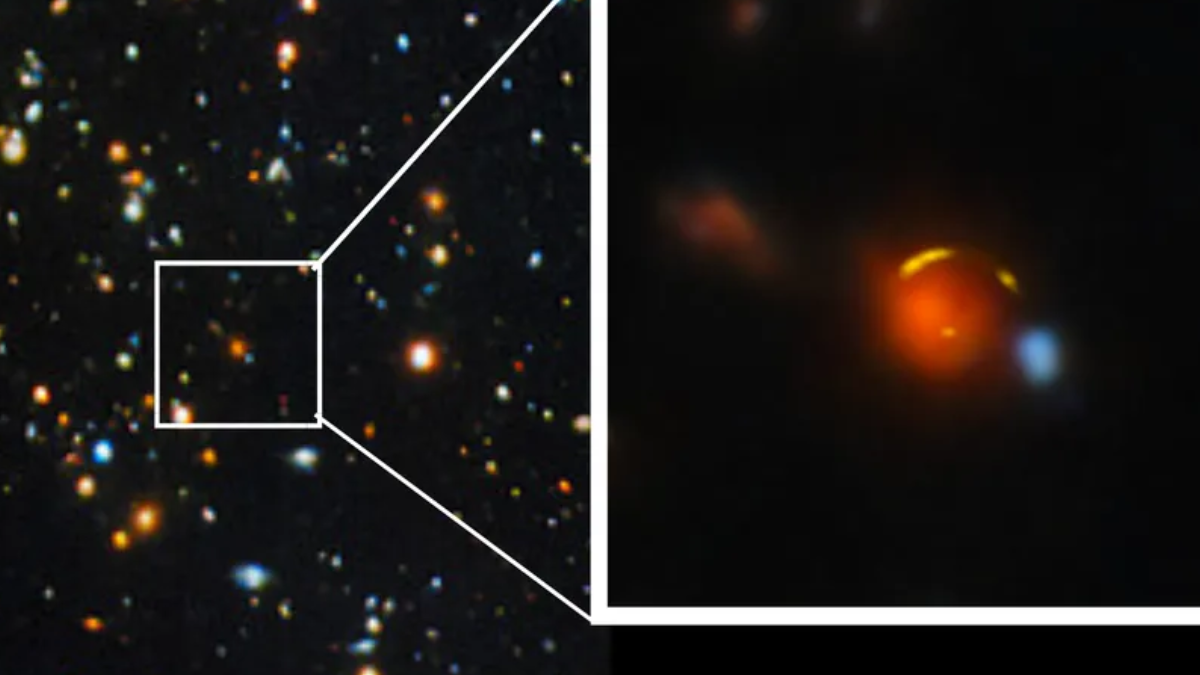
Astronomers using the world's largest ground-based telescope have discovered that galaxies started churning out stars at a high rate - when the universe was just a billion years old.
-
www.ndtv.com
-
Astronomers Discover Shockingly Hot Young Galaxy Cluster That Defies Theory
- Saturday January 10, 2026
- Written by Gadgets 360 Staff
Astronomers have identified an exceptionally hot galaxy cluster forming just 1.4 billion years after the Big Bang. Observations reveal gas temperatures far exceeding theoretical limits, suggesting an unexpectedly violent early formation. The discovery challenges standard models of galaxy cluster evolution and points to intense activity from starbur...
-
www.gadgets360.com
-
Extreme Star Factory: ALMA Detects Galaxy Y1 Forming Stars 180 Times Faster Than the Milky Way
- Wednesday November 19, 2025
- Written by Gadgets 360 Staff
Using ALMA’s ultra-sensitive Band 9 observations, astronomers identified galaxy Y1 as an extreme star-forming system in the early universe. Producing stars at 180 solar masses per year, Y1 reveals how intense, short-lived starbursts helped shape young galaxies and may have been more common than previously believed.
-
www.gadgets360.com
-
James Webb Telescope Uncovers the Turbulent Birth of the First Galaxies
- Saturday October 25, 2025
- Written by Gadgets 360 Staff
Using JWST data, astronomers analyzed more than 250 galaxies from the universe’s first 1.5 billion years and found most were chaotic, with gas swirling in all directions. Only a few showed early signs of ordered rotation. The findings reveal how intense star formation and gravitational turbulence gave way to stability, transforming the early univ...
-
www.gadgets360.com
-
James Webb Telescope Spots Rare ‘Cosmic Owl’ Formed by Colliding Galaxies
- Monday July 14, 2025
- Written by Gadgets 360 Staff
NASA’s James Webb Space Telescope has unveiled the “Cosmic Owl,” a jaw-dropping image of two colliding ring galaxies forming a structure that resembles an owl’s face. This double-ring formation is extraordinarily rare, and the event is shedding light on galaxy evolution, black hole dynamics, and rapid star formation. Led by Ph.D. student Mi...
-
www.gadgets360.com
-
Hubble Telescope Captures NGC 4536, a Starburst Galaxy with Intense Star Formation
- Wednesday March 26, 2025
- Written by Gadgets 360 Staff
NASA’s Hubble Space Telescope has captured a striking image of NGC 4536, a starburst galaxy 50 million light-years away in the Virgo constellation. The galaxy’s sweeping spiral arms are filled with young blue star clusters and ionized hydrogen gas, indicating rapid star formation. Astronomers believe its bar-like structure channels gas toward t...
-
www.gadgets360.com
-
NASA Hubble Space Telescope Captures a Spiral Galaxy With Multiple Starburst Regions
- Monday October 14, 2024
- Written by Gadgets 360 Staff
The Hubble Space Telescope has unveiled a stunning image of the spiral galaxy NGC 5248, also known as Caldwell 45, located 42 million light-years from Earth in the constellation Boötes. Known for its prominent spiral arms and intense star formation, NGC 5248 boasts two active nuclear rings, making it a fascinating subject for both professional and...
-
www.gadgets360.com
-
Ancient Starburst Evidence Found in Central Region of Milky Way: Study
- Wednesday December 18, 2019
- ANI
An observation of the Milky Way Galaxy done by European Southern Observatory (ESO) using Very Large Telescope (VLT) has found the evidence of a burst star formation which led to over hundred thousands of supernova explosions in the central part of the galaxy.
-
www.gadgets360.com
-
Inner Structure of Galaxy at Edge of Universe Depicted in Unprecedented Detail
- Wednesday June 10, 2015
- Written by shubhamv
"This discovery is an important step to understand the evolutionary process of starburst galaxies and supermassive black holes in galaxies."
-
www.gadgets360.com
-
Why Do Some Galaxies 'Burst'
- Monday February 16, 2015
- World News | Indo-Asian News Service
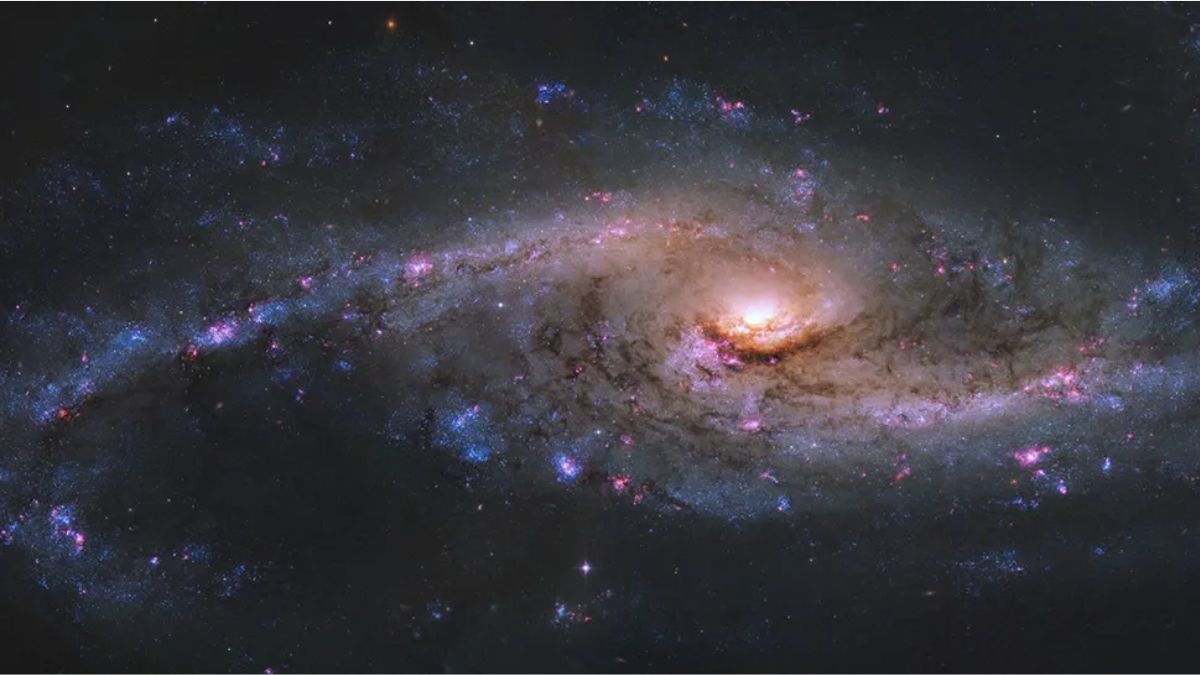
To help understand why some galaxies "burst" while others do not, an international team of astronomers have dissected a cluster of star-forming clouds at the heart of NGC 253, one of the nearest starburst galaxies to the Milky Way.
-
www.ndtv.com
-
Monster starburst galaxies discovered in early universe
- Friday March 15, 2013
- World News | Press Trust of India
Astronomers using the world's largest ground-based telescope have discovered that galaxies started churning out stars at a high rate - when the universe was just a billion years old.
-
www.ndtv.com