



Johns Hopkins University School Of Medicine
-
{
- All
- News
-

Study: HIV Can Hide And Grow In 'Sanctuaries' In Body After It's Undetectable In Blood
A new National Institutes of Health-funded study shows that HIV can still live and grow in the body even after disappearing from the blood following aggressive antiretroviral therapy.
-
Exercise Could Protect the Brain From Ageing
Exercise may increase the level of an enzyme which protects the brain from energy-depleting stress that can lead to ageing and neurodegenerative diseases such as Alzheimer's, a new study in mice has found.
-
Exercise Could Protect the Brain From Ageing
Exercise may increase the level of an enzyme which protects the brain from energy-depleting stress that can lead to ageing and neurodegenerative diseases such as Alzheimer's, a new study in mice has found.
-
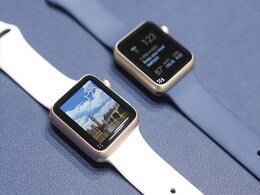
The Apple Watch Could Soon Predict Seizures, Thanks to Johns Hopkins University
One of the most promising uses for the Apple Watch is its potential for improving health and fitness. And now, thanks to a new study from the Johns Hopkins University School of Medicine, the Watch is being used for the first time as a tool to help those diagnosed with epilepsy.
-
The Apple Watch Could Soon Predict Seizures, Thanks to Johns Hopkins University
One of the most promising uses for the Apple Watch is its potential for improving health and fitness. And now, thanks to a new study from the Johns Hopkins University School of Medicine, the Watch is being used for the first time as a tool to help those diagnosed with epilepsy.
-
New Blood Biomarker for Migraine Found
Researchers may have discovered a new blood biomarker for episodic migraine which defined as having less than 15 headaches per month.
-
New Blood Biomarker for Migraine Found
Researchers may have discovered a new blood biomarker for episodic migraine which defined as having less than 15 headaches per month.
-
Researchers Identify 'Long-Sought Culprit' of Heart Failure
The research, published in the journal Nature, revealed that an enzyme called PDE-9 interferes with the body's natural "braking" system needed to neutralise stress on the heart.
-
Study: HIV Can Hide And Grow In 'Sanctuaries' In Body After It's Undetectable In Blood
A new National Institutes of Health-funded study shows that HIV can still live and grow in the body even after disappearing from the blood following aggressive antiretroviral therapy.
-
Exercise Could Protect the Brain From Ageing
Exercise may increase the level of an enzyme which protects the brain from energy-depleting stress that can lead to ageing and neurodegenerative diseases such as Alzheimer's, a new study in mice has found.
-
Exercise Could Protect the Brain From Ageing
Exercise may increase the level of an enzyme which protects the brain from energy-depleting stress that can lead to ageing and neurodegenerative diseases such as Alzheimer's, a new study in mice has found.
-
The Apple Watch Could Soon Predict Seizures, Thanks to Johns Hopkins University
One of the most promising uses for the Apple Watch is its potential for improving health and fitness. And now, thanks to a new study from the Johns Hopkins University School of Medicine, the Watch is being used for the first time as a tool to help those diagnosed with epilepsy.
-
The Apple Watch Could Soon Predict Seizures, Thanks to Johns Hopkins University
One of the most promising uses for the Apple Watch is its potential for improving health and fitness. And now, thanks to a new study from the Johns Hopkins University School of Medicine, the Watch is being used for the first time as a tool to help those diagnosed with epilepsy.
-
New Blood Biomarker for Migraine Found
Researchers may have discovered a new blood biomarker for episodic migraine which defined as having less than 15 headaches per month.
-
New Blood Biomarker for Migraine Found
Researchers may have discovered a new blood biomarker for episodic migraine which defined as having less than 15 headaches per month.
-
Researchers Identify 'Long-Sought Culprit' of Heart Failure
The research, published in the journal Nature, revealed that an enzyme called PDE-9 interferes with the body's natural "braking" system needed to neutralise stress on the heart.

