Fermi Telescope
- All
- News
-
Astronomers Spot the Longest Gamma-Ray Burst Ever Seen: What You Need to Know
- Wednesday December 10, 2025
- Written by Gadgets 360 Staff
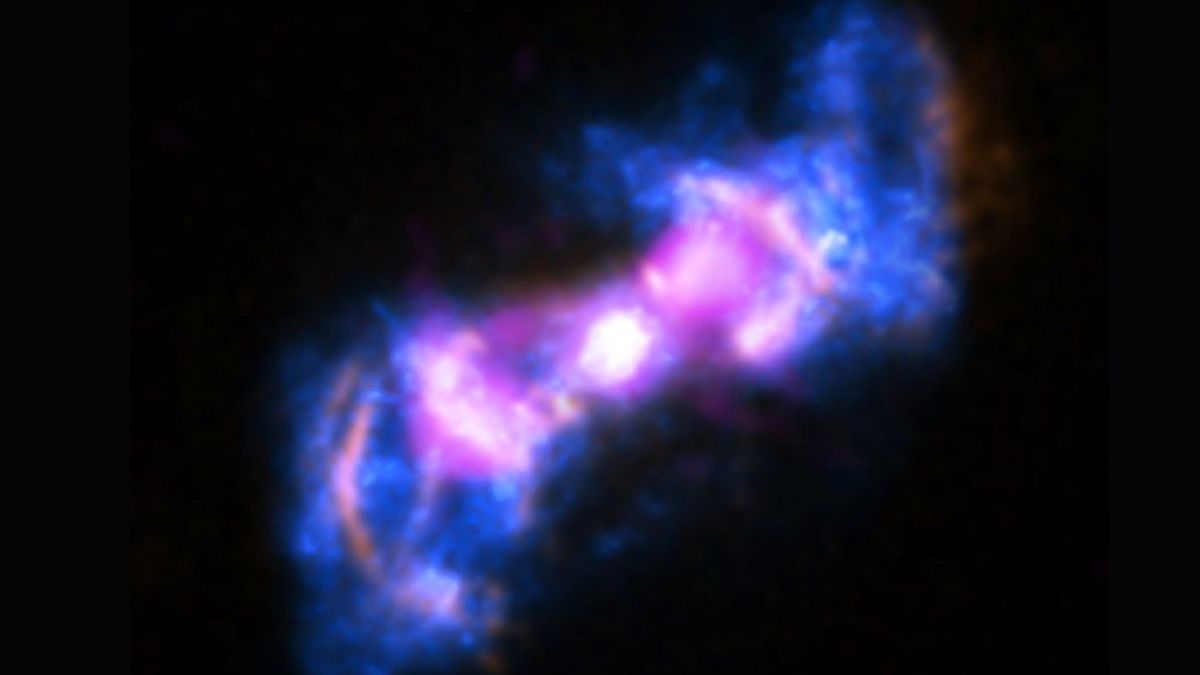
A powerful gamma-ray burst detected in July 2025 has stunned astronomers by lasting nearly seven hours, making it the longest GRB ever recorded. Named GRB 250702B, the event produced repeated pulses and unusual afterglows, raising theories about rare “middleweight” black holes tearing apart stars in deep space.
-
www.gadgets360.com
-
Fermi Telescope Detects Gamma-Ray Halo That Could Be First Direct Dark Matter Signal
- Saturday November 29, 2025
- Written by Gadgets 360 Staff
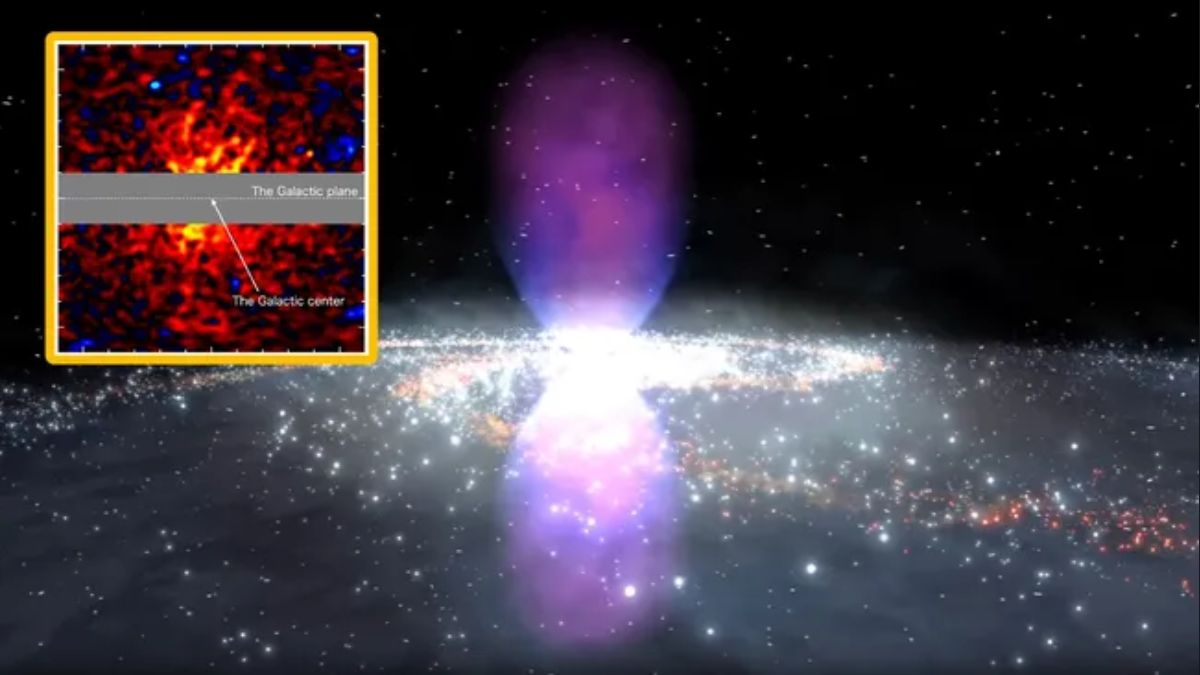
NASA’s Fermi Gamma-ray Space Telescope has detected a faint halo of high-energy gamma rays around the Milky Way’s centre—matching predictions for dark-matter annihilation. The finding, reported by Professor Tomonori Totani, could represent the first direct glimpse of dark matter, but scientists caution that alternative explanations remain and...
-
www.gadgets360.com
-
Scientists May Have Caught The First Real Glimpse Of Dark Matter, Universe's Most Elusive Ingredient
- Wednesday November 26, 2025
- Science | Edited by Amit Chaturvedi
The new study led by Prof Tomonori Totani of the University of Tokyo analysed Fermi telescope observations of the Milky Way's centre - the region where dark matter is expected to be densest.
-
www.ndtv.com
-
Dark Matter May Have Been Seen for the First Time in NASA Gamma-Ray Data
- Wednesday November 26, 2025
- Written by Gadgets 360 Staff
A new analysis of NASA’s Fermi telescope data reveals a faint gamma-ray halo around the Milky Way’s core, matching predictions for annihilating dark-matter particles. Researchers say no known astrophysical source fits the signal, raising the possibility of the first direct evidence of dark matter. Experts, however, stress caution and call for v...
-
www.gadgets360.com
-
Flattened Dark Matter May Explain Mysterious Gamma-Ray Glow at Milky Way’s Core, Study Finds
- Sunday October 26, 2025
- Written by Gadgets 360 Staff
Dark matter near the Milky Way’s center appears flattened, not spherical, according to new simulations. The discovery may explain a puzzling gamma-ray glow long observed by NASA’s Fermi telescope, reigniting theories that dark matter collisions produce high-energy radiation in the galaxy’s core
-
www.gadgets360.com
-
NASA Detects Strange Gamma-Ray Burst That Defies 50 Years of Expectations
- Thursday September 11, 2025
- Written by Gadgets 360 Staff
Astronomers have spotted GRB 250702B, a gamma-ray burst that erupted several times over two days—something never seen before. Detected by NASA’s Fermi and China’s Einstein Probe, the event defies current models of collapsing stars or black holes, hinting at an entirely new cosmic phenomenon.
-
www.gadgets360.com
-
Brightest Gamma-Ray Burst Ever Observed Reveals Cosmic Secrets
- Friday August 1, 2025
- Written by Gadgets 360 Staff
On October 9, 2022, astronomers detected GRB 221009A, the most powerful gamma-ray burst ever recorded, earning the nickname “BOAT” (Brightest Of All Time). This rare, once-in-10,000-year event came from a galaxy 2 billion light-years away and temporarily blinded gamma-ray detectors. It revealed new insights into stellar death, as the associated...
-
www.gadgets360.com
-
The Universe’s Brightest Lights Have Surprisingly Dark and Mysterious Origins
- Saturday May 3, 2025
- Written by Gadgets 360 Staff
NASA’s Fermi Gamma-ray Space Telescope has revealed that some of the universe’s brightest light sources originate near supermassive black holes in galaxy centres. These active galactic nuclei emit intense radiation, including gamma rays and X-rays, despite black holes themselves being invisible. Their powerful jets and high-energy emissions cha...
-
www.gadgets360.com
-
New Study Uncovers Shadowy Origins of Universe’s Most Luminous Phenomena
- Friday May 2, 2025
- Written by Gadgets 360 Staff
NASA’s Fermi Gamma-ray Space Telescope has revealed that some of the universe’s brightest light sources originate near supermassive black holes in galaxy centres. These active galactic nuclei emit intense radiation, including gamma rays and X-rays, despite black holes themselves being invisible. Their powerful jets and high-energy emissions cha...
-
www.gadgets360.com
-
T Coronae Borealis' Nova Outburst May Happen Soon, Experts Suggest
- Tuesday December 3, 2024
- Written by Gadgets 360 Staff
Astronomers are closely monitoring T Coronae Borealis, a binary star system in the Corona Borealis constellation, for its next nova eruption. The event, expected within months, could light up the night sky as the white dwarf gathers material from its red giant companion, triggering a nuclear explosion. Advanced telescopes like NASA’s Fermi are ga...
-
www.gadgets360.com
-
A Nearby Supernova May End Dark Matter Search, Claims New Study
- Friday November 22, 2024
- Written by Gadgets 360 Staff
A supernova within the Milky Way could revolutionise dark matter research by producing gamma rays from axions, elusive particles theorised to exist during a star's core collapse. Scientists at UC Berkeley are calling for gamma-ray telescopes to monitor the sky, ensuring readiness for the next nearby supernova. Such an event could confirm the axion'...
-
www.gadgets360.com
-
NASA Detects Most Powerful Gamma-Ray Bursts Close To Earth
- Tuesday October 18, 2022
- Science | Edited by Amit Chaturvedi
The signal originated from the direction of the constellation Sagitta, and travelled an estimated 1.9 billion years to reach Earth, NASA said.
-
www.ndtv.com
-
NASA Names New Gamma-Ray Constellations After Hulk, Godzilla
- Monday October 22, 2018
- Science | Indo-Asian News Service
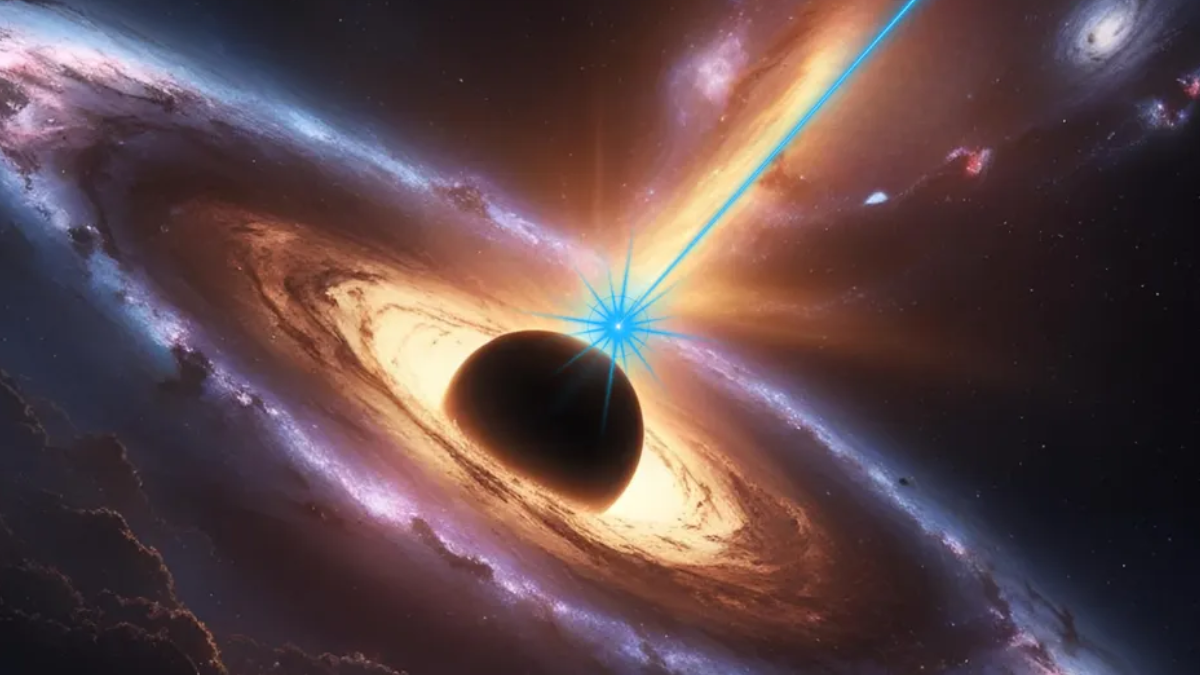
NASA has used certain characters from modern myths such as the "Hulk" and "Godzilla" to name its new set of 21 gamma-ray constellations constructed in celebration of its Fermi Gamma-ray Space Telescope's 10th year of operations.
-
www.ndtv.com
-
NASA Telescope Finds Clues To Dark Matter At Andromeda Galaxy
- Wednesday February 22, 2017
- World News | Indo-Asian News Service
NASA's Fermi gamma-ray space telescope has found a signal at the centre of the neighbouring Andromeda galaxy that could be coming from dark matter, an unknown substance that makes up most of the universe, according to a study.
-
www.ndtv.com
-
Nasa's Fermi Telescope Set to Spot Gravitational Wave Sources
- Tuesday April 19, 2016
- Written by shubhamv
Fermi's GBM sees the entire sky not blocked by Earth and is sensitive to X-rays and gamma rays with energies between 8,000 and 40 million electron volts (eV).
-
www.gadgets360.com
-
Astronomers Spot the Longest Gamma-Ray Burst Ever Seen: What You Need to Know
- Wednesday December 10, 2025
- Written by Gadgets 360 Staff
A powerful gamma-ray burst detected in July 2025 has stunned astronomers by lasting nearly seven hours, making it the longest GRB ever recorded. Named GRB 250702B, the event produced repeated pulses and unusual afterglows, raising theories about rare “middleweight” black holes tearing apart stars in deep space.
-
www.gadgets360.com
-
Fermi Telescope Detects Gamma-Ray Halo That Could Be First Direct Dark Matter Signal
- Saturday November 29, 2025
- Written by Gadgets 360 Staff
NASA’s Fermi Gamma-ray Space Telescope has detected a faint halo of high-energy gamma rays around the Milky Way’s centre—matching predictions for dark-matter annihilation. The finding, reported by Professor Tomonori Totani, could represent the first direct glimpse of dark matter, but scientists caution that alternative explanations remain and...
-
www.gadgets360.com
-
Scientists May Have Caught The First Real Glimpse Of Dark Matter, Universe's Most Elusive Ingredient
- Wednesday November 26, 2025
- Science | Edited by Amit Chaturvedi
The new study led by Prof Tomonori Totani of the University of Tokyo analysed Fermi telescope observations of the Milky Way's centre - the region where dark matter is expected to be densest.
-
www.ndtv.com
-
Dark Matter May Have Been Seen for the First Time in NASA Gamma-Ray Data
- Wednesday November 26, 2025
- Written by Gadgets 360 Staff
A new analysis of NASA’s Fermi telescope data reveals a faint gamma-ray halo around the Milky Way’s core, matching predictions for annihilating dark-matter particles. Researchers say no known astrophysical source fits the signal, raising the possibility of the first direct evidence of dark matter. Experts, however, stress caution and call for v...
-
www.gadgets360.com
-
Flattened Dark Matter May Explain Mysterious Gamma-Ray Glow at Milky Way’s Core, Study Finds
- Sunday October 26, 2025
- Written by Gadgets 360 Staff
Dark matter near the Milky Way’s center appears flattened, not spherical, according to new simulations. The discovery may explain a puzzling gamma-ray glow long observed by NASA’s Fermi telescope, reigniting theories that dark matter collisions produce high-energy radiation in the galaxy’s core
-
www.gadgets360.com
-
NASA Detects Strange Gamma-Ray Burst That Defies 50 Years of Expectations
- Thursday September 11, 2025
- Written by Gadgets 360 Staff
Astronomers have spotted GRB 250702B, a gamma-ray burst that erupted several times over two days—something never seen before. Detected by NASA’s Fermi and China’s Einstein Probe, the event defies current models of collapsing stars or black holes, hinting at an entirely new cosmic phenomenon.
-
www.gadgets360.com
-
Brightest Gamma-Ray Burst Ever Observed Reveals Cosmic Secrets
- Friday August 1, 2025
- Written by Gadgets 360 Staff
On October 9, 2022, astronomers detected GRB 221009A, the most powerful gamma-ray burst ever recorded, earning the nickname “BOAT” (Brightest Of All Time). This rare, once-in-10,000-year event came from a galaxy 2 billion light-years away and temporarily blinded gamma-ray detectors. It revealed new insights into stellar death, as the associated...
-
www.gadgets360.com
-
The Universe’s Brightest Lights Have Surprisingly Dark and Mysterious Origins
- Saturday May 3, 2025
- Written by Gadgets 360 Staff
NASA’s Fermi Gamma-ray Space Telescope has revealed that some of the universe’s brightest light sources originate near supermassive black holes in galaxy centres. These active galactic nuclei emit intense radiation, including gamma rays and X-rays, despite black holes themselves being invisible. Their powerful jets and high-energy emissions cha...
-
www.gadgets360.com
-
New Study Uncovers Shadowy Origins of Universe’s Most Luminous Phenomena
- Friday May 2, 2025
- Written by Gadgets 360 Staff
NASA’s Fermi Gamma-ray Space Telescope has revealed that some of the universe’s brightest light sources originate near supermassive black holes in galaxy centres. These active galactic nuclei emit intense radiation, including gamma rays and X-rays, despite black holes themselves being invisible. Their powerful jets and high-energy emissions cha...
-
www.gadgets360.com
-
T Coronae Borealis' Nova Outburst May Happen Soon, Experts Suggest
- Tuesday December 3, 2024
- Written by Gadgets 360 Staff
Astronomers are closely monitoring T Coronae Borealis, a binary star system in the Corona Borealis constellation, for its next nova eruption. The event, expected within months, could light up the night sky as the white dwarf gathers material from its red giant companion, triggering a nuclear explosion. Advanced telescopes like NASA’s Fermi are ga...
-
www.gadgets360.com
-
A Nearby Supernova May End Dark Matter Search, Claims New Study
- Friday November 22, 2024
- Written by Gadgets 360 Staff
A supernova within the Milky Way could revolutionise dark matter research by producing gamma rays from axions, elusive particles theorised to exist during a star's core collapse. Scientists at UC Berkeley are calling for gamma-ray telescopes to monitor the sky, ensuring readiness for the next nearby supernova. Such an event could confirm the axion'...
-
www.gadgets360.com
-
NASA Detects Most Powerful Gamma-Ray Bursts Close To Earth
- Tuesday October 18, 2022
- Science | Edited by Amit Chaturvedi
The signal originated from the direction of the constellation Sagitta, and travelled an estimated 1.9 billion years to reach Earth, NASA said.
-
www.ndtv.com
-
NASA Names New Gamma-Ray Constellations After Hulk, Godzilla
- Monday October 22, 2018
- Science | Indo-Asian News Service
NASA has used certain characters from modern myths such as the "Hulk" and "Godzilla" to name its new set of 21 gamma-ray constellations constructed in celebration of its Fermi Gamma-ray Space Telescope's 10th year of operations.
-
www.ndtv.com
-
NASA Telescope Finds Clues To Dark Matter At Andromeda Galaxy
- Wednesday February 22, 2017
- World News | Indo-Asian News Service
NASA's Fermi gamma-ray space telescope has found a signal at the centre of the neighbouring Andromeda galaxy that could be coming from dark matter, an unknown substance that makes up most of the universe, according to a study.
-
www.ndtv.com
-
Nasa's Fermi Telescope Set to Spot Gravitational Wave Sources
- Tuesday April 19, 2016
- Written by shubhamv
Fermi's GBM sees the entire sky not blocked by Earth and is sensitive to X-rays and gamma rays with energies between 8,000 and 40 million electron volts (eV).
-
www.gadgets360.com