





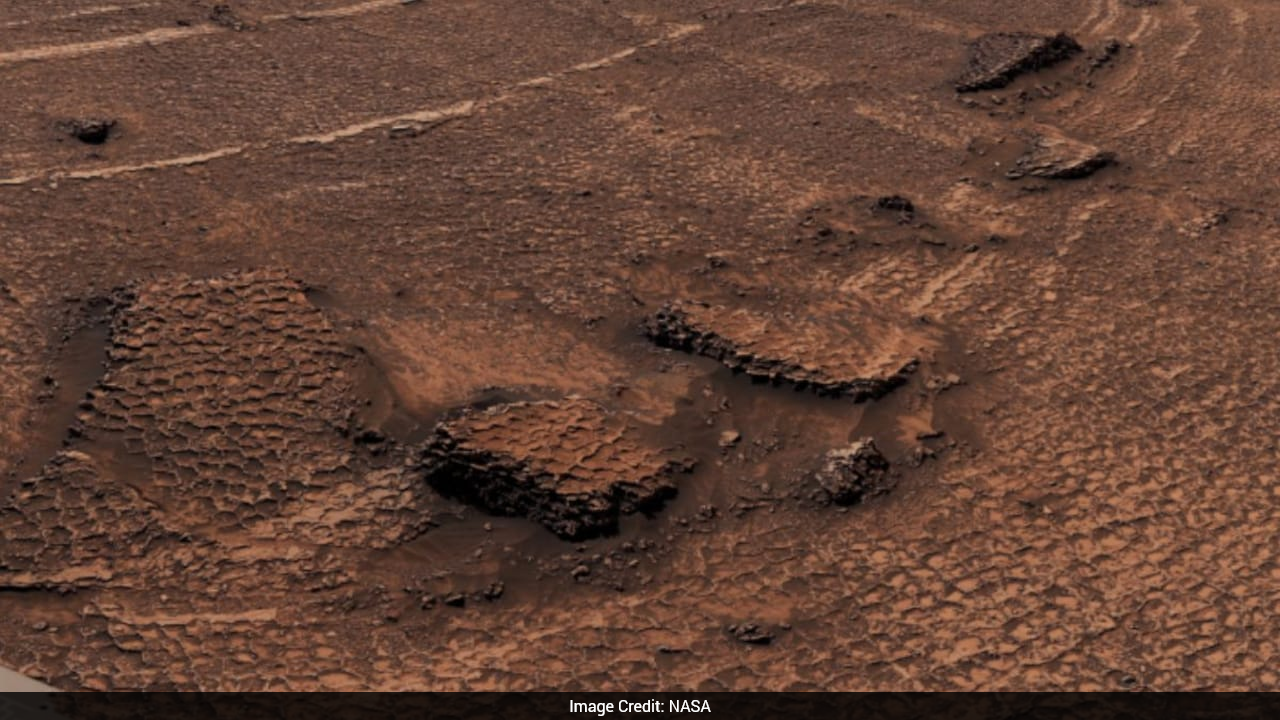
- NASA's Curiosity rover captured a vast honeycomb-like landscape on Mars
- Polygonal fractures measure about 1.5 to 3 inches across in Valle Grande
- Patterns extend 360 degrees and wrap around the 20-foot Miraflores butte
NASA's Curiosity rover has captured a new landscape on Mars, revealing a vast area covered with honeycomb-like patterns that stretch as far as the rover can see. Scientists say the discovery is much larger than similar features previously observed during the mission, reported NASA.
As the rover recently began climbing a Martian valley nicknamed "Valle Grande," it sent back images showing polygonal fractures measuring about 1.5 to 3 inches (4 to 8 centimetres) across.
While the mission has spotted small patches of these geometric shapes before, scientists said nothing matched the scale of the formation found in Valle Grande.
In a 360-degree panorama captured on June 19 and 20, during the 4,930th and 4,931st Martian days, or sols, of the mission, the polygonal shapes extended in all directions. The patterns also wrapped around the sides of a nearby butte called "Miraflores," which stands 20 feet (6 meters) tall and is topped with a thick cap of sand.
Mission project scientist Ashwin Vasavada of NASA's Jet Propulsion Laboratory in Southern California said the team had seen many fascinating landscapes through Curiosity's cameras, but this vast expanse of polygons was especially striking. He said scientists carefully measured the shapes and chemistry of the formations and hoped the collected data would provide clues about how they formed.
According to NASA, some polygons observed during previous missions clearly formed as mud cracks. However, scientists noted that several processes can contribute to such honeycomb textures, including cycles of warm and cold temperatures or compression that squeezed water from sediment when the surface was buried.
Track Latest News Live on NDTV.com and get news updates from India and around the world

