Bomb And The Button: Time To Call Pakistan's Nuclear Blackmail By Its Name
For decades, Pakistan's military has wielded its nuclear arsenal not as a deterrent, but as a diplomatic cudgel - a tool to intimidate India, extract concessions, and shield itself from accountability.
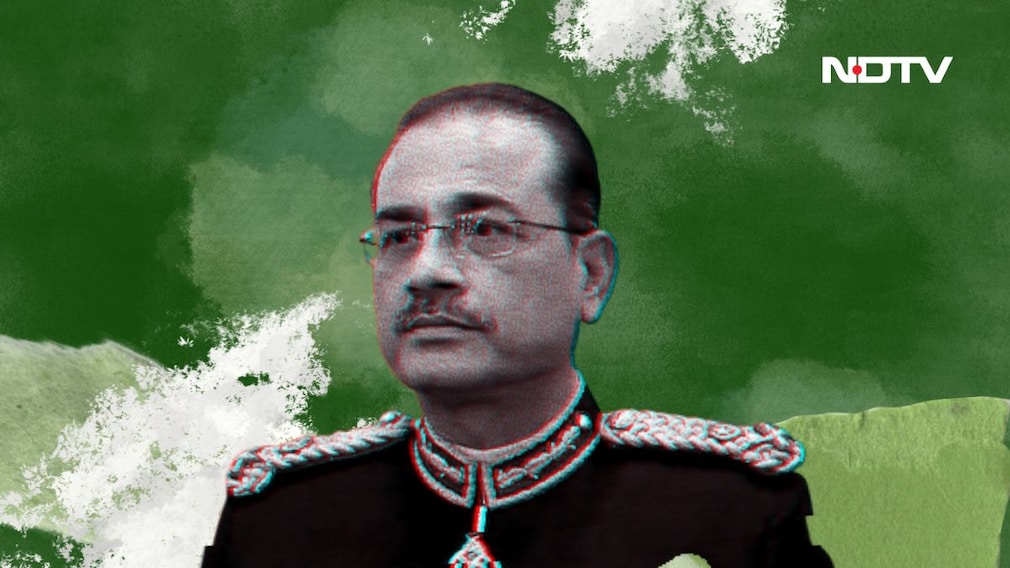
From 1947 to Kargil, Pakistan's generals have lost every conventional war they've fought. But they've mastered a far more insidious weapon: nuclear blackmail. It's not the bomb itself that poses the gravest danger, but the hand that hovers over the button. Today, that hand belongs to "Field Marshal" Asim Munir, a man whose rhetoric is not merely bellicose but openly sectarian, divisive and bigoted.
In statements one can hardly imagine being uttered in the 21st century, Munir posits the impossibility of Muslims living in a non-Muslim majority India to justify his claim that Muslim-majority Kashmir is the "jugular vein" of Pakistan. His intention was to stoke hatred of India and of Hindus, and to justify Pakistani belligerence. But to suggest that Muslims cannot live in a non-Muslim majority country was all the more preposterous for being made to a Pakistani diaspora audience living in the United States - a non-Muslim majority country!
The Warm Washington Welcome
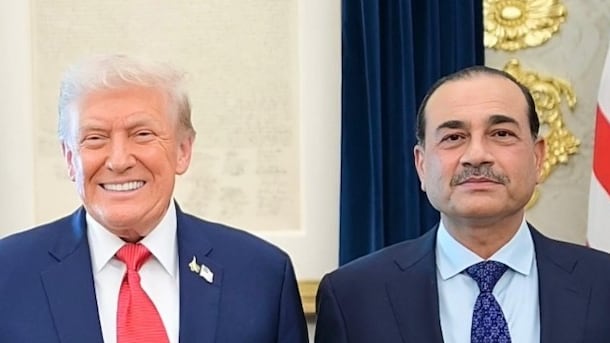
The choice of audience highlighted the fact that Munir's threats aren't confined to Rawalpindi or Islamabad. They're made on American soil, under the warm glow of Washington's welcome. At a White House-hosted dinner during the Trump administration, Munir reportedly warned that Pakistan could "take half the world down" if provoked - a statement that should have triggered alarm, not applause. Instead, it was met with diplomatic indulgence, a familiar pattern in the US-Pakistan relationship, where strategic convenience often trumps - apologies for my choice of word! - moral clarity.
Also Read | Opinion: Munir's Nuclear Threat Is About Involving A 'Third' Player
For decades, Pakistan's military has wielded its nuclear arsenal not as a deterrent, but as a diplomatic cudgel - a tool to intimidate India, extract concessions, and shield itself from accountability. The world remembers A.Q. Khan's nuclear bazaar, where technology was trafficked to North Korea, Iran, and Libya. Yet, Pakistan faced no meaningful consequences, thanks to the world's (read: America's) leniency and the enduring illusion of partnership.
Recommended

Nothing Explains America's Approach
Such an illusion might have been understood, and even forgiven, in the years of the US presence in Afghanistan, when Pakistan's indispensability lay in its geography - the mere fact that the United States' logistics routes into Afghanistan ran through that country gave Islamabad a level of leverage over Washington that only professional soldiers can fully understand. (One American general gruffly told me: "amateurs focus on strategy, rank amateurs obsess with tactics, but true military professionals know what really matters is logistics".) Since America could not supply its troops or rotate them without going through Pakistan, Islamabad was a truly indispensable partner.
Also Read | A US Bailout? A 'Coup'? What Are Asim Munir's Nuclear Threats Really About?
But now that US forces are no longer deployed in Afghanistan, what is it that makes Americans regard Pakistan as a partner? Improbably enough - since we are talking about the country run by the leading military sponsors of terrorism on the planet - it is supposed to be counter-terrorism co-operation. The US Department of State has publicly applauded Pakistan's "continued successes" in containing terrorist entities like ISIS-K, Tehrik-e-Taliban Pakistan (TTP), and the Balochistan Liberation Army (BLA). Well, hello, these entities happen to be attacking the Pakistani state - surely Pakistan doesn't need applause for defending itself?
Hold on, say the Americans. Pakistan has also participated in joint intelligence operations with the US, including the 2025 arrest of ISIS-K conspirator Mohammad Sharifullah, who was involved in the Kabul Abbey Gate bombing that killed 23 US Marines at the time of the American withdrawal from Afghanistan. But just talk to experts like Prof C. Christine Fair, and they will tell you the Americans have been "played" by the ISI - that Sharifullah is nowhere close to being among the top leaders of ISIS-K.
Fool's Gold
But it does seem that the Americans are happy to be fooled. The US-Pakistan Counterterrorism Dialogue, held most recently this month (August 2025) in Islamabad, has again reaffirmed both nations' engagement. The irony is that the US simply overlooks Pakistan's inconsistencies, including the military's confirmed ties to many extremist groups it has incubated on its soil to use against its neighbours. And Pakistan, as we saw in Pahalgam, continues to build on its long record of employing terrorism as a strategic tool.
Also Read | "Osama Bin Laden In Suit": Ex-Pentagon Official On Pakistan's Asim Munir
Today, though, America's illusions are more dangerous than ever. Munir's recent chest-thumping in the wake of the Pahalgam terror attack, which claimed innocent lives and reignited fears of cross-border escalation, is virtually an admission of responsibility. His justification of sectarian violence is not just morally repugnant - it's strategically destabilising. Pakistan's military, facing internal political and economic collapse, now threatens even India's water supplies, invoking nuclear escalation as a response to any future Indian dam-building. Instead of slapping him down, Americans are urging India to embark on conciliatory hydro-diplomacy.
More Than The Bomb
The additional peril lies in the possibility that Munir - now self-promoted as only the second Field Marshal in the Pakistani Army's bloody history - could seize full political control, formalising the military's grip on Pakistan's state apparatus. In such a scenario, permanent brinkmanship becomes policy, and the risks to India and global stability multiply exponentially.
India must remain vigilant, but so must the world. The danger is not just Pakistan's bomb - it is the cosy geopolitical arrangement that allows nuclear threats to flourish unchecked. When the international community rewards provocation with partnership, it emboldens the very forces that imperil peace.
It is time to call nuclear blackmail by its name. And it is time for those who host its practitioners at diplomatic dinners to face up to the implications, rather than utter bromides about "partnership". But at the end of the day, it is we in India who will have to live with the consequences.
(Shashi Tharoor is an author, former diplomat, and Member of Parliament from Thiruvananthapuram, Kerala, since 2009)
Disclaimer: These are the personal opinions of the author
-
Opinion | Trump's Favourite Field Marshal: How Munir Became The President's Best Man

Pakistan and the United States are not obvious analogues. And yet, their respective leaders have made a comparison inevitable today.
-
A Missile On One Soldier's Shoulder Could Ground The US Air War In Iran
Iran shot down US jets while China denied arming Tehran. But reports of a Chinese spy satellite being used by Iran, the viral F-35 tutorial from a Chinese engineer, and now 1,000+ MANPADs reportedly on their way to the war suggests otherwise.
-
Opinion | Amid Trump's War On The World, How Effective Really Is India's Strategic Autonomy?
India cannot mechanistically base its positions on preferred international norms, unmindful of its own direct interests.
-
Opinion | In Stalin's Tamil Nadu vs Delhi Pitch, Flashbacks From A 2014 Jayalalithaa Episode
In 2014, Jayalalithaa had posed the question to the Tamil Nadu electorate,"Gujarat Modiyaa Tamil Nadu odu intha ladyaa"(Gujarat's Modi or this lady of Tamil Nadu), and tasted electoral success, winning 37 of the 39 seats in the state.
-
'Help', Said Trump In Iran. Why US' European Allies Hesitated, Walked Away
47 days into the war, Europe has rejected Trump's attacks on Iran on the back of $25B Hormuz blockade shock that spiked inflation to 2.5% and prompted 59% of EU voters to call the strikes illegal (71% Spain), while Trump's Pope spat draws ire from Italy.
-
Assassination That Took 20 Years: Spies, Missed Chances, Then A Final Moment
Before Osama bin Laden became the global face of transnational terrorism, there was another figure-more elusive, less theatrical, but arguably more influential in the evolution of modern guerrilla warfare. He was Imad Mughniyeh.
-
The Malacca Gambit: How China Oil-Choke Strategy Could Backfire On Trump
US President Donald Trump seems to be weaponising oil chokepoints - Venezuela, Hormuz, and Malacca - to pressure China, but Beijing's pipelines, reserves, and shadow fleets mean the real test is which side dares escalate further.
-
Opinion | 38% vs 18%: How Bengal Exposes The Biggest Irony Of Women's Reservation
Bengal with its duality - 38% women in Parliament versus 18% in the state contest - captures the core tension of the Bill better than any other example.
-
Opinion | Mines, Submarines, Drones: Why World's Mightiest Navy Won't Get Too Close To Hormuz
Iran is relying on the symmetric advantage of geography to fight against the brute power of the world's largest and most powerful navy, the US.
-
'Tawakkul al-Allah': Meet Sheikh Moussa, The Man Israel Can't Move
Sheikh Moussa refuses to leave his family home in Beirut's Dahieh despite decades of Israeli missile strikes. His faith - tawakkul al-Allah - keeps him rooted amid rubble, memories, and a doctrine designed to break Israel's rivals.