





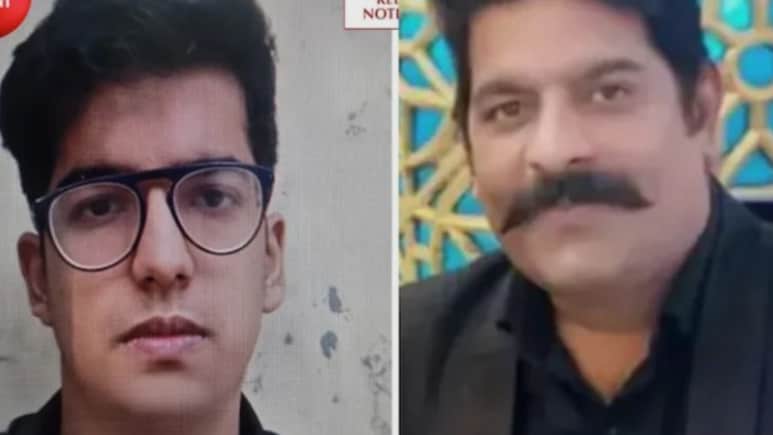
Weeks after alleged drug accused Virender Basoya was deported from Dubai, his son Rishabh Basoya, also an accused in the alleged Rs 13,000-crore drug haul case, has secured permission from the Delhi High Court to return to India from the UK after the court ordered limited suspension of the Red Corner Notice (RCN) and Look Out Circular (LOC) issued against him.
The court made it clear that the relief is only to facilitate his travel to India and does not affect the ongoing investigation or legal proceedings against him.
The order comes weeks after the deportation of Virender Basoya from Dubai. Rishabh Basoya, his son and a co-accused in the case, is currently in London and has expressed his willingness to return to India and join the investigation.
In an order passed on August 19, the Delhi High Court directed that the RCN and LOC issued against Rishabh Basoya be suspended only to the extent necessary for him to travel to and enter India.
The court clarified that the limited relief does not amount to closure of the investigation or grant of any protection from arrest. It said the investigating agency would remain free to question or arrest him in accordance with the law upon his arrival in India.
The matter stems from an FIR registered by the Delhi Police Special Cell in 2024 under relevant Sections of the Narcotic Drugs and Psychotropic Substances (NDPS) Act.
According to the police, a large quantity of cocaine, mephedrone and ganja was recovered in the case. During the investigation, authorities allegedly uncovered links to an international drug cartel.
Delhi Police has alleged that Rishabh Basoya was involved in the alleged conspiracy and had provided a vehicle to a co-accused, from which cocaine was later recovered.
Court records show that Rishabh Basoya is an Indian citizen and holds an Indian passport. He has been living in the United Kingdom since 2022 and was pursuing an LL.B. (Hons.) degree at the University of West London.
He visited India during his vacation between June and September 2024 before returning to London. According to the investigating agency, he did not return to India thereafter to join the investigation and continued to stay abroad.
Following his non-appearance, legal proceedings against him progressed. A Delhi trial court issued a non-bailable warrant against him on January 7, 2025. He was later declared a proclaimed offender on May 19, 2025.
Subsequently, an RCN was issued against him through Interpol in 2025 at the request of the investigating agency.
Rishabh Basoya approached the Delhi High Court seeking suspension or cancellation of the Red Corner Notice. Through his petition, he said he wished to return to India, surrender before the trial court and participate in the investigation.
He also claimed that he had been falsely implicated in the case and that there was no independent and substantial evidence linking him to the alleged offence.
On August 5, Basoya informed the court that he was ready to return to India but required permission from the concerned authorities to do so. The court subsequently sought responses from the Centre and the investigating agencies.
The State opposed the request, arguing that an RCN or LOC could not be selectively suspended only for travel to India.
According to the government, suspending the Red Corner Notice would remove the international alert against the accused and create a possibility that he could travel to another country instead of returning to India.
The Central Bureau of Investigation (CBI), which serves as the coordinating agency between India and Interpol, also stated in its reply dated July 16, that it did not recommend temporary suspension of the RCN or direct surrender before the Indian Embassy in Dubai.
After hearing both sides, the Delhi High Court chose what it described as a balanced approach.
The court noted that the State's concern that the accused could travel elsewhere after getting relief from the RCN could not be completely ignored. At the same time, it took note of Basoya's willingness to return to India and appear before the investigating agency and the court.
The High Court therefore held that the RCN and LOC would remain suspended only to the extent required to facilitate his return to India and entry into the country. The suspension would not operate for any other purpose.
The court directed Rishabh Basoya to provide complete details of his travel plans to the concerned authority within seven days, including the route through which he would travel and details of his arrival in India.
Upon receiving the information, Delhi Police will issue the necessary directions to the relevant authorities so that he can enter India on the basis of the limited suspension of the RCN and LOC.
However, the court emphasised that his arrival in India would not protect him from legal action.
It expressly stated that the investigating agency and Delhi Police would be free to interrogate or arrest him, if required, in accordance with law after he enters the country.
The court also recorded Basoya's assurance that he would not leave India without prior permission of the court if allowed to return. He further undertook to share complete travel details in advance and cooperate with the investigation.
The High Court made his assurance part of its order and warned that if he failed to honour the commitment or did not return to India in accordance with the travel details provided, the limited relief granted to him would automatically cease to operate without any further orders.
Track Latest News Live on NDTV.com and get news updates from India and around the world

