





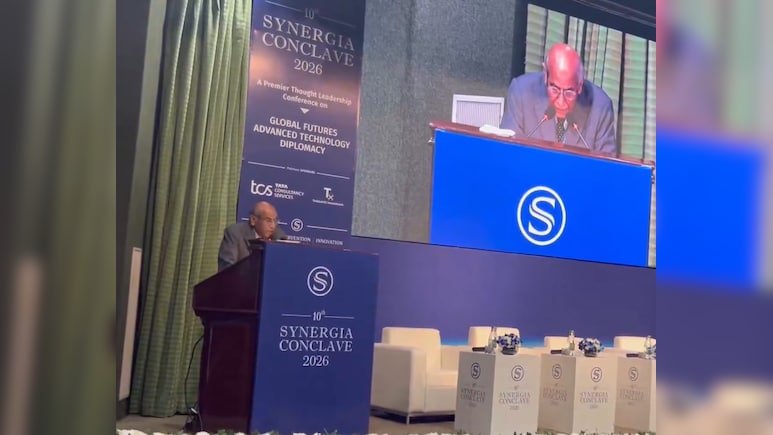
Former Foreign Secretary Shyam Saran has stated that the escalating conflict between the Israel-US and Iran presents a significant strategic challenge for India. He emphasised that New Delhi needs to prioritise protecting its energy supplies, economy, and diaspora while engaging diplomatically to prevent further escalation.
"Whether we like it or not, this is a very, very challenging situation that we are facing and there are no good choices," Saran said in an interview with NDTV at the Synergia Conclave 2026. He noted that India's immediate priority should be ensuring that the crisis in West Asia does not translate into hardship for people at home.
"The main objective for India is to ensure that the crisis in the neighborhood does not create great difficulty and hardship for the people of India, and that the impact of this war should not cause economic or energy distress," Saran said. He added that India may have to explore alternative energy sources and diversify supply chains if the conflict disrupts existing flows of oil and LPG.
Beyond energy supplies, the safety of the Indian diaspora is another key concern. Nearly nine million Indians live and work across West Asia-many in Gulf countries that could be affected by a wider regional escalation, the former Foreign Secretary noted.
Saran also emphasised that diplomatic engagement will be crucial. "I don't think the Indian government is being silent. Moreover, merely making statements isn't going to solve the problem," he said.
In the short term, he argued, New Delhi must focus on practical steps, such as securing alternative energy supplies and maintaining safe shipping routes. "Ensuring that the shipping routes for India, particularly those going through the Strait of Hormuz, remain safe is a key challenge," Saran said.
Addressing these risks may require engagement with multiple stakeholders. According to Saran, India may need to hold direct conversations with Iran while coordinating with friendly countries like Israel and the United States to highlight the broader economic impact the conflict could have on energy flows, global trade, and India specifically.
The former Foreign Secretary added that India could work with other affected nations to explore diplomatic avenues aimed at de-escalation. "This requires dialogue with countries that are equally affected and an effort to see whether it is possible to bring the war to an end," Saran said.
Beyond the immediate crisis, he warned of both short-term and long-term consequences for India's economy. Government agencies, he said, need to prepare for multiple scenarios and assess the implications for trade, exports, energy imports, and overall economic stability.
Referring to the government's emphasis on Atmanirbhar Bharat, Saran suggested that the current situation serves as a reminder of the importance of self-reliance in critical sectors. "This may be a good time to think about how, when faced with such crisis situations, we can expand self-reliance in key areas," he noted.
Despite the challenges, Saran believes India can still play a constructive role internationally. New Delhi remains deeply concerned about regional developments and could contribute to efforts aimed at reducing hostilities while working with global partners on questions of energy security and trade stability, he added.
Track Latest News Live on NDTV.com and get news updates from India and around the world

