Delhi's New Policy Paves Way For High-Rises. Architects Flag One Big Risk
Without parallel investments in roads and urban design, higher density could simply place more pressure on already strained neighbourhoods.
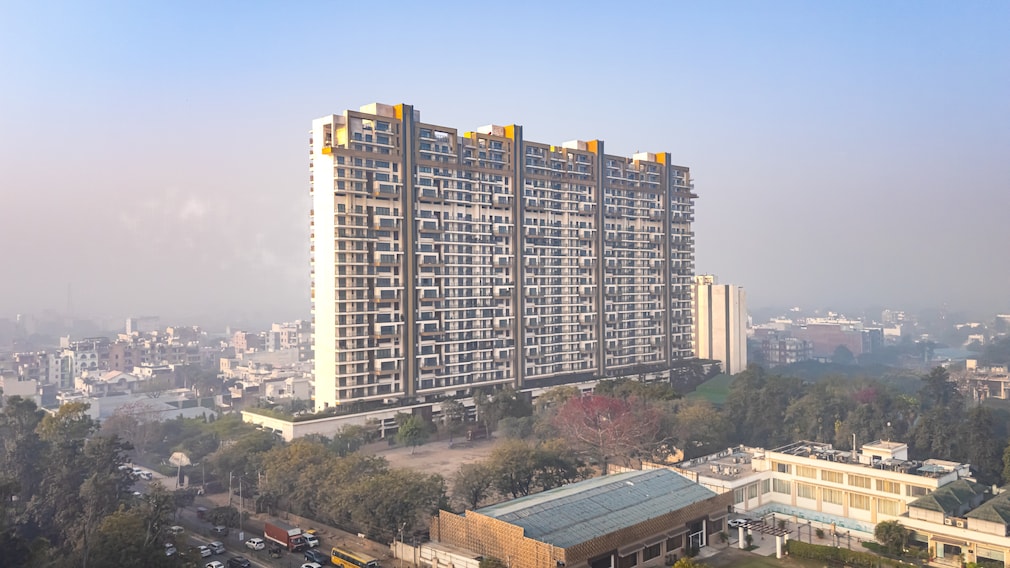
Delhi is preparing to build higher than ever before.
A series of planning reforms, including higher Floor Area Ratio (FAR) limits and the expansion of Transit-Oriented Development (TOD) zones, have unlocked fresh opportunities for high-rise housing and large-scale redevelopment across the national capital. The changes are expected to reshape neighbourhoods, increase housing supply and make better use of land in a city where developable space is rapidly shrinking.
But architects say the biggest challenge is not how many towers Delhi can build.
It is whether the city's roads, water supply, drainage, public transport and civic infrastructure can keep pace with the wave of new development. Without neighbourhood-level planning, they warn, taller buildings could end up placing even greater pressure on already congested parts of the city.
"Delhi is at an interesting moment in its urban evolution," says Harshal Kavdikar, Founder and Principal Architect at E Group Architecture and Partner at Nilay Sarathi. According to him, higher FAR and TOD-led development are a natural response to rising land prices, limited developable land and growing housing demand. However, he cautions that redevelopment should not become an exercise driven solely by the additional construction potential unlocked by policy.
According to him, discussions around redevelopment in many urban villages and redevelopment pockets remain heavily focused on additional built-up area, taller towers and project economics. What often gets ignored is how these projects will affect streets, public spaces, transport networks, civic infrastructure and the overall character of neighbourhoods.
"A city is not transformed simply by replacing low-rise buildings with high-rise ones," he says. The true measure of success, he argues, is whether residents enjoy a better quality of life after density increases.
'Need Parallel Investments In Urban Design'
Without parallel investments in roads, utilities, public transport and urban design, higher density could simply place more pressure on already strained neighbourhoods.
Kavdikar also believes Delhi reflects a broader national trend where redevelopment is increasingly driven by commercial viability rather than long-term city-building.
While financial feasibility is essential, he says every redevelopment project should strengthen the neighbourhood around it instead of focusing only on the individual site.
"The conversation needs to move beyond how much can be built to what kind of city we want to create for the next generation," he says.
The changing policy landscape supports this transformation.
Sanjay Bhardwaj, Partner at team3, says every planning regulation eventually leaves a lasting mark on the city's physical form.
"Every policy decision leaves a physical imprint on the city. Over time, those decisions become its urban form," he says.
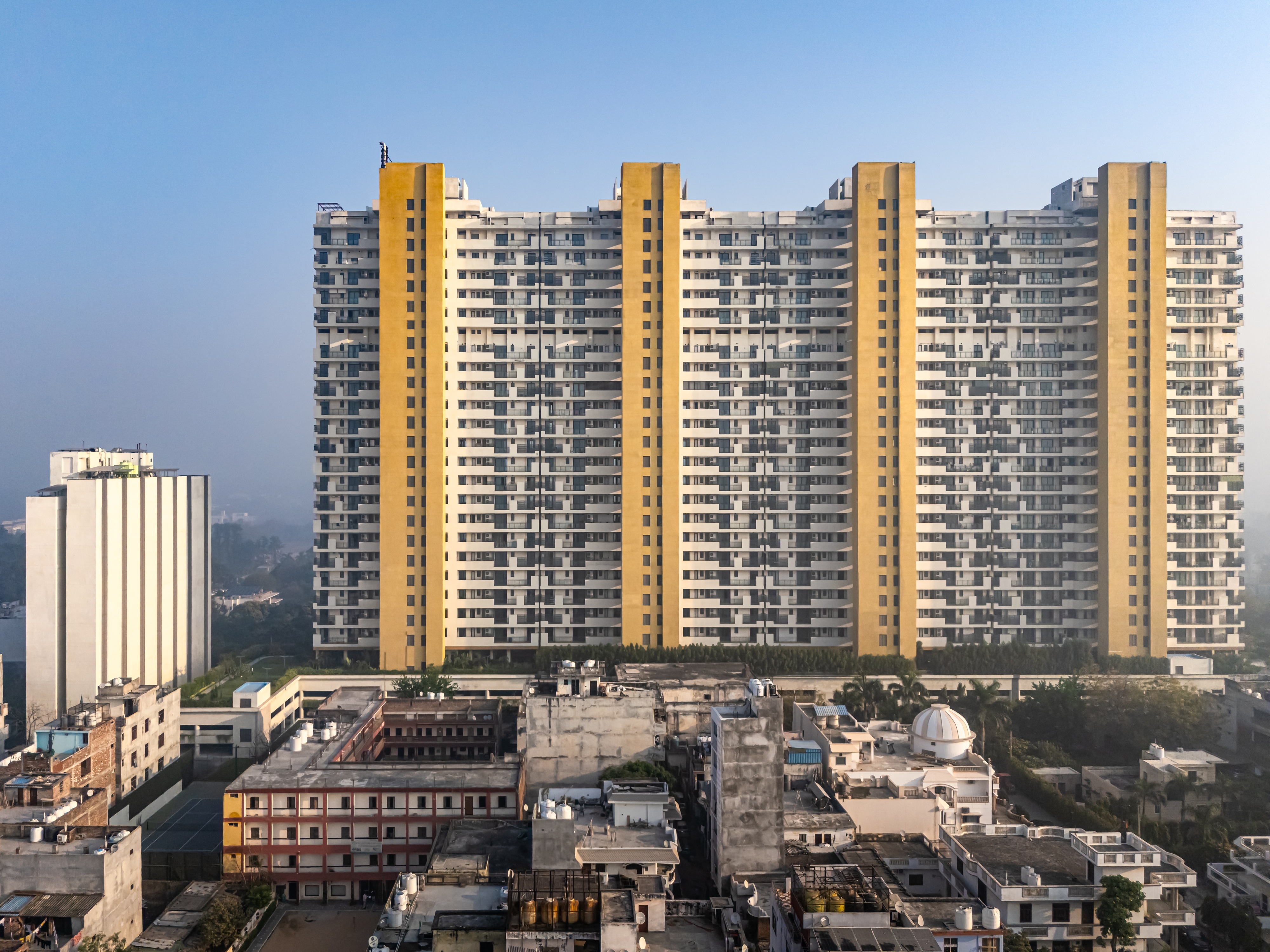
According to Bhardwaj, Delhi is already witnessing fragmented land parcels in several urban villages being consolidated into larger development sites through change-of-land-use approvals and relaxed FAR norms. Similar changes are visible in government-led redevelopment of older housing colonies, where higher-density projects are steadily altering long-established neighbourhoods.
'TOD Policy A Major Turning Point'
The policy opens nearly 207 square kilometres within a 500-metre influence zone around Metro and Regional Rapid Transit System (RRTS) corridors for higher-density, mixed-use development. It also reduces the minimum eligible plot size from one hectare to 2,000 square metres while allowing an FAR of up to 500, significantly expanding redevelopment opportunities across the city.
Bhardwaj cites Sky Mansion in Chandanhula as an example of how policy changes can reshape an entire locality. The project, approved through a change of land use from urban village land, demonstrates how a low-rise settlement can gradually evolve into a high-density residential precinct surrounded by existing schools, religious structures and traditional village streets.
For Bhardwaj, however, the debate is not about opposing density.
Delhi will continue to grow, and the revised TOD policy itself allocates 65 per cent of the permissible FAR to residential development, with an emphasis on smaller housing units to meet future demand.
The more important question, he says, is whether this growth is guided by a comprehensive urban vision or merely assembled through a series of individual policy approvals.
He argues that redevelopment should be evaluated at the neighbourhood level rather than plot by plot. Authorities should examine the cumulative impact of projects on transport systems, public infrastructure, open spaces and the surrounding urban fabric before granting additional development rights.
That, he says, will require far greater coordination among architects, planners and civic agencies.
"As architects, we can shape individual buildings, but the city itself is ultimately shaped by the planning frameworks that determine how those buildings relate to one another," Bhardwaj says.
-
Opinion | A Jolt For Trump? How The US May Be Staring At A 'Blue' Wave

Evidence now points firmly to a Democratic majority in the House. The only real surprise is the Senate
-
Opinion | Why The Saudi-Pak-Turkey Defence Pact May Actually Be An 'Intel' Network
Rather than a NATO-like construct, the Mecca pact may evolve to become something like the West's Five Eyes alliance.
-
The Real Story Of France's Unrest Is Getting Lost In A Storm Of Online Lies
A man cosplaying Napoleon on the streets, looting at luxury fashion stores like Dior, France is currently confronting one of its most serious episodes of civil unrest in years.
-
Opinion | The Last Bet? What Trump's 'Mother Of All Bombs' Could Actually Do To Iran
Can an MOAB deliver a decisive blow to Iran that may force it to surrender immediately, as Japan did after Hiroshima and Nagasaki in World War 2?
-
Hit Songs, Empty Pockets: The Hidden Math Behind India's Viral Music Boom
Over 80,000 brands and five lakh creators in India make branded content. The opportunity is worth around Rs 1,500 crore.
-
Opinion | Great 'Exceptions': How The Oil India Was Attacked For Is The Oil Trump Now Seeks
A law written to punish the buyers of Russian oil was suspended by the US to protect a purchase of Russian oil. India spent fourteen months being lectured for less.
-
Opinion | Louis Vuitton Loot, Torched Cars: France Protests Have An Unlikely Beneficiary
It's an unbelievable moment. Crowds looting the most exclusive stores in Paris, including the famed Luis Vuitton. But what's behind this meltdown?
-
Blog: Kolkata Didn't Learn From 2015. Eleven Years Later, It Proved To Be Fatal
The City of Joy isn't a stranger to crowd control. Be it during Pujo or Christmas at Park Street, Eden Gardens cricket matches, or Derbies between Mohun Bagan and East Bengal. But during Pujo, the entire city is on alert.
-
Opinion | Slurs, Threats, Now A Temple Attack Plot: When Did America Become So Hostile To Indians?
The rising tide of anti-India, anti-Hindu, and racist attacks serves as a stark reminder that economic prosperity does not automatically guarantee social immunity from bigotry.