- Daily ibuprofen use can damage the stomach lining by inhibiting protective prostaglandins
- Long-term use may cause gastritis, ulcers, internal bleeding, and potentially stomach perforation
- NSAIDs increase risks of kidney damage and cardiovascular issues, especially in older adults
Whether it's a nagging tension headache from a long day at the desk, the persistent ache of joint stiffness, or recovery after an intense gym session, most people have reached for a strip of ibuprofen without a second thought. It has become the "universal" fix-it-all in people's medicine cabinets. But while this non-steroidal anti-inflammatory drug (NSAID) is a lifesaver for acute pain, a growing number of people are turning it into a daily habit that often has devastating consequences for their internal health.
As of 2026, the landscape of pain management has shifted significantly. Recent market data indicate that the global ibuprofen market has hit a valuation of 0.11 billion dollars, driven largely by a 55% increase in patients using the drug for chronic pain-related disorders like arthritis and musculoskeletal issues. With over 180 million paediatric doses administered annually and millions of adults relying on over-the-counter (OTC) relief, the line between "occasional use" and "chronic dependency" has blurred.
But what is this daily ritual actually doing to your digestive system? To understand the internal cost of long-term pain management and why "safe" doesn't always mean "harmless", people need to know what exactly happens you take ibuprofen daily.
How Your Stomach Protects Itself
Before the damage happens, understanding the stomach's natural defence mechanism is necessary. Your stomach is a highly acidic environment, containing hydrochloric acid strong enough to dissolve metal. To prevent this acid from digesting the stomach itself, the body produces a thick layer of mucus and bicarbonate.
This "shield" is maintained by lipid compounds called prostaglandins. These are the silent heroes of your digestive health, ensuring blood flow to the stomach wall and stimulating the repair of damaged cells.
Also Read: Painkiller Overuse Is Silently Harming Your Kidneys, Doctor Raises Alarm
How Ibuprofen "Strips" Your Lining
Ibuprofen works by inhibiting enzymes known as cyclooxygenases, specifically COX-1 and COX-2. While blocking COX-2 is the goal, it reduces the inflammation and chemicals that make you feel pain; the drug isn't a "smart bomb". It also blocks COX-1.
COX-1 is the primary enzyme responsible for producing the protective prostaglandins in your stomach. When you take ibuprofen daily, you are effectively "turning off" your stomach's natural security system. Without these prostaglandins, the stomach lining becomes thin, blood flow decreases, and the acid begins to attack the very organ that contains it.
The 4 Progressive Stages Of Damage
Daily usage often follows a predictable, downward trajectory for gastrointestinal health:
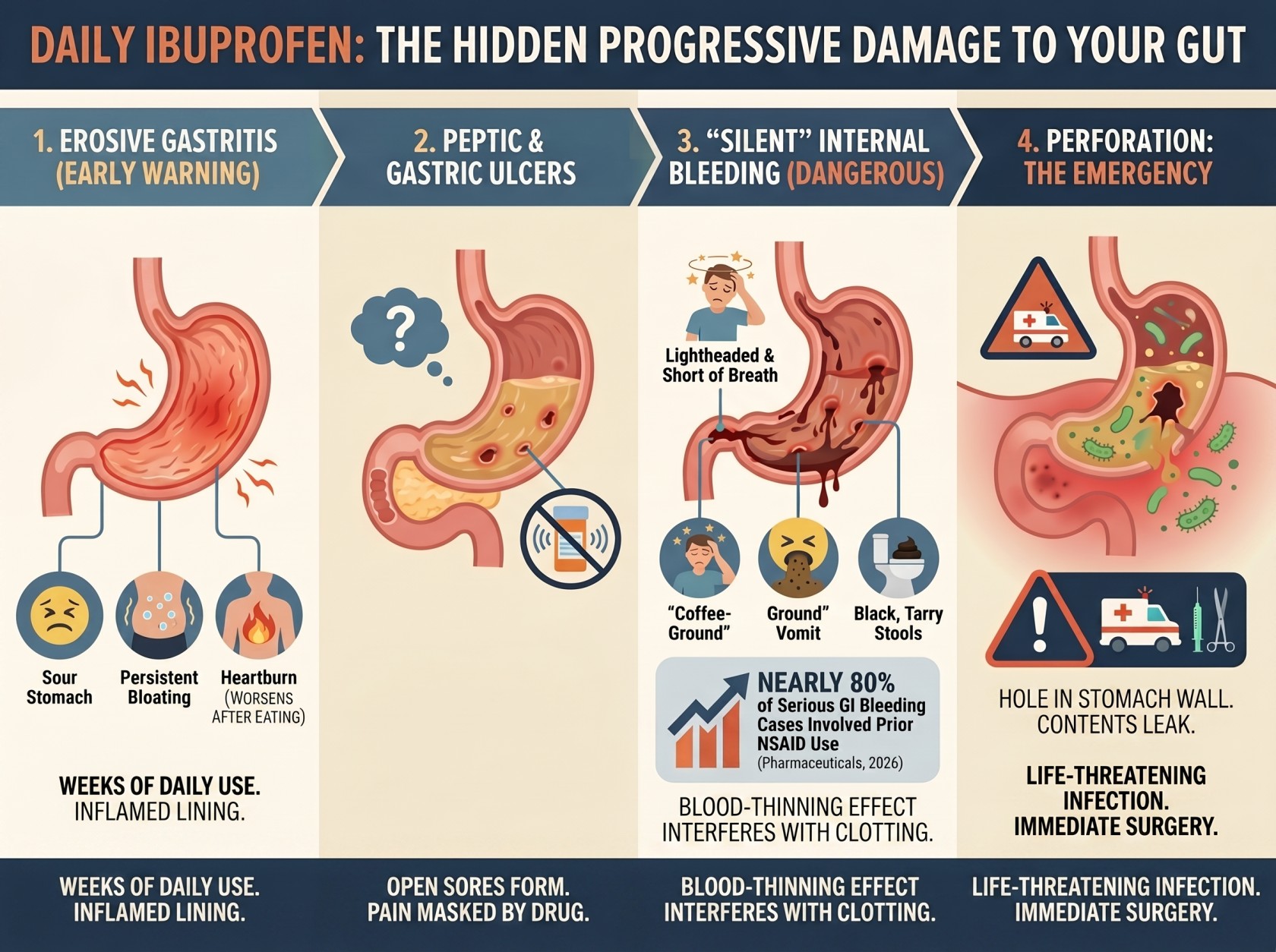
1. Erosive Gastritis (The Early Warning)
Within just a few weeks of daily use, the stomach lining can become inflamed and reddened. This is known as gastritis. Patients often mistake this for simple indigestion. You might feel a "sour stomach", persistent bloating, or a burning sensation (heartburn) that worsens after eating.
2. Peptic and Gastric Ulcers
When the protective layer is sufficiently depleted, the gastric acid creates open sores, or ulcers, in the lining of the stomach or the beginning of the small intestine (duodenum). These ulcers can cause intense, gnawing pain, but surprisingly, many daily ibuprofen users don't feel the pain because the drug itself masks the symptoms.
Dr Anant Kumar, Chairman of Urology, Renal Transplant and Robotics, Uro-Oncology, Max Super Speciality Hospital, Saket, explains, "NSAIDs reduce protective prostaglandins, which not only affect kidney blood flow but also damage the stomach lining, increasing the risk of ulcers and bleeding."
3. "Silent" Internal Bleeding
This is perhaps the most dangerous side effect. Ibuprofen also has a mild blood-thinning effect by interfering with platelet function. If an ulcer begins to bleed, the blood may not clot properly. Statistics from 2026 published in the Pharmaceuticals suggest that nearly 80% of patients admitted for serious GI bleeding had been using an NSAID in the week prior. Symptoms include feeling lightheaded, shortness of breath, or noticing "coffee-ground" vomit or black, tarry stools.
4. Perforation: The Emergency
In severe, untreated cases, the ulcer can burn a hole entirely through the stomach wall, which is referred to as a condition known as 'perforation'. This allows stomach contents and bacteria to leak into the abdominal cavity, leading to peritonitis, a life-threatening infection that requires immediate surgery.
Also Read: What Is The Best Time To Take Omega-3 Supplements For Maximum Absorption?
Are You At Higher Risk?
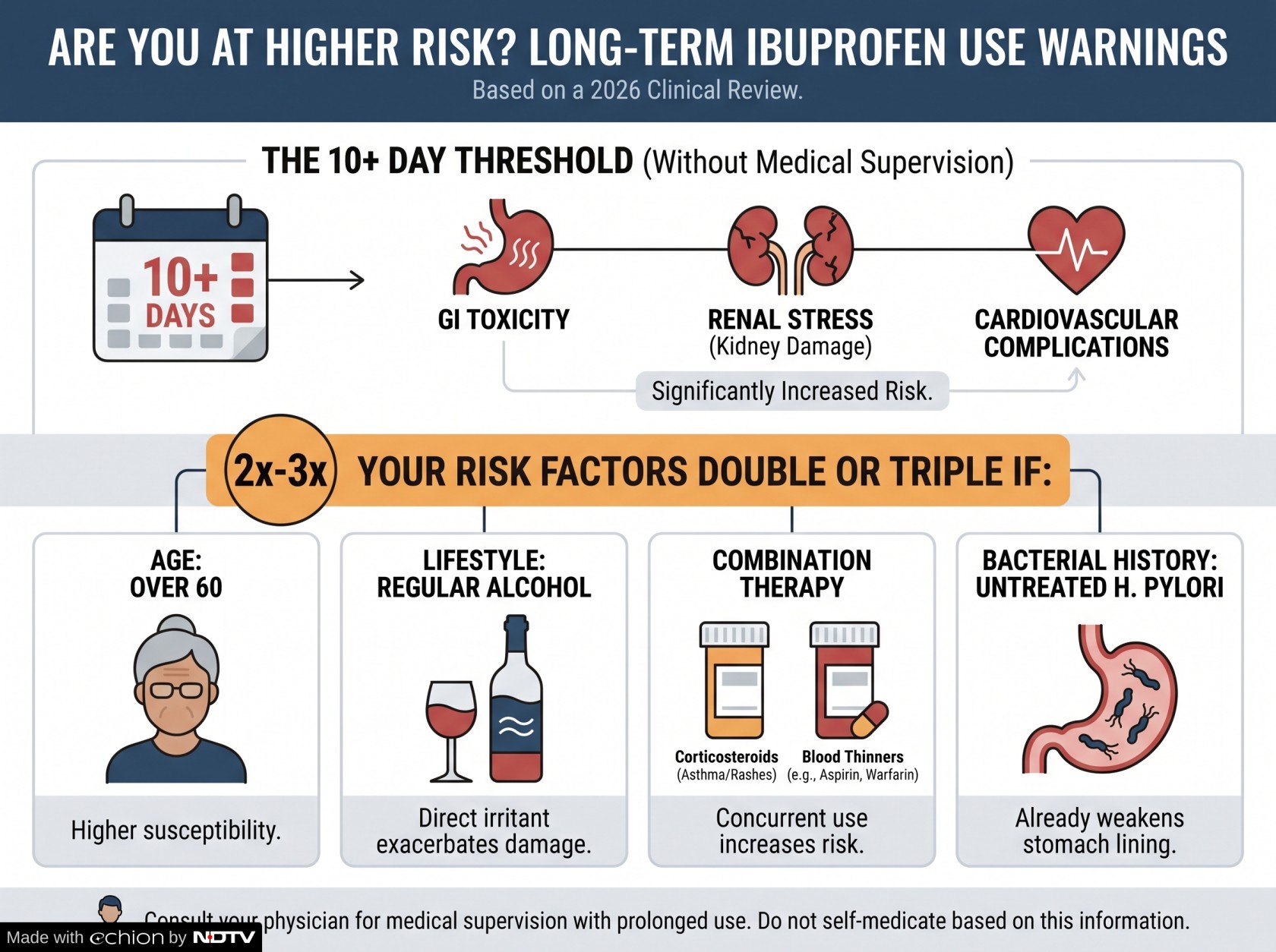
A 2026 clinical review highlights that taking ibuprofen for more than 10 consecutive days without medical supervision significantly increases the risk of not just GI toxicity but also renal stress (kidney damage) and cardiovascular complications.
While anyone can develop stomach issues from daily use, your risk factors double or triple if:
- Age: You are over the age of 60.
- Lifestyle: You consume alcohol regularly (alcohol is a direct irritant that exacerbates the damage).
- Combination Therapy: You are taking other medications like corticosteroids (for asthma or rashes) or blood thinners (like aspirin or warfarin).
- Bacterial History: You have an untreated H. pylori infection, which already weakens the stomach lining.
The Verdict: How To Protect Yourself
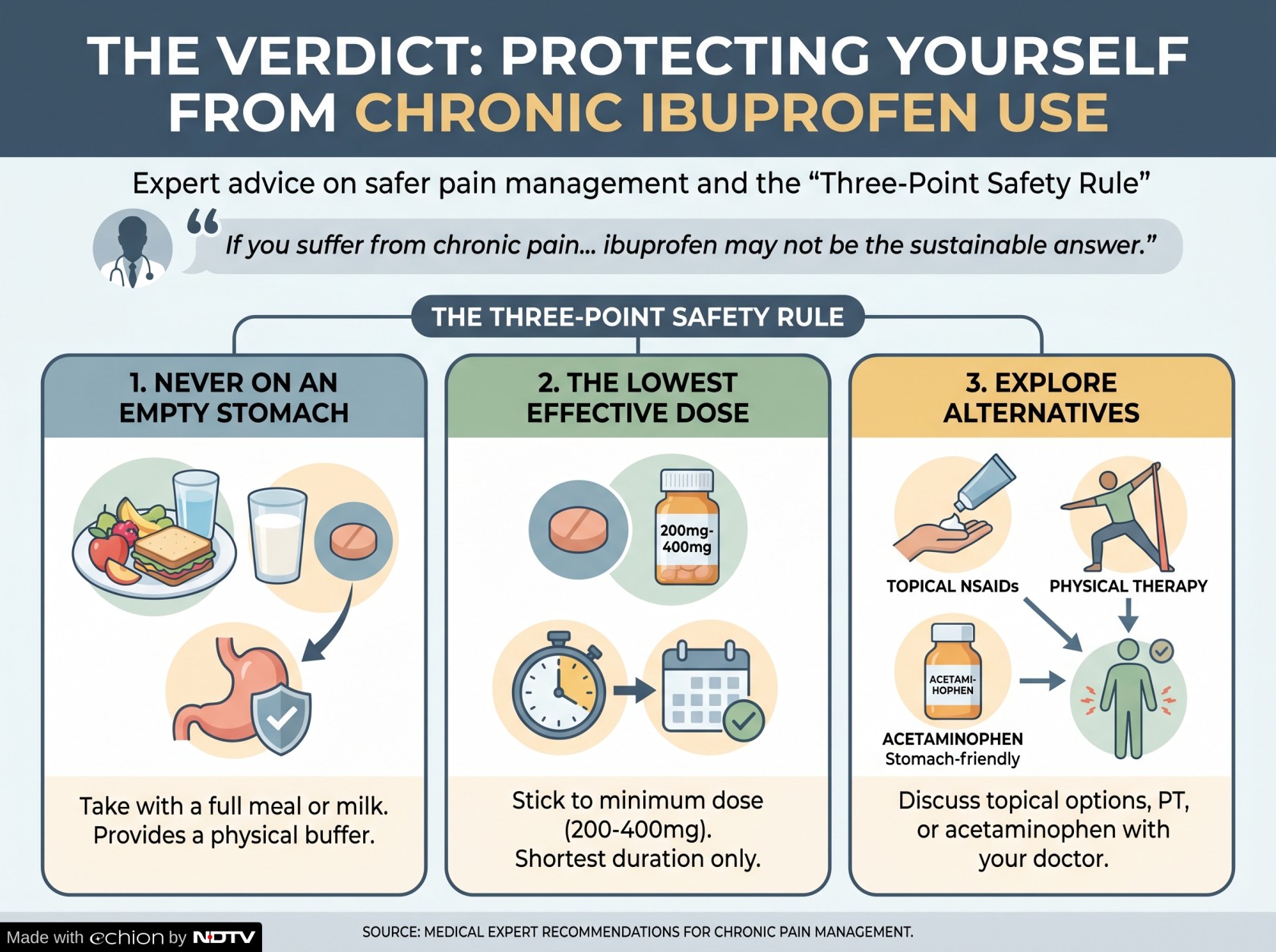
If you suffer from chronic pain that requires daily management, ibuprofen may not be the sustainable answer. A doctor recommend the "Three-Point Safety Rule" for those who must use it:
- Never on an Empty Stomach: Always take the pill with a full meal or a glass of milk to provide a physical buffer against the chemical.
- The Lowest Effective Dose: Don't take two pills if one will suffice. Stick to the minimum dose (200mg-400mg) for the shortest duration.
- Explore Alternatives: Discuss topical NSAIDs (creams/gels), physical therapy, or acetaminophen (which doesn't affect the stomach lining in the same way) with your general physician.
Monitor your "signals": If you notice unexplained fatigue, persistent indigestion, or sharp upper abdominal pain, stop the medication immediately and consult a specialist. Your stomach is resilient, but it isn't invincible.
Disclaimer: This content, including advice, provides generic information only. It is in no way a substitute for a qualified medical opinion. Always consult a specialist or your own doctor for more information. NDTV does not claim responsibility for this information.