- Breakfast choices impact blood sugar and metabolic health in modern India
- Sabudana Khichdi causes rapid blood sugar spikes due to high starch content
- Poha offers moderate glycaemic impact with added protein and fibre benefits
The most important meal of the day, breakfast, holds utmost importance, as it is considered a ritual. Whether it's the comforting chew of sabudana khichdi, the airy lightness of poha, or the savoury warmth of upma, Indians and their morning breakfast choices define their energy levels for the day. However, as India grapples with a rising metabolic health crisis, people have to look past the flavour and toward the blood sugar spikes that it may be resulting in. Managing blood sugar is no longer a concern reserved only for those with a clinical diagnosis. In the body's ability to switch between burning carbs and fats, managing blood sugar has become a cornerstone of preventive health.
A breakfast that triggers a sharp insulin spike doesn't just lead to a mid-morning energy crash; over time, these glucose rollercoasters contribute to systemic inflammation and insulin resistance. For the modern Indian professional, the goal is sustained satiety. But when people put their three beloved staples to the test, which one actually supports long-term metabolic health, and which one is a hidden sugar bomb?
Different Types Of Indian Breakfast Options And Their Impact On Blood Sugar
Sabudana Khichdi - The Quick Energy Trap
Sabudana (tapioca pearls) is a beloved fasting staple, often perceived as light. However, from a nutritional standpoint, it is nearly pure starch. Extracted from the pith of the sago palm or cassava root, it is high in carbohydrates but remarkably low in protein, minerals, and dietary fibre.
Because it lacks the structural fibre to slow down digestion, sabudana has a high Glycaemic Index (GI). When consumed, it is rapidly converted into glucose, leading to a sharp, immediate spike in blood sugar. While it provides a quick burst of energy and is ideal for someone breaking a long fast or a high-intensity workout, it is less than ideal for a sedentary morning at the desk. To mitigate this, if you must have it, balancing the starch with a generous serving of fibre-rich vegetables and protein-heavy yoghurt is non-negotiable.
Also Read: Busy Mornings? Try These 8 Healthy Yet Quick Breakfast Options
Poha - The Balanced Middle Ground
Poha (flattened rice) is perhaps the simplest breakfast across the subcontinent. Nutritionally, it sits in a much better position than Sabudana. Since it is parboiled before being flattened, it retains a fraction of the nutrients found in the rice husk and is relatively easy on the digestive system.
While poha is still a carb-dominant dish, its glycaemic impact is moderate. The traditional way of preparing it is sauteing it with mustard seeds, turmeric, and a hearty handful of peanuts, and it is a masterclass in accidental nutrition. The healthy fats and protein from the peanuts, combined with the fibre from onions, peas, and carrots, significantly lower the overall Glycaemic Load (GL) of the meal. Adding sprouts or a side of moong dal can further blunt the glucose response, making it a sustainable daily option.
Upma - The Satiety Specialist
Upma, typically made from semolina (rava or sooji), offers a different metabolic profile. Semolina is made from durum wheat, which is more complex than the simple starch of tapioca.
The beauty of upma lies in its versatility. Because it acts as a base, it can be fortified with a high volume of vegetables like beans, carrots, and peas. According to the dietary guidelines established by the Indian Council of Medical Research (ICMR) and the National Institute of Nutrition (NIN), the inclusion of vegetables and pulses (like urad dal used in the tempering) provides better satiety and a slower release of glucose into the bloodstream. Compared to poha, upma often feels heavier, which is actually a sign of its ability to delay gastric emptying, keeping you full until lunch and preventing the dreaded 11 AM snack craving.
Also Read: 10 Doctor-Approved Healthy Breakfast Options For Better Digestion
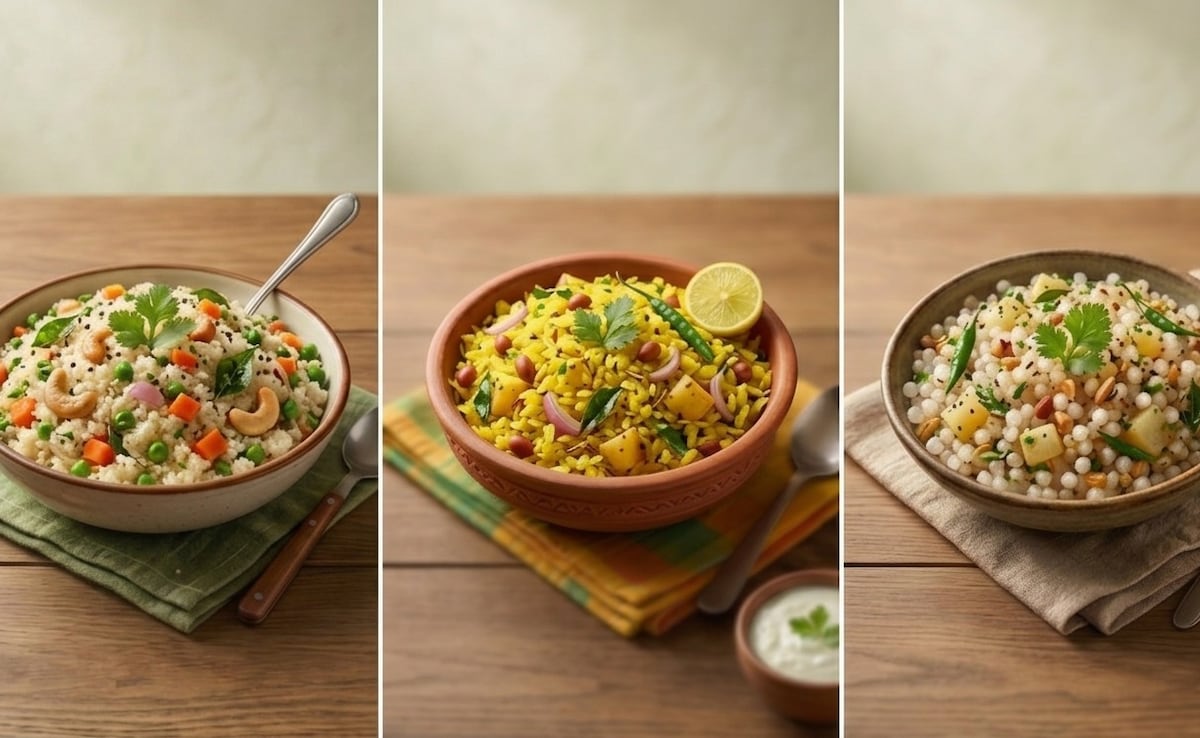
Sabudana Khichdi, Poha, Or Upma
Photo Credit: A.I generated image
Expert Tips For A "Sugar-Steady" Morning
To optimise your metabolic health without sacrificing the flavours you love, consider these adjustments:
- The 50% Rule: Ensure that at least 50% of your plate consists of non-starchy vegetables or protein sources (like sprouts or paneer), regardless of the base grain.
- Order of Eating: Start your meal with a few soaked almonds or a small bowl of sprouts. This "fibre first" approach creates a buffer in the gut that slows sugar absorption.
- The "Fermented" Factor: Pairing these dishes with a probiotic like curd (dahi) can improve gut health, which is directly linked to better insulin sensitivity.
- Occasional Indulgence: Save Sabudana Khichdi for festive occasions or high-activity days rather than making it a daily habit.
When it comes to the battle of the bowls, upma and poha emerge as the clear winners for daily blood sugar management, provided they are loaded with vegetables and protein. While sabudana is a cultural favourite, its high glycaemic impact makes it a "sometimes" food in the context of a modern, low-activity lifestyle. By choosing functional ingredients over simple starches, people can enjoy their traditional breakfasts while supporting long-term metabolic health.
Disclaimer: This content, including advice, provides generic information only. It is in no way a substitute for a qualified medical opinion. Always consult a specialist or your own doctor for more information. NDTV does not claim responsibility for this information.