- Filmmaker Kiran Rao is battling Chikungunya, causing severe joint pain and weakness
- Chikungunya virus attacks joint connective tissue causing inflammation and prolonged stiffness
- India sees rising Chikungunya cases, especially in Maharashtra and Karnataka states
Filmmaker Kiran Rao recently took to social media to share a glimpse of her current reality: a thermometer, a stack of books, and a sobering admission. The Laapataa Ladies director is currently battling Chikungunya, a mosquito-borne viral illness that is as notorious for its name as it is for its debilitating impact. Rao revealed that the viral load has left her so weakened that even the simple act of holding up a book has become an impossible task.
Her experience is a textbook case of how the Chikungunya virus (CHIKV), an RNA virus from the alphavirus genus, targets the human body. While the fever might subside in a few days, the bent-over posture (which is what the word 'Chikungunya' literally means in the Kimakonde language) can linger, turning daily chores into monumental challenges.
How Chikungunya Affects Joint Health
The struggle Rao describes is not just about general fatigue; it's a specific physiological attack on the musculoskeletal system. When the virus enters the bloodstream via a bite from an infected aedes aegypti or aedes albopictus mosquito, it migrates quickly to the synovial fibroblasts, the connective tissue in the joints. Research highlights why this pain is so unique and persistent:
- A 2023 systematic review in BMC Musculoskeletal Disorders explains that the virus triggers a massive immune response. This inflammation isn't just surface-level; it affects the joint lining, leading to severe swelling and stiffness that can impair mobility for months.
- According to longitudinal cohort studies, the virus can be so aggressive that it triggers chronic inflammatory joint disease. In many patients, the post-viral stage mimics rheumatoid arthritis, requiring long-term monitoring and physiotherapy to regain a full range of motion.
- Clinical trials documented in the Transactions of the Royal Society of Tropical Medicine and Hygiene suggest that "persistent arthralgia" (joint pain) is the hallmark of the disease. This explains why even lightweight objects, like a paperback book, feel like lead weights during the peak of the infection.
Also Read: Mosquito Myths That Need To Buzz Off: What Really Spreads Dengue And Malaria
Practical Precautions To Take With Chikungunya
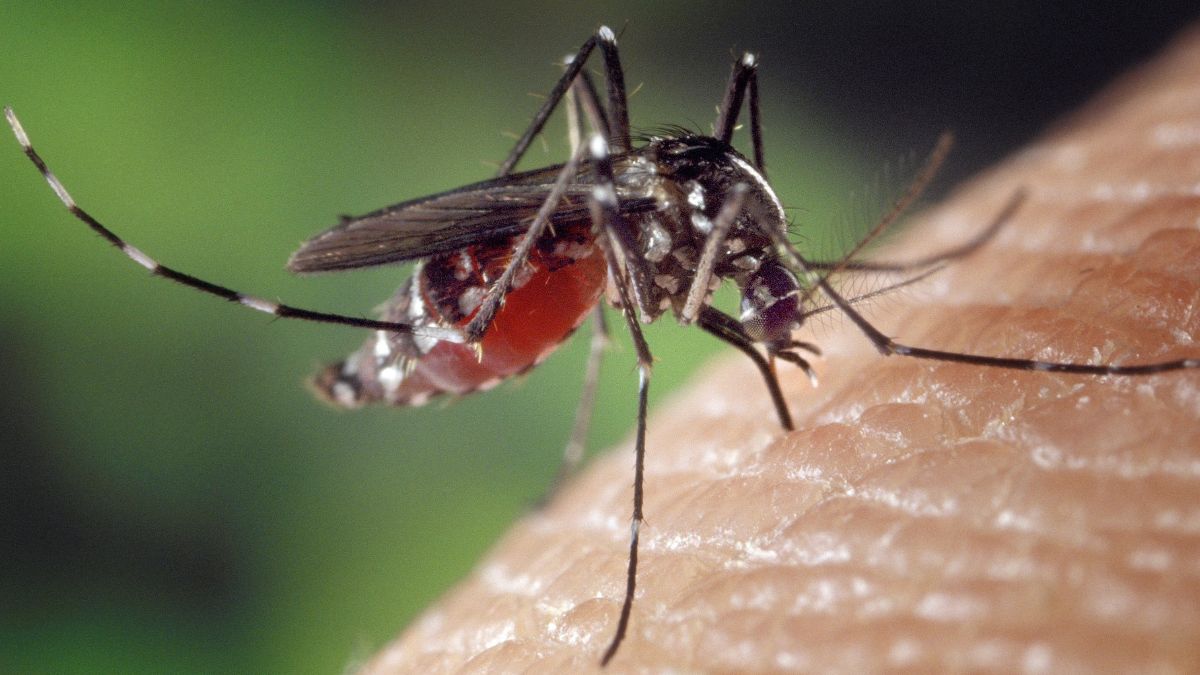
With India witnessing a steady rise in cases due to fluctuating climate patterns and urban water stagnation, prevention is no longer just good advice; it's a necessity. Unlike some other respiratory viruses, Chikungunya is primarily vector-borne, but staying safe requires a multi-pronged approach to keep the buzz away.
1. Eliminate The Nursery
The Aedes mosquito is a container breeder. So, you need to check your surroundings for even a spoonful of stagnant water. You need to empty out flowerpot saucers, discarded tyres, birdbaths, and clogged gutters. If you have indoor money plants in water, change the water every two days.
2. Personal Barriers Are Necessary
Since these mosquitoes are primarily day-biters, your protection needs to be active from sunrise to sunset. For this, you need to wear long-sleeved shirts and full-length trousers made of light-coloured, breathable fabrics. In addition, you can use certified repellents on exposed skin and consider installing mesh screens on windows.
3. Strengthen Your Home Defence
If you live in a high-risk zone (see the data mentioned below for states like Maharashtra and Karnataka), use mosquito coils or vaporisers during the day. For those with infants or elderly family members, bed nets remain the gold standard for undisturbed and safe rest.
4. Community Vigilance
Chikungunya is not spread directly from human to human through coughing. However, a mosquito biting an infected person and then biting you is the primary transmission route. If someone in your house is sick, they must stay under a mosquito net to prevent seeding the local mosquito population.
Also Read: India Could Bear The Heaviest Long-Term Burden Of Chikungunya: Global Study
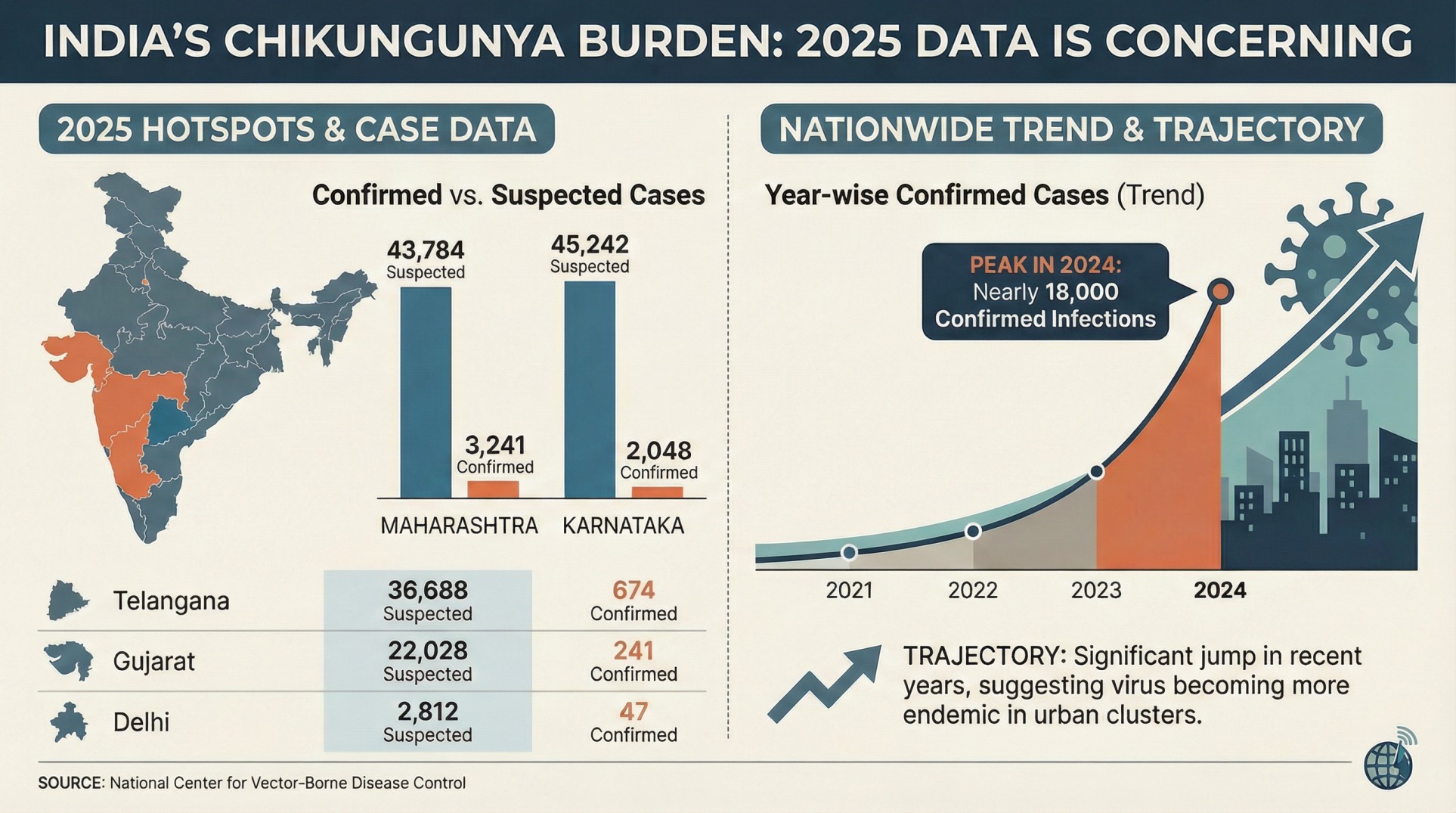
India's Chikungunya Burden: 2025 Data Is Concerning
The data from the National Center for Vector-Borne Disease Control paints a concerning picture about India's chikungunya burden. In 2025 alone, Maharashtra and Karnataka have reported thousands of confirmed cases, making them the current hotspots for the virus.
- Maharashtra: 43,784 suspected cases and 3,241 confirmed cases
- Karnataka: 45,242 suspected cases and 2,048 confirmed cases
- Telangana: 36,688 suspected cases and 674 confirmed cases
- Gujarat: 22,028 suspected cases and 241 confirmed cases
- Delhi: 2,812 suspected cases and 47 confirmed cases
The year-wise trend shows a significant jump in confirmed cases over the last few years, peaking in 2024 with nearly 18,000 confirmed infections nationwide. This trajectory suggests that the virus is becoming more endemic in urban clusters.
Recovery And Beyond
For Kiran Rao and thousands like her, the road to recovery involves patience. Medical professionals emphasise that there is no specific cure or vaccine for Chikungunya; treatment is purely supportive. To effectively manage it, taking the following steps could help:
- Drinking plenty of fluids to combat fever-induced dehydration.
- Using paracetamol to manage fever; however, one must avoid aspirin or non-steroidal anti-inflammatory drugs (NSAIDs) until dengue is ruled out, as these can increase bleeding risks.
- Once the acute phase passes, light stretching is vital to prevent the joints from "freezing".
While the physical toll is high, the silver lining is that infection usually provides long-term immunity. For now, as the filmmaker rests and recovers, her story serves as a potent reminder for the rest of us to clear out those stagnant trays and reach for the repellent while stepping out.
Disclaimer: This content, including advice, provides generic information only. It is in no way a substitute for a qualified medical opinion. Always consult a specialist or your own doctor for more information. NDTV does not claim responsibility for this information.